Inmet: weather forecast between September 21nd and 28th
The South, Southeast, and North regions will experience the highest rainfall volumes predicted for the next seven days.
21.09.2026 | 17:11 (UTC -3)
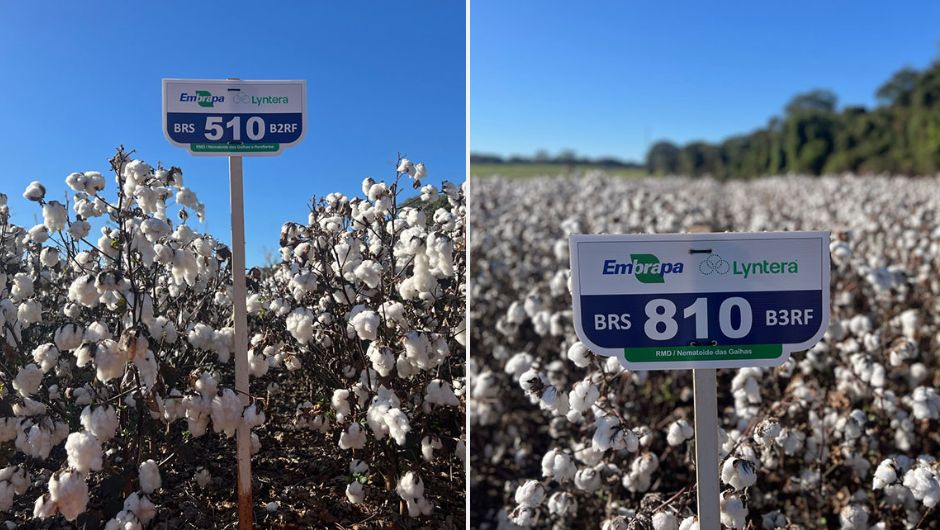
Two new cotton cultivars from Embrapa, in partnership with Lyntera, are arriving on the market this month. According to the companies, BRS 510 B2RF and BRS 810 B3RF combine high productivity and a high level of health, with multiple resistance to the main diseases of the crop and to nematodes.
The materials incorporate biotechnology for caterpillar resistance and herbicide tolerance. Another highlight is their field performance, with a yield potential reaching approximately 7,6 t/ha in the first crop and exceeding 5,3 t/ha in the second.
The cultivars will be presented to producers during the 15th Brazilian Cotton Congress, which takes place from September 22nd to 24th in Belo Horizonte (MG).
Both cultivars are transgenic and incorporate Bayer technologies for protection against the main cotton caterpillars and tolerance to the herbicide glyphosate. BRS 510 uses Bollgard 2 RRFlex (B2RF), while BRS 810 features Bollgard 3 RRFlex (B3RF), which adds a mechanism of action and expands protection against caterpillars. The technologies also facilitate weed management.
“With these cultivars, we hope to provide a reduction in losses due to nematodes; greater control of caterpillars; tolerance to the herbicide glyphosate, which facilitates weed management; and resistance to important diseases, such as ramularia, angular leaf spot, and blue disease. In short, an improvement in the overall health of the crop, reducing production risks and, potentially, the costs of pesticides,” highlights researcher Camilo Morello, coordinator of the cotton genetic improvement program at Embrapa Algodão (PB).
Both varieties are resistant to root-knot nematodes (Meloidogyne incognitaThis nematode causes losses of up to 50% in cotton crop productivity, compromising the root system and plant development.
Furthermore, they exhibit multiple resistance to the main diseases affecting the crop, such as bacterial blight, blue disease, and especially ramularia leaf spot (caused by the fungus Ramulariopsis pseudoglycines), present in the main cotton-producing regions of the country, with productivity losses of 25% to 35% under normal conditions and even exceeding 70% in cases of high severity. Both are adapted to sandy soils. Despite their common characteristics, the two cultivars present differences that may guide their selection for different growing conditions.
In addition to root-knot nematodes, BRS 510 B2RF is also resistant to reniform nematodes (Rotylenchulus reniformis), which cause losses exceeding 60% in cotton productivity in areas with high infestations. Nematodes are microscopic worms that are among the main phytosanitary challenges to Brazilian cotton farming, as they parasitize plant roots and cause billions of dollars in losses to the sector.
The average productivity of this cultivar reaches approximately 7,6 t/ha in the first crop and exceeds 5,3 t/ha in the second crop. It is recommended for high-yield commercial areas, including those with a history of nematode and disease pressure, in the states of Goiás, Mato Grosso, Mato Grosso do Sul, Bahia, Ceará, Tocantins, and Paraná.
The BRS 810 B3RF variety not only exhibits resistance to bacterial blight, blue disease, ramularia leaf spot, and root-knot nematode, but also stands out for having fibers that exceed the demands of the textile industry: it achieves an average productivity of approximately 7,3 t/ha in the first crop and 5,2 t/ha in the second.
It is suitable for cultivation in the first crop season or for the opening of a second crop season in the Cerrado and other regions considered suitable by the Agricultural Zoning of Climatic Risk (Zarc) – such as the Federal District, Goiás, Mato Grosso, Bahia, Ceará, Maranhão, Piauí, Tocantins, Minas Gerais and Paraná – as well as for irrigated cultivation in the Semi-arid region.
Nelson Suassuna, a plant pathologist at Embrapa Algodão and one of those responsible for developing the cultivars, explains that ramularia occurs throughout Brazil and is the disease that requires the most fungicide applications: 8 to 10 per crop. Nematodes, while widespread in almost all producing regions, have a greater impact in specific areas of the Cerrado, such as western Bahia and Mato Grosso. "These cultivars can be important allies in these regions with high nematode and disease pressure," he states.
In addition to using resistant or tolerant cultivars, nematode and ramularia management strategies include crop rotation with non-host plants, application of chemical or biological nematicides and fungicides, as well as cleaning agricultural equipment and machinery to prevent contamination of new areas, in the case of nematodes.
The seeds will be sold by the company Lyntera, located in Formosa (GO). More information can be obtained by phone (61) 99937-4526, or by email contato@lyntera.com.br.
Receive the latest agriculture news by email



Receive the latest agriculture news by email