Viruses and parasitoid venom alter arthropods
Field trial links components of Cotesia glomerata to herbivore and parasitoid colonization
09.08.2026 | 14:26 (UTC -3)
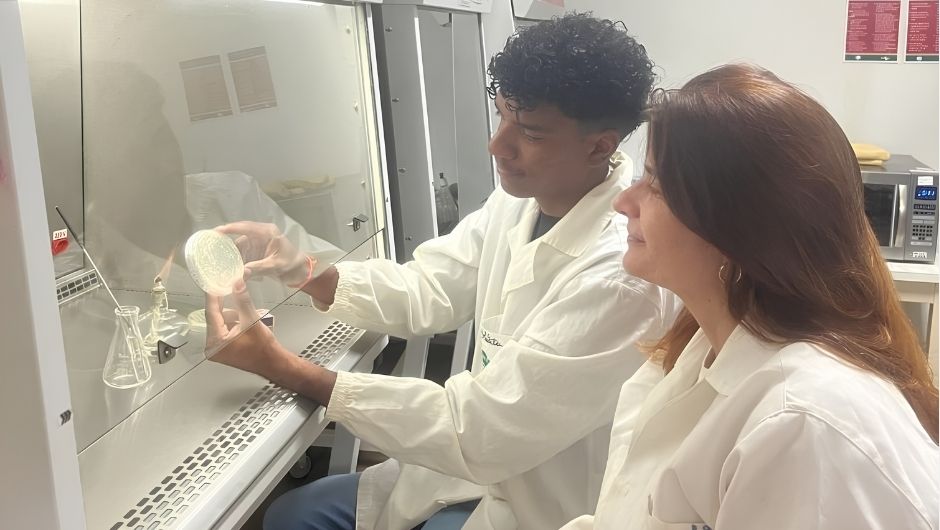
Researchers at Embrapa have identified bacteria capable of fixing nitrogen in cotton plants. This discovery represents an important step towards the development of bio-inputs that can be used in cotton and other crops, either for organic farming or by reducing dependence on imported chemical fertilizers. These bacteria, called diazotrophic bacteria, are capable of transforming nitrogen from the air into forms that can be assimilated by plants. They were found in the roots of tree cotton.
Well-established in Brazil, biological nitrogen fixation (BNF) in legumes such as soybeans is not yet viable in crops like cotton. “In soybeans this is already well known, but soybeans are capable of symbiosis with these bacteria through nodules present in the roots. Inoculating cotton with bacteria could potentially replace nitrogen fertilizer, which is expensive and could not be used in organic agriculture, for example,” explains Lúcia Hoffmann, a researcher at Embrapa Algodão (PB), who coordinates the study in partnership with Embrapa Agrobiologia (RJ).
For the past 24 years, Hoffmann has worked on mapping and cataloging tree species in Brazil. These include three species related to cultivated cotton: the native Brazilian cotton (Gossypium mustelinum), which is wild and found in environmental preservation areas of Paraíba and Pernambuco and in riparian forests in Bahia; the mocó cotton, which was widely cultivated commercially until the 1980s in the semi-arid region; and the ancestral cotton, Gossypium barbadense, cultivated in backyards and gardens throughout Brazil, frequently for medicinal or ornamental use and the production of handicrafts by traditional communities.
"All tree cotton plants have deep roots that promote soil conservation, including through symbiosis and association with fungi and bacteria, and that help the plant to better utilize water and nutrients from the soil," says the researcher.
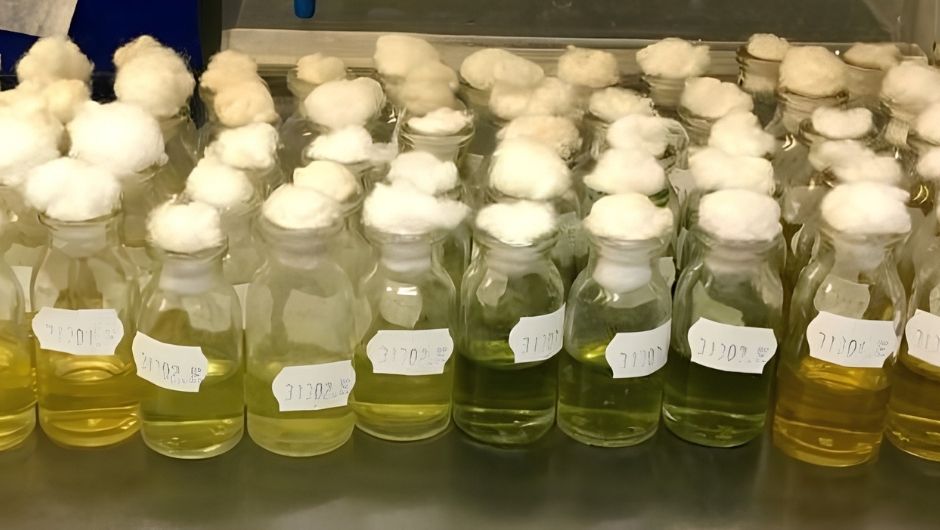
The research began with the isolation, in the laboratory, of diazotrophic bacteria found in the roots of tree cotton, a species also known as ancestral cotton or backyard cotton, Gossypium barbadense. Subsequently, the microorganisms were inoculated into herbaceous cotton plants, a species commercially cultivated on a large scale. In initial tests, the plants treated with the bacteria showed performance similar to that of plants that received the recommended dose of nitrogen fertilizer for cotton cultivation in the Cerrado region.
The experiment was conducted in 2025 at the Cerrado Cotton Regional Center, based at Embrapa Rice and Beans (GO). The plants were grown in individual pots in a controlled environment in greenhouses. “We observed that the plants that received only the bacteria, without nitrogen fertilization, had development equivalent to that of the fertilized plants. This indicates that these microorganisms have the potential to be used as bio-inputs, replacing part of the conventional fertilization,” reports the researcher.
“The next step is to deepen the studies to identify and characterize new strains of diazotrophic bacteria that could be used as future bio-inputs for cotton cultivation and other agricultural crops,” says researcher Marcia Soares Vidal, who works with Lúcia Hoffmann on a project to isolate and characterize new diazotrophic bacteria.
According to them, mineral nutrition represents the main cost of cotton production, and nitrogen is one of the nutrients that suffers the most losses during the fertilization process. "Nitrogen is the nutrient that most often shows deficiency, even when applied at recommended doses, possibly due to losses through volatilization, in the case of ammonia, denitrification, or leaching," they explain, referring to processes caused by rainwater or the flooding of agricultural crops.
In addition to economic benefits, the partial replacement of chemical fertilizers with biological nitrogen fixation can also contribute to reducing the environmental impacts of agriculture. This is because decreasing the use of nitrogen fertilizers reduces the emission of nitrous oxide, one of the main greenhouse gases released by agricultural soils. "The emission of nitrous oxide into the atmosphere can be minimized by restricting nitrogen fertilization, whether chemical or organic. Nitrous oxide is, after CO2, the main greenhouse gas emitted by agricultural soils," they emphasize.
The research also aims to reduce Brazil's dependence on imports of nitrogen fertilizers. Currently, the country imports 95% of the nitrogen fertilizer used in crops, which makes national agricultural production more vulnerable to fluctuations in the international market.
The researchers report that some diazotrophic bacteria can provide multiple benefits beyond nitrogen fixation. "They are multifunctional beneficial microorganisms that establish a mutualistic association with host plants and exhibit plant growth promotion properties, such as phytohormone synthesis, nutrient absorption, antagonism to pathogens and insect pests, resistance inducers, and mitigators of water stress," they state.
Based on these characteristics, Embrapa Algodão and Embrapa Agrobiologia have been conducting studies seeking to generate new bio-inputs to make plants more productive even in adverse climatic conditions.
According to a study by the Mato Grosso Institute of Agricultural Economics in partnership with Senar-MT, fertilizers and pesticides currently represent 44,76% of the total cost of cotton production.
In Brazil, in July 25, the total cost was estimated at R$ 18.454,19/ha, an increase of 17,83% compared to the consolidated figure for the 2024/25 crop. Specifically, in Mato Grosso, the largest national producer of the fiber, in that same crop, the consolidated production cost was R$ 15.661,10/ha, a reduction of 3,43% compared to the previous crop. The decrease in the cost of soil amendments and pesticides was what drove this reduction.
Considering the revenue from the sale of cotton lint and cottonseed, it is estimated that the gross revenue of the 2024/25 Brazilian crop will reach R$ 18.727,44/ha, representing an increase of 6,39% compared to the 2023/24 crop. This amount is sufficient to cover all production costs and provides the producer with a margin of R$ 3.066,34/ha.
Globally, Brazil leads the ranking of cotton exporters and is the 3rd largest producer of the fiber. According to the Brazilian Cotton Producers Association (Abrapa), in 2025, the country produced 2,83 million tons, and the expectation is to reach 3,83 million tons in 2026. Domestically, the crop is present in all regions, with emphasis on the Cerrado areas. The state with the largest planted area is Mato Grosso, followed by Bahia, Minas Gerais, Mato Grosso do Sul, and Goiás.
Tree cotton, in which bacteria capable of fixing nitrogen in plants have been identified, was the commercially produced species in Brazil until the mid-1980s. Without technological advancements, productivity ranged between 55 and 140 kg/ha and required a larger area to be cultivated.
Genetic improvement programs for the development of shorter-cycle cultivars that are more resistant and adapted to different climatic conditions, as well as solutions for managing the boll weevil – the main cotton pest – are among the research contributions that have strengthened and helped expand cotton cultivation in Brazil. Today, the planted area represents one-third of what it was in the 1970s, and production is almost five times greater.
For decades, herbaceous cotton has become the species cultivated for commercial purposes. Adapted to the conditions of the Cerrado, it was one of the factors responsible for the migration of the crop from the Northeast to the Midwest, where productivity today exceeds 4,3 kg/ha, according to 2024 data from the Brazilian Institute of Geography and Statistics (IBGE).
Receive the latest agriculture news by email


Receive the latest agriculture news by email