Adama launches Galil Nano in Brazil.
The product debuts the company's nanotechnology platform and will be launched during the Show Rural.
10.02.2026 | 17:17 (UTC -3)
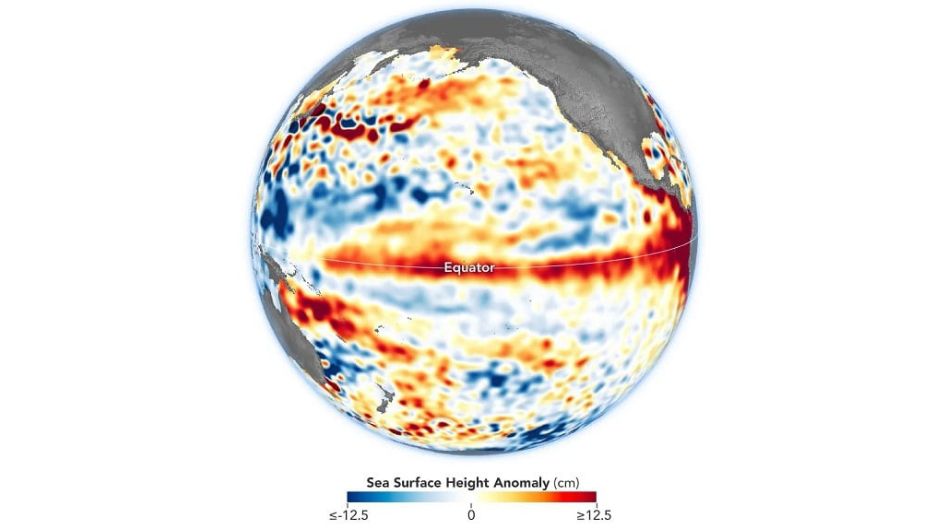
The effects of El Niño, which returns in 2026, are expected to begin manifesting as early as May and intensify throughout the year. This is according to climate analyses by Climatempo, a meteorological and weather forecasting consulting company in Brazil and Latin America. The data points to a climatic phenomenon with consequences similar to those of 2023, which could cause severe storms, but also strong and frequent heat waves in various inland regions of Brazil.
Vinicius Lucyrio, a meteorologist at Climatempo, states that the El Niño phenomenon will have an accelerated start this year, and the expectation is that it will be, at a minimum, a moderate to strong climatic event. "The most recent official projections from NOAA (National Oceanic and Atmospheric Administration/USA) already indicate a higher probability of a moderate or more intense El Niño for the period of August, September, and October. Normally, the peak tends to be between November and January," he emphasizes.
One of the biggest concerns with El Niño, as Lucyrio explains, is the increase in severe storm events due to warmer air and ocean. The meteorologist recalls that the two hottest years ever recorded on planet Earth were 2024 and 2023, years marked by the influence of a strong El Niño, when these climatic incidents were more frequent.
El Niño, resulting from the abnormal warming of the waters of the equatorial Pacific Ocean, makes the air warmer and causes rainfall to occur irregularly in most of Brazil, while increasing rainfall in Rio Grande do Sul and reducing it in the far north of Brazil, where the Amazon and Northeast regions become more prone to severe drought.
Climatempo's analyses indicate that the coldest period of this year should have a greater number of cold air incursions with greater reach over Brazil, restricted to the months of May and June, but this chance gradually decreases from July onwards with the more consistent development of El Niño and the coupling of oceanic conditions with the atmosphere.
“The trend is for us to have extreme heat and dry weather starting at the end of winter and into the spring of 2026. This shows a certain similarity to the conditions of 2023, in the sense that we may have large, frequent, long and intense heat waves in much of the interior of the country,” he explains.
Conversely, the South of the country becomes stormier and cloudier even in winter. According to Lucyrio, widespread rainfall events, with a risk of flooding, as well as strong storms and MCCs (Mesoscale Convective Complexes), tend to increase significantly in the spring. Some of this instability in the Southern Region may also be felt in the states of Mato Grosso do Sul and São Paulo.
Predictions also indicate that the flooding of rivers in the Amazon in 2026 should be greater than last year's, followed by a much more pronounced period of low water levels. "However, it's still too early to say whether this will compromise the navigability of the region's rivers. It's quite likely that we will have long and intense periods of heat and dry weather there," he assesses.
According to Vinicius Lucyrio, the start of the next rainy season could be misleading in some regions. “We may have some atypical rain showers between August and September in Central Brazil, southeastern Pará, Minas Gerais, São Paulo, and the interior of the Northeast. But this will not indicate the return of rain, much less its regularity,” he states. According to the Climatempo meteorologist, “the beginning of the next rainy season should have a very irregular pattern and be insufficient to replenish soil and reservoir moisture, which could lead to problems with water supply, hydroelectric power generation, and the establishment of some crops,” he concludes.
Receive the latest agriculture news by email



Receive the latest agriculture news by email