MS Harvest 2026/27: Soybean planting reaches 248,6 hectares
Planting for the 2026/27 crop has progressed to 5,1% of the estimated area, exceeding the pace recorded in the previous cycle.
29.09.2026 | 16:44 (UTC -3)
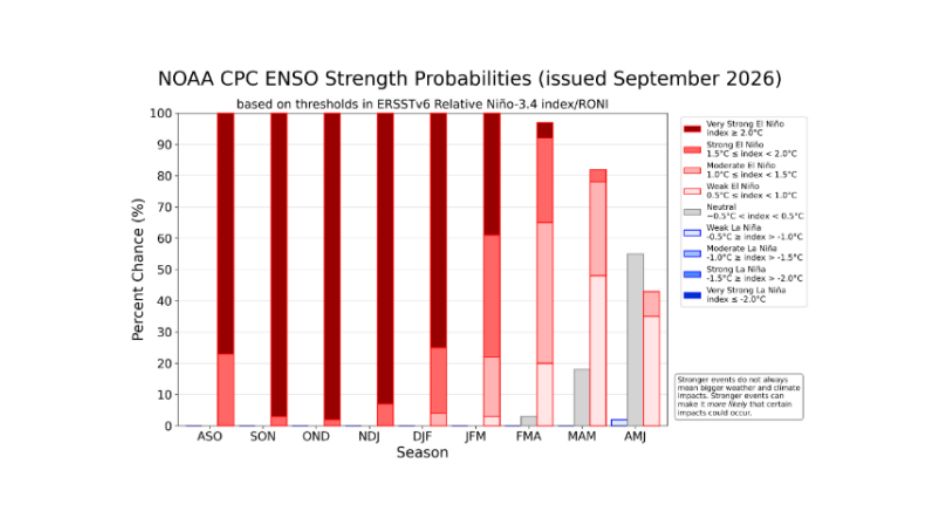
El Niño is expected to reach very strong intensity, with a probability exceeding 95%, in the next quarter. Between October and December, and throughout the spring and summer of 2026/27, the phenomenon should reach its peak intensity. There are also indications that the episode could be among the most intense since 1950. The forecast, released today (September 30th) in the September El Niño Panel, prepared by the National Institute of Meteorology (Inmet) and partners, indicates that the phenomenon should persist at least until the first quarter of 2027.
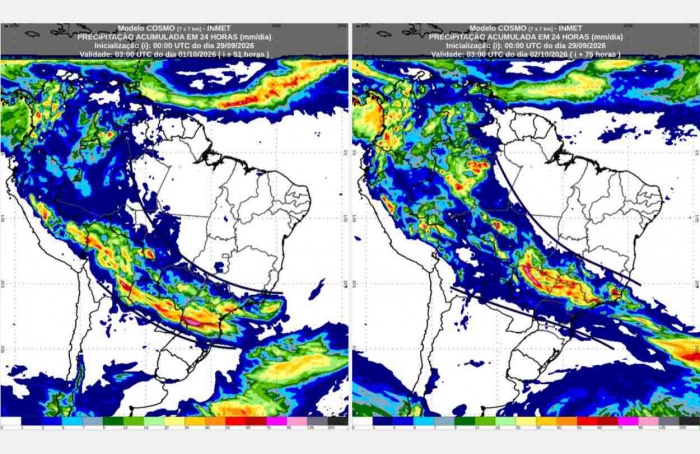
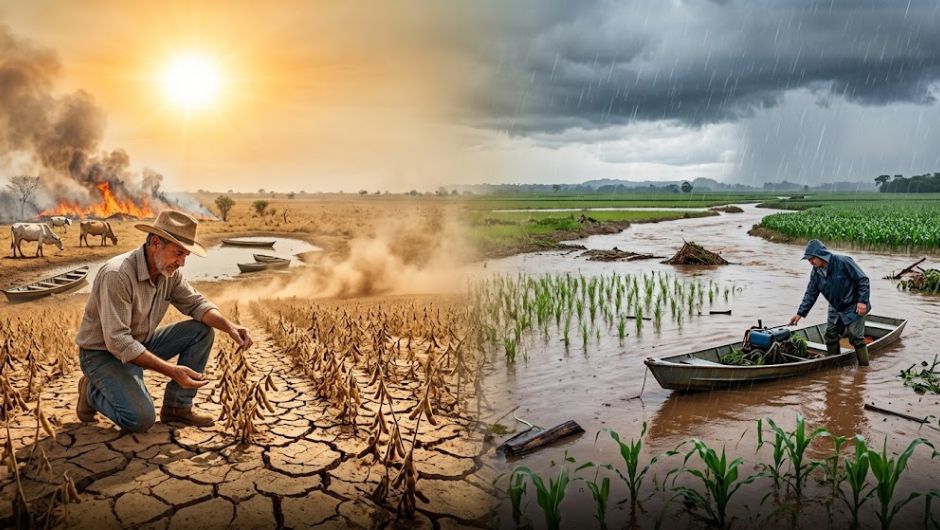
The scenario predicted for the coming months is marked by contrasts between Brazilian regions: drought and a higher risk of fire in the central-northern part of the country, and above-average rainfall, with the possibility of flooding, in the South. Temperatures are also expected to be above average in much of Brazil. However, Inmet (National Institute of Meteorology) emphasizes that these projections represent seasonal trends, and that the impacts in each location depend on the evolution of meteorological conditions.
El Niño conditions were confirmed in June, and the warming of the Equatorial Pacific Ocean has been steadily intensifying. By the end of September, sea surface temperature anomalies exceeded 2°C in the central and eastern areas of the ocean, according to the US National Oceanic and Atmospheric Administration (NOAA).
Partial data from September from the National Center for Monitoring and Alerting of Natural Disasters (Cemaden) show a worsening of drought conditions in the country. The number of municipalities classified as experiencing extreme drought rose from four to 24 in one month, while the number of municipalities experiencing severe drought increased from 153 to 197. The largest increases were recorded in Amazonas, Bahia, Amapá, Alagoas, and Sergipe.
In the Northeast, 16% of the region is experiencing severe drought, the most severe situation in the country. In the North, the drought has intensified rapidly in Roraima, Acre, and Amazonas, where some municipalities are already having difficulty obtaining water and experiencing impacts on navigation. In Roraima, the Branco and Negro rivers have low levels, while the forecast indicates below-average rainfall.
At the opposite extreme, heavy rains raised river levels and caused flooding in the South, mainly in the Taquari Valley and along the Caí River in Rio Grande do Sul, as well as in municipalities in Santa Catarina. The Brazilian Geological Survey (SGB) has already issued more than 190 hydrological alert bulletins for the region in 2026.
For the period from October to December, the forecast indicates above-average rainfall in the South, parts of the Southeast, and eastern Northeast. The risk of flooding remains in the South, although the trend is for it to decrease until December.
In the north-central region, the combination of low rainfall and high temperatures can harm crops such as soybeans and coffee, as well as affect livestock in the semi-arid region. In the south, the greater availability of moisture tends to favor corn, but excess rain can increase the occurrence of diseases in wheat and hinder the planting of soybeans and rice.
The National Civil Defense recommends that the population keep their registration updated to receive alerts. The service is available via SMS, by sending the ZIP code to the number 40199, in addition to the official channels on WhatsApp, at the number (61) 2034-4611, and on Telegram, through the profile @defesacivilbrbot.
The September Bulletin of the El Niño Panel was prepared by Inmet in partnership with the National Institute for Space Research (Inpe), the National Water and Basic Sanitation Agency (ANA), the National Center for Monitoring and Alerting of Natural Disasters (Cemaden), the Geological Survey of Brazil (SGB), the National Secretariat for Civil Protection and Defense (Sedec) and the Management and Operational Center of the Amazon Protection System (Censipam).
Receive the latest agriculture news by email



Receive the latest agriculture news by email