FMC applies for registration of the herbicide rimisoxafen in Brazil
The active ingredient acts on Groups 12 and 32 and targets resistant weeds in soybeans and corn
28.09.2026 | 17:56 (UTC -3)
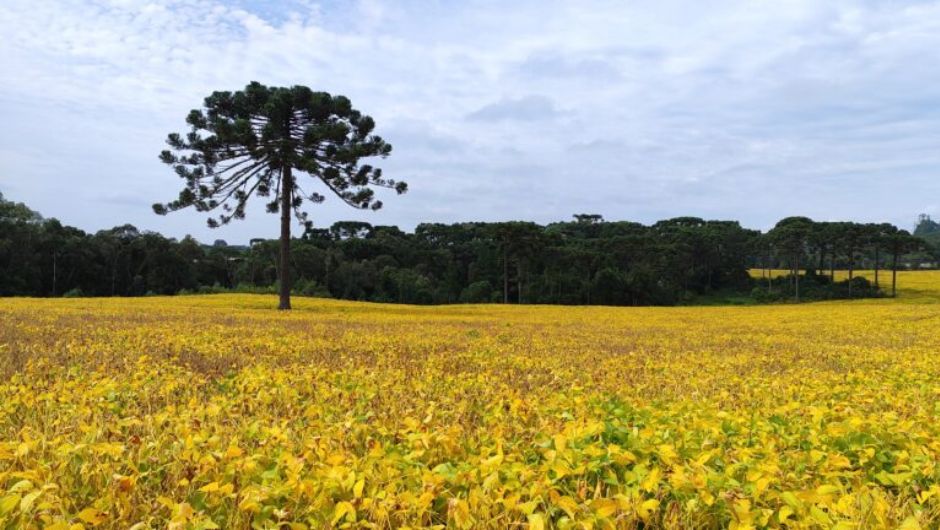
Estimates for the 2026/27 summer crop in Santa Catarina were released today (September 29th) by the Center for Socioeconomics and Agricultural Planning of Epagri (Epagri/Cepa) and point to a cycle marked by the impacts of El Niño. According to the projections, climatic conditions and excess moisture should delay planting, favor diseases, and reduce the windows for management and harvesting, affecting productivity.
According to Henrique Oldoni, a Socioeconomic and Rural Development analyst at Epagri/Cepa, the current scenario demands crop planning, "which involves choosing the crop, the cultivar, the technological level, and the planting dates and cultural practices, in addition to paying close attention to soil conservation practices to reduce losses and damages."
Meteorologist Marilene de Lima explains that El Niño is already in place and is predicted to reach very strong intensity during the spring and early summer. As a result, Santa Catarina is expected to experience above-average rainfall, with totals potentially reaching three times the expected amount in October and November.
"It is important for rural producers to follow the forecasts released by official bodies, especially during periods when climatic phenomena have the greatest influence on agricultural activities," emphasizes Marilene.
Below are the agricultural data estimates for the 2026/27 summer crop season in Santa Catarina, including rice, soybeans, grain corn, silage corn, beans, apples, bananas, and tobacco. The analyses were produced by the Socioeconomic and Rural Development analysts at Epagri/Cepa.
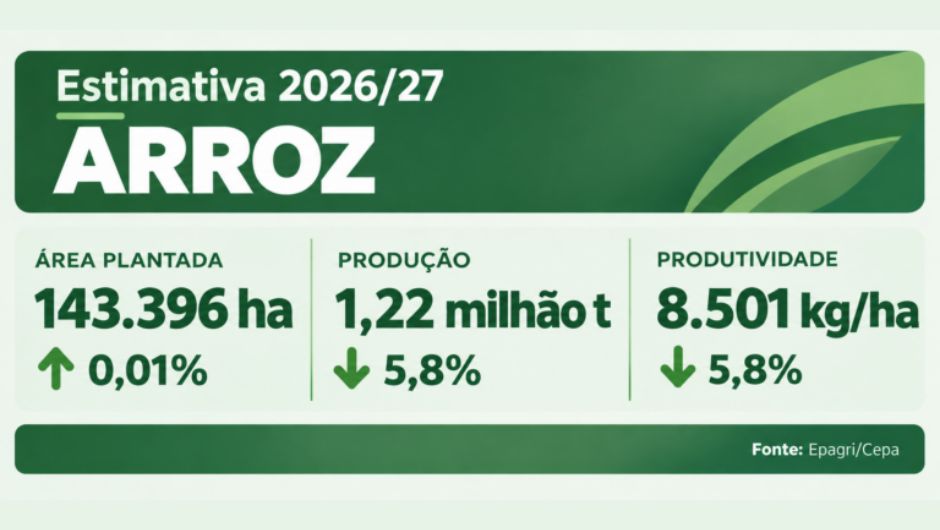
In the rice harvest, the planted area in Santa Catarina is expected to remain practically stable, estimated at 143.396 hectares, a 0,01% increase compared to the previous season. The average state productivity is projected at 8.501 kg/ha, a 5,8% reduction, while production is expected to reach 1,22 million tons, also with an estimated decrease of 5,8%. The main producing regions are Araranguá, with 501,97 tons, followed by Criciúma (185,23 tons), Joinville (143,61 tons), Tubarão (122,52 tons), and Rio do Sul (103,59 tons). Araranguá concentrates 40,8% of the cultivated area, followed by Criciúma (15,3%), Joinville (12,1%), Tubarão (11%), and Rio do Sul (7%).
In the market, the average partial price of rice in September in Santa Catarina is R$ 70,18 per 50 kg sack, a value 7,85% higher than that recorded in August. The evolution of the harvest and prices will be monitored throughout the cycle, considering weather conditions and the progress of the agricultural calendar.
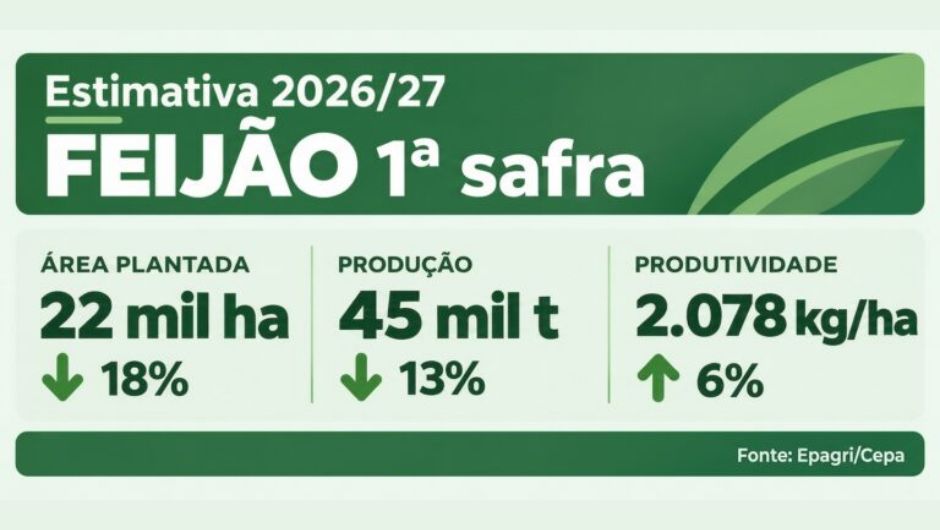
For the first bean crop of 2026/27, the cultivated area in Santa Catarina is expected to total approximately 22 hectares, a reduction of almost 18% compared to the previous cycle. Despite the lower planting intention, the average productivity is estimated at 2.078 kg/ha, an increase of more than 6% year-on-year. With the reduction in area, the state's production is initially projected at 45 tons, a volume 13% lower than that recorded in the 2025/26 crop.
The main producing regions concentrate a significant portion of the cultivated area. Canoinhas accounts for 26,7%, followed by Xanxerê, with 18,8%, and Campos de Lages, with 14,6%. The reduction in planted area is currently the main factor for the projected drop in state production, while the expectation of higher productivity helps to mitigate some of this reduction.
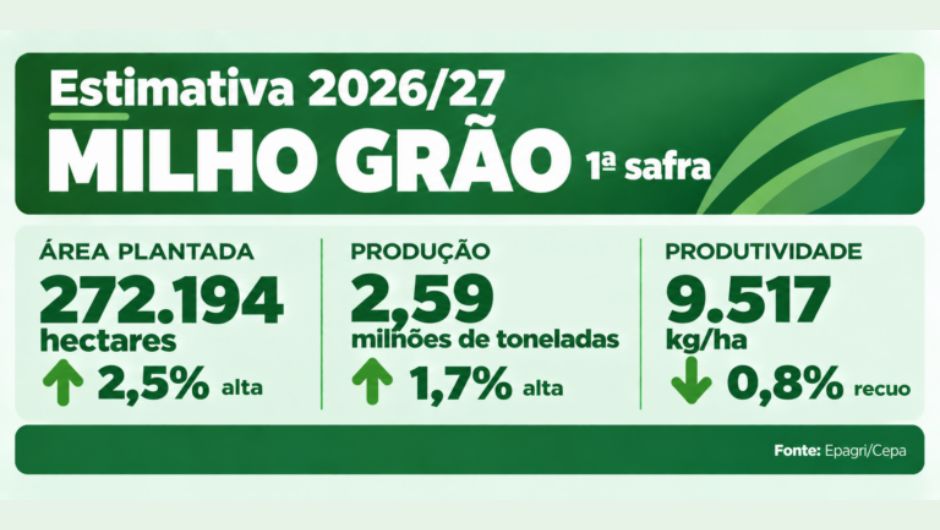
For the first 2026/27 corn grain crop, Santa Catarina is expected to expand its planted area by 2,5%, reaching 272.194 hectares, 6,66 hectares more than in the previous cycle. Average productivity is estimated at 9.517 kg/ha, a decrease of 0,8%, while production should reach 2,59 million tons, an increase of 1,7%. The increase in cultivated area contributes to increased production and compensates for the slight expected reduction in yield, in a scenario of climatic uncertainties associated with the forecast of a strong El Niño. The Joaçaba Microregion concentrates the largest share of the area, with 18,8%, followed by Chapecó (14,9%) and Xanxerê (9,6%).
The agricultural calendar indicates an early planting of corn in Santa Catarina, with 45% of the area destined for cultivation already planted in the state, especially in the microregions of Chapecó and Xanxerê. Producers took advantage of the brief windows of dry weather recorded in the second half of August and the beginning of September to advance with sowing.
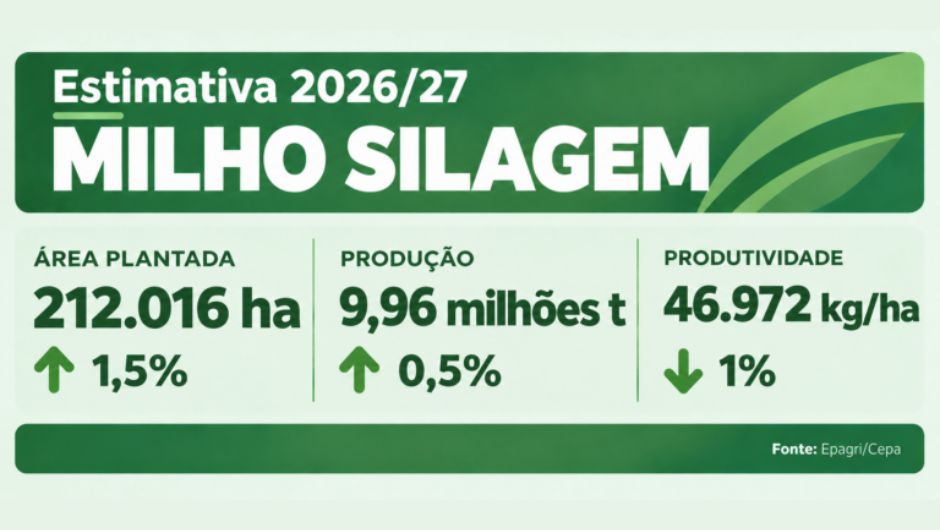
In the 2026/27 corn silage crop season, Santa Catarina is expected to increase the area dedicated to cultivation by 1,5%, reaching 212.016 hectares, approximately 3,2 hectares more than in the previous season. Average productivity is estimated at 46.972 kg/ha of silage, a 1% reduction, while state production is expected to reach 9,96 million tons, a 0,5% increase. The increase in planted area is partly associated with higher demand for corn silage among dairy farmers and the expectation of less impact from a potential El Niño on the crop compared to soybeans.
The Chapecó microregion concentrates the largest share of the area planned for silage corn, with 21,3%, followed by São Miguel do Oeste, with 19%, and Concórdia, with 12,8%. Even with the expectation of reduced productivity, the expansion of the cultivated area should result in a slight increase in state production. In the state, 61% of the area destined for silage corn is already planted, which represents an anticipation of planting by producers.
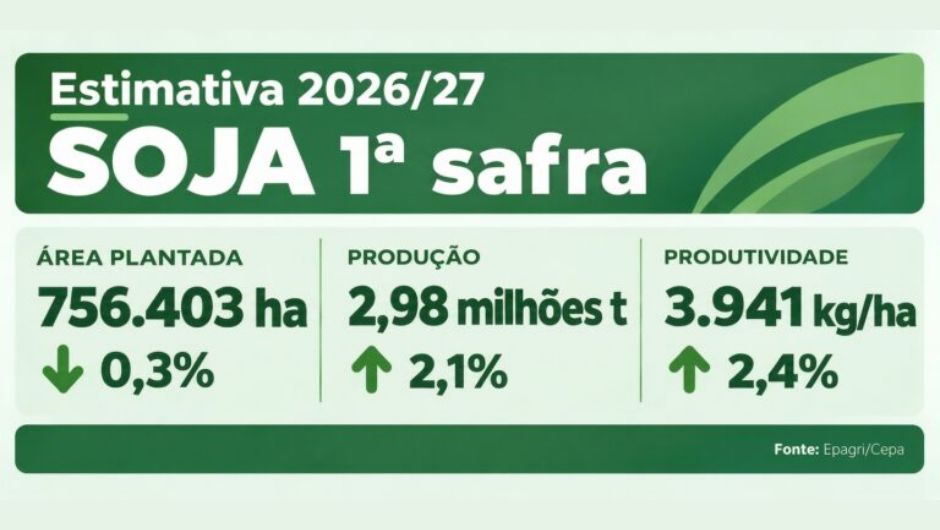
In the first soybean crop of 2026/27, Santa Catarina is expected to register a planted area of 756.403 hectares, a reduction of 0,3%, or about 2,6 hectares less than in the previous crop. Average productivity, on the other hand, is estimated at 3.941 kg/ha, a growth of 2,4%. With this, state production should reach 2,98 million tons, an increase of 2,1%, equivalent to 60,4 tons more than in the previous cycle. The slight reduction in area is related to producers' concerns about climate risks in light of predictions of the El Niño phenomenon.
The Canoinhas microregion concentrates the largest share of the area planned for soybean cultivation, with 22%, followed by Xanxerê, with 17,4%, and Curitibanos, with 17,2%. Even with the slight reduction in planted area, the expectation of increased productivity should contribute to the growth of state production in the 2026/27 harvest.
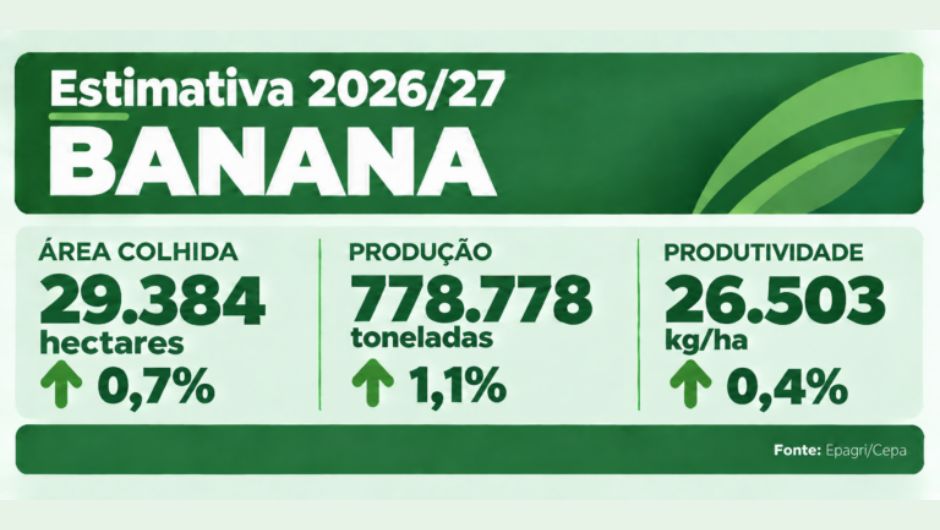
For the 2026/27 harvest, Santa Catarina estimates 29.384 hectares of harvested banana area, a 0,7% increase compared to the previous harvest. Average productivity is expected to grow by 0,4%, from 26.411 to 26.503 kg/ha, with notable increases in the microregions of São Bento do Sul (32.441 kg/ha), Blumenau (30.797 kg/ha), and Itajaí (30.472 kg/ha).
The state's production is estimated at 778.778 tons, a 1,1% increase compared to the 770.648 tons of the 2025/26 harvest. Joinville concentrates the largest share of production, with 365.044 tons, followed by Blumenau (159.712 t), Itajaí (121.280 t), and Araranguá (92.999 t). The microregion of Joinville also leads in harvested area, with 12.445 hectares, equivalent to 42,4% of the state total. The estimates do not consider possible adverse effects resulting from climatic and meteorological conditions.
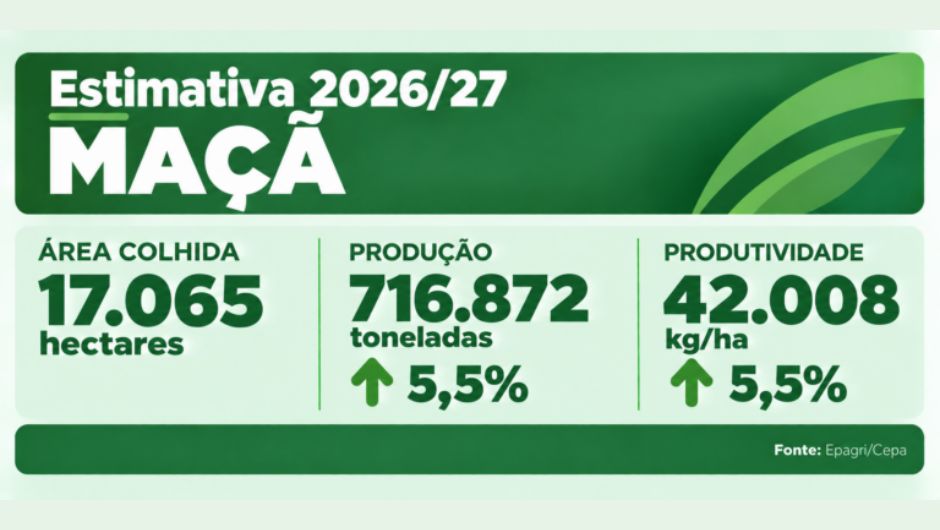
For the 2026/27 harvest, Santa Catarina estimates stability in the harvested apple area, which should remain at 17.065 hectares. The Campos de Lages region concentrates the largest part of the cultivated area, with 13.587 hectares, equivalent to 79,6% of the state total, followed by Joaçaba (15,0%) and Curitibanos (5,4%). The average state productivity should grow by 5,5%, increasing from 39.809 to 42.008 kg/ha, with particular emphasis on the microregion of Joaçaba, which shows an expected increase of 30,1%.
The apple production in Santa Catarina is estimated at 716.872 tons, a 5,5% increase compared to the 679.334 tons of the 2025/26 harvest. The Campos de Lages region accounts for the largest share, with 590.029 tons, followed by Joaçaba with 91.389 tons, and Curitibanos with 35.454 tons. The estimate considers current conditions and does not take into account possible adverse effects caused by climatic and meteorological conditions.
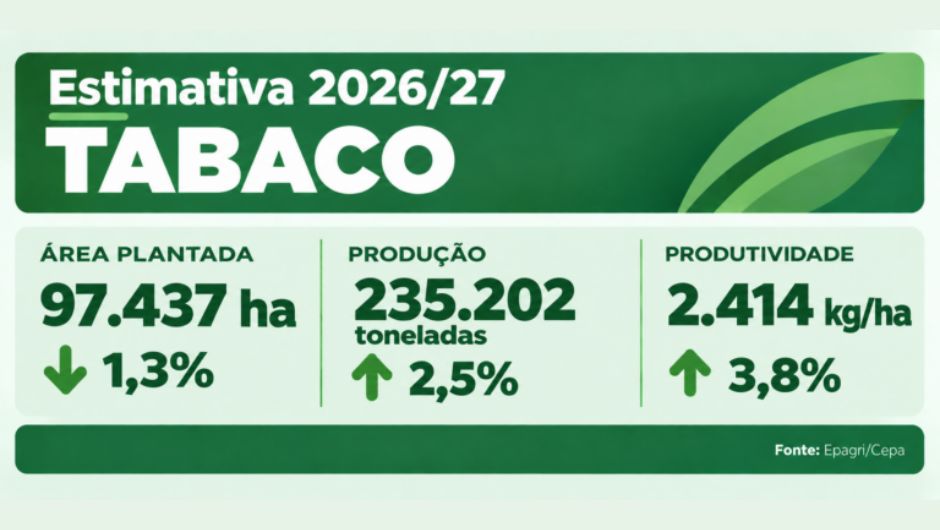
The outlook for the 2026/27 tobacco crop calls for caution, with the planted area estimated at 97.437 hectares, a 1,33% reduction compared to the previous cycle. In many regions, the area is expected to remain close to that of the previous crop, while instability in other agricultural activities contributes to maintaining interest in the crop. There are also reports of early planting in some regions, increasing the exposure of crops to frost, intense cold, excess moisture, and difficulties in initial development.
The average state productivity is estimated at 2.414 kg/ha, an increase of 3,83%, while production should reach 235.202 tons, a growth of 2,46%. However, the results still depend on weather conditions throughout the cycle. Canoinhas concentrates 40,57% of the estimated area, followed by Ituporanga (15,07%) and Rio do Sul (14,42%). The planted area estimate will be updated in November, when Afubra releases the crop data.
Receive the latest agriculture news by email



Receive the latest agriculture news by email