Drill causes damage to crops and sugarcane processing
Pest, which causes losses of R$8 billion per year, can be controlled with genetically modified varieties from CTC
05.07.2024 | 14:55 (UTC -3)
Alessandra Carvalho
Photo: disclosure/CTC
A study carried out by professor Márcia Mutton, from Unesp (Universidade Estadual Paulista, Jaboticabal campus), in partnership with the Sugarcane Technology Center (CTC), brought new data on the impact of the sugarcane borer on sugarcane production, of ethanol and sugar.
For every 1% of borer infestation there is a reduction of the order of 0,96 to 2,06% in ethanol yield per hectare and 0,43 to 1,97% in sugar production per hectare, depending on the variety evaluated , reveals the study.
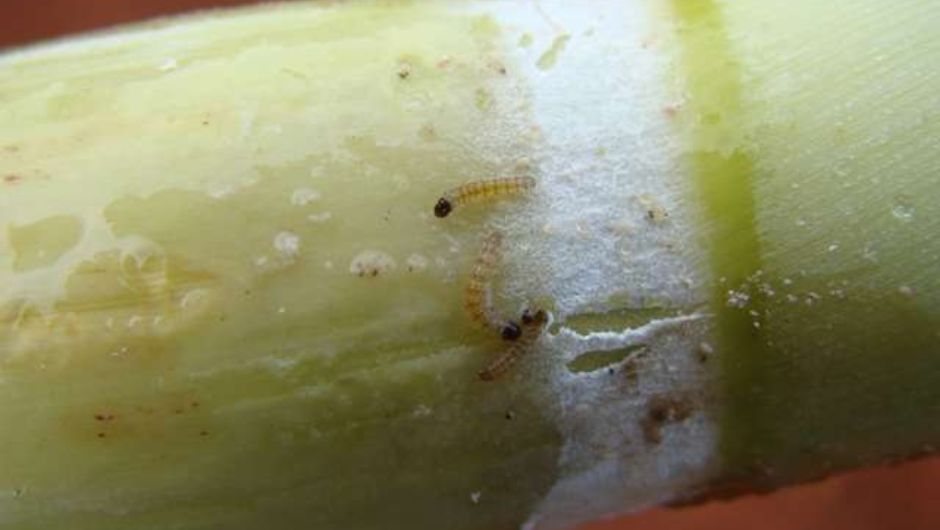
Present in all sugarcane growing regions of Brazil, the sugarcane borer (Diatraea saccharalis) causes losses estimated at R$8 billion/year, considering damage to crops and the industrial process.
These results confirm the high losses that this pest causes in industrial processing and which could be avoided if the sector was able to harvest a sugarcane field with a lower level of damage”, says the Unesp professor.
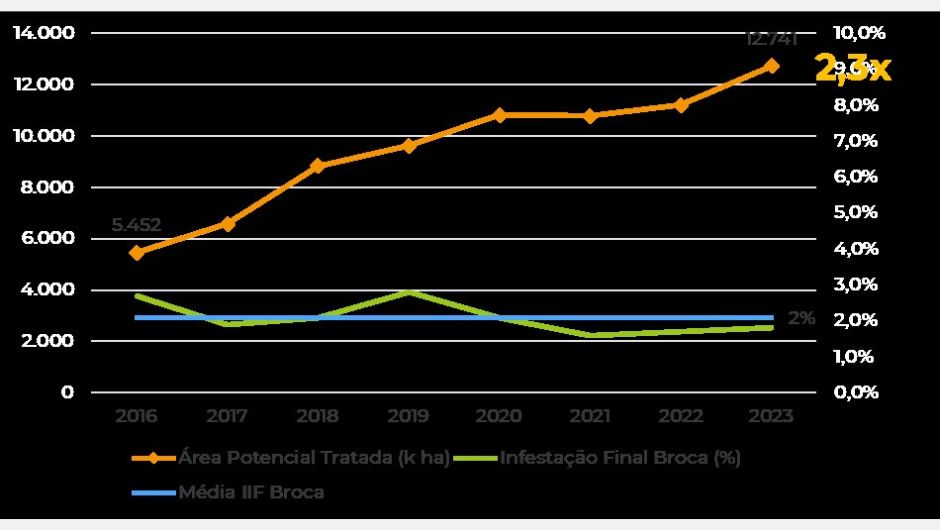
According to information from Kynetec (2024), an agricultural market research company, the sector's effort to control this pest has more than doubled over the last few years, due to the increase in the area treated and the greater number of applications, which rose from 1,2, 1,9 applications for XNUMX applications on average.
The Borer Final Infestation Intensity – an index that measures the residual infestation of the pest in sugarcane fields after its chemical and/or biological control – remains almost unchanged, according to information from Benchmarking CTC.
This demonstrates the low efficiency of traditional control methods, which depend, among other factors, on ideal climatic conditions and the correct moment of application, in order to function satisfactorily.
New sugarcane varieties
Since 2017, CTC has offered genetically modified (BT) sugarcane varieties, which are the most effective solution to mitigating this problem.
“Pest control using these varieties is greater than 95%, which represents a big difference compared to conventional control methods, delivering borer-free sugarcane”, says Luiz Antonio Dias Paes, commercial director at CTC.
In this way, the plant presents a higher ethanol yield in the industry and higher sugar productivity in the industrial process, as it reduces the concentration of ash, starch and total phenolic compounds, increasing the quality of the sugar produced (low Icumsa Color colors).
BT sugarcane is present in more than 180 users, including mills and suppliers, which together are responsible for around 60% of national crushing.
“Advances in the use and expansion of cultivation areas with biotechnology are fundamental tools for increasing the productivity and competitiveness of the sugar-energy sector, always focusing on the sustainability and profitability of the sector”, concludes Paes.