






Corteva sues Inari Agriculture for alleged patent infringement
The lawsuit was filed in court for the District of Delaware; company did not inform which patents were in dispute
27.09.2023 | 18:35 (UTC -3)
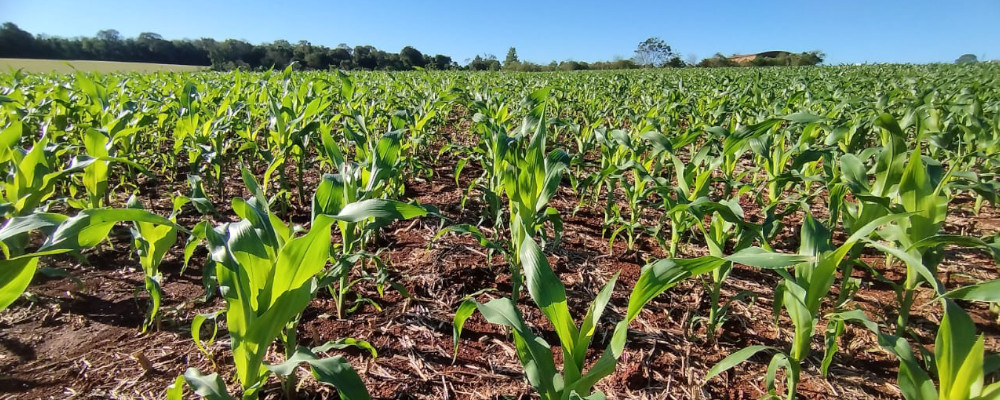
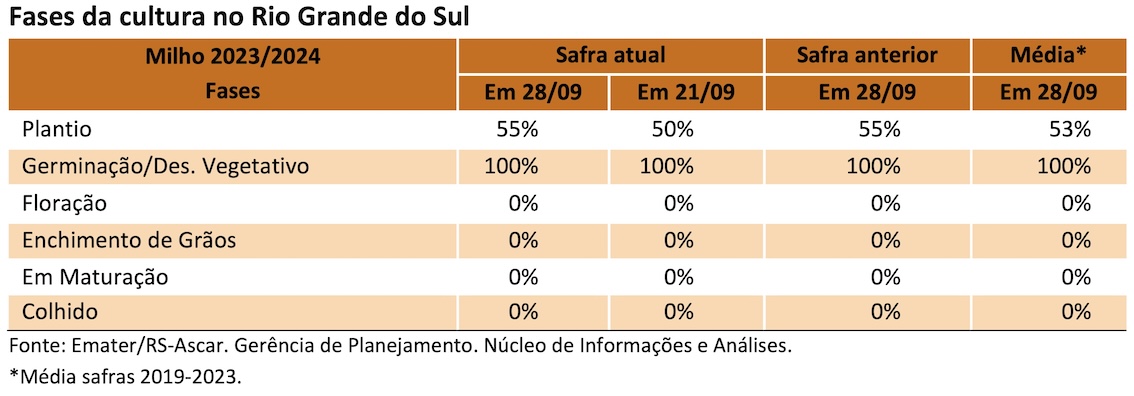
The area sown with corn in Rio Grande do Sul reached 55% of the cultivation projection for the 2023-24 harvest, which is 817.521 hectares. The crops are predominantly in the germination and vegetative development phase. According to Emater-RS, the West, Northwest and North regions of the state are close to completing sowing. However, in the South, Central and Northeast regions, planting progress was hampered by rain, which caused waterlogging and excess moisture in the soil. These conditions made the transit of agricultural machinery unfeasible and, in some cases, negatively affected seed germination.
In the administrative region of Emater-RS of Ijuí, established corn crops show excellent development, with rapid emission of new leaves and vigorous stalk growth. There was an increase in the growth rate due to warmer days. Adequate soil moisture allowed producers to distribute nitrogen fertilizer in top dressing. Most producers choose to divide the recommended dose in coverage twice: the first when the corn is at the V3 stage, and the second at V6. There was a decrease in the incidence of corn leafhoppers, confirmed by the reduction in the capture of the insect in monitoring traps. The association of conventional control with biological products showed better results.
In corn for silage, it is estimated that around 30% of the area intended for cutting whole plants for silage has already been planted. The evolution varies between regions, being more significant in the North, close to 90%, and less significant in the Northeast, just 3%. In the administrative regions of Emater-RS of Erechim and Frederico Westphalen, crops have an adequate stand and good development, due to the better climatic conditions at their initial establishment. For the 2023-24 harvest, a cultivated area of 364.291 hectares is planned, with an estimated productivity of 39.088 kg/ha.
Regarding the rice harvest, the Rio-Grandense Rice Institute (Irga) estimates cultivation of 902.425 hectares in RS and Emater-RS projects productivity of 8.359 kg/ha. The culture is in the initial stage of implementation. However, in most regions of the state, planting was made impossible by continuous rainfall and the consequent flooding of the implantation areas. In the administrative region of Emater-RS of Santa Maria, only the mud damaged by the floods of the region's rivers were reassembled. In Santa Rosa, soil moisture remains excessive in the sowing areas, making it difficult for machines and equipment to access both the fields and the access roads.
For 1st harvest beans, a projected cultivation area of 29.053 hectares. The productivity estimate is 1.775 kg/ha. The culture is being implemented. However, excess rainfall limited the progress of sowing only in regions where the volume of rainfall was lower. In the Ijuí region, planting reached 90%. Cultivation is distributed in small areas, which has allowed substantial progress in the sowing of the crop. In crops that have already emerged, the plants display widely developed leaves and do not show any symptoms of disease or damage caused by the cold.
Receive the latest agriculture news by email



Receive the latest agriculture news by email


