The tobacco industry could lose US$100 million due to US tariffs.
SindiTabaco and Abifumo are asking the government to include the product on the list of exceptions.
24.07.2026 | 17:28 (UTC -3)
Favorable weather between July 1st and 21st boosted the development of winter crops and the harvesting of cotton and second-crop corn in most of Brazil. The Agricultural Monitoring Bulletin (BMA), released by the National Supply Company (Conab) last week, shows that vegetation levels remain above the historical average and those recorded in the previous cycle. However, this positive scenario contrasts with the warning in Rio Grande do Sul, where excessive rainfall threatens productivity.
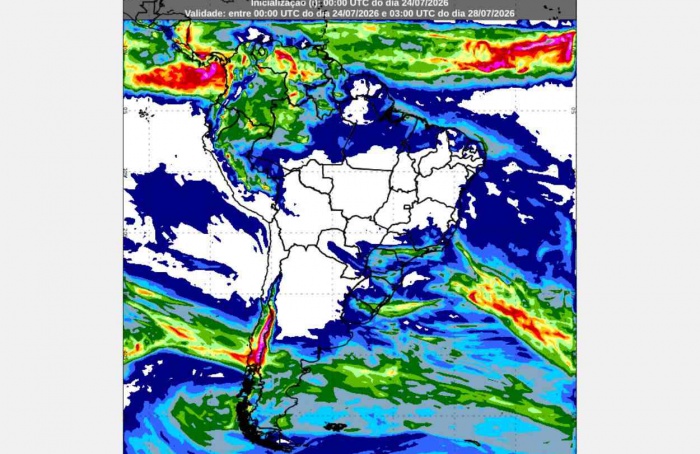
According to the survey, dry weather prevailed in most of the country, while the heaviest rainfall was concentrated in the North and South regions, as well as the eastern coast of the Northeast. In Amazonas and Roraima, the good volume of water favored the growth of soybeans and third-crop corn. In Pará, Rondônia, and Tocantins, the dry weather helped in the ripening and harvesting of cotton and second-crop corn.
In the Southern region, the cold and occasional frosts benefited the start of the wheat growing season, while good soil moisture favored the second-crop corn in Paraná. In Rio Grande do Sul, sunshine and dry weather ensured an ideal environment for wheat. However, heavy rains at the end of July raised an alert for plant damage and the risk of leaching – a process in which excess water “washes” nutrients from the soil and reduces soil fertility. As crop health indicators only reflect the situation up to July 20th, the impacts of these recent storms are not yet reflected in the current data.
In the Northeast, the drought harmed soil water storage in the Sealba region (Sergipe, Alagoas, and northeastern Bahia), affecting bean and third-crop corn plantations. Dry weather in Matopiba (Maranhão, Tocantins, Piauí, and Bahia) aided the maturation and harvesting of cotton and second-crop corn.
In the Central-West and Southeast regions, the stable weather, dry air, and cold temperatures helped with cotton maturation and the natural drying of the second corn crop. In southwestern Mato Grosso do Sul, the lack of water in the soil affected wheat crops during flowering and grain filling – phases in which the plant most needs moisture – which puts the cereal's productive potential in the state at risk.
Receive the latest agriculture news by email



Receive the latest agriculture news by email