




Lula signs environmental licensing law with 63 vetoes
Government says changes guarantee environmental protection without sacrificing legal certainty
08.08.2025 | 15:59 (UTC -3)

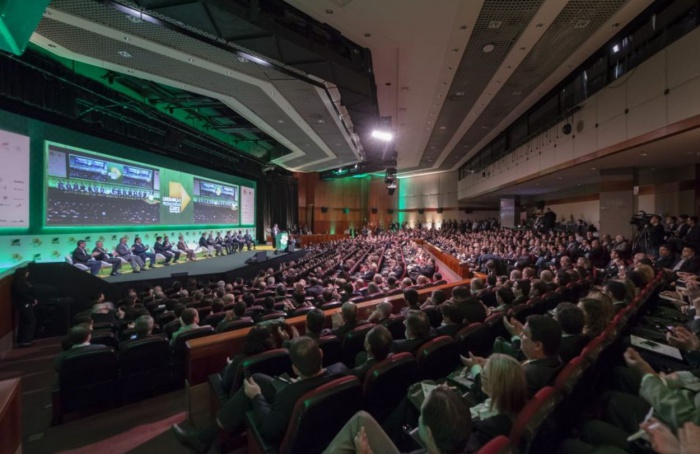
The importance of investments for the competitiveness of agriculture, the formation of strategic partnerships and greater institutional articulation were the central themes of the debaters on the panel “Food, Energy and Innovation”, during the 24th Brazilian Agribusiness Congress, held by the Brazilian Agribusiness Association (Abag), in partnership with B3 - the Brazilian stock exchange, which takes place this Monday (11/8), in São Paulo (SP).
According to Marcio Santos, CEO of Bayer Brazil, agriculture has been a very positive development, with continuous investment in innovation, which has enabled the country, for example, to have a productive and sustainable second harvest. "If the external scenario were resolved today, would we be prepared to serve the global market? Have we built it over these decades, and are we still maintaining it? These questions are fundamental because we have to believe we can maintain our growth trajectory," he explained.
For him, COP30 will be an opportunity and a milestone for repositioning the country. "This event can open avenues for dialogue with our current and new partners," he noted. He warned of internal obstacles to Brazil's competitiveness: "In my opinion, we lack the institutional environment to be more competitive. I offer a reflection on what we have already built over the last 50 years and how we will think about the coming years and this trajectory of agriculture."
Alfredo Miguel, Latam director at John Deere, highlighted the role of diplomacy, which must be present at all times, but focused on the reality and challenges to discuss solutions. On the other hand, the private sector will need to reorganize itself in terms of costs, supply chain, and exports to remain competitive.
"It's important that the government has a short- and medium-term plan to help us remain competitive together. Agriculture needs to lead Brazil in science, technology, and innovation to continue this growing expansion of the sector," Miguel stated.
Diversification is the foundation of resilience, according to Gilberto Tomazoni, Global CEO of JBS. "We recognize that the commodity cycle exists, and that geopolitical and economic problems come and go. Staying diversified through innovation is the key to keeping the company growing during difficult times. Based on this strategy, we've been able to reallocate investments," he explained.
Tomazoni defended the role of a foreign trade agency (trade) as a strategic instrument for the country, which could be the bridge to project Brazil, not only the product, but the way and the way of making and the tropical technology of Brazilian production."
During the panel moderated by journalist William Waack, Larissa Wachholz, Senior Fellow at the Brazilian Center for International Relations (Cebri), warned of China's growing discomfort with its dependence on exports from Brazil and the US. According to her, the Chinese are already actively seeking to diversify their suppliers.
Wachholz advocated for a more pragmatic and open approach from Brazil in international partnerships, without automatic alignments. "We need to consider our dependencies as a country—whether in fertilizers or other inputs—and benefit from the innovation and diversity of our partners, without favoring one or the other. We need to develop new markets and not sell cheap. We need to look at the world, understand its needs, and complement each other," he analyzed.
Receive the latest agriculture news by email



Receive the latest agriculture news by email