



Biodiesel could increase demand for soybeans in Mato Grosso do Sul.
A higher blend should boost investment and industry, according to Aprosoja-MS.
14.04.2026 | 17:12 (UTC -3)
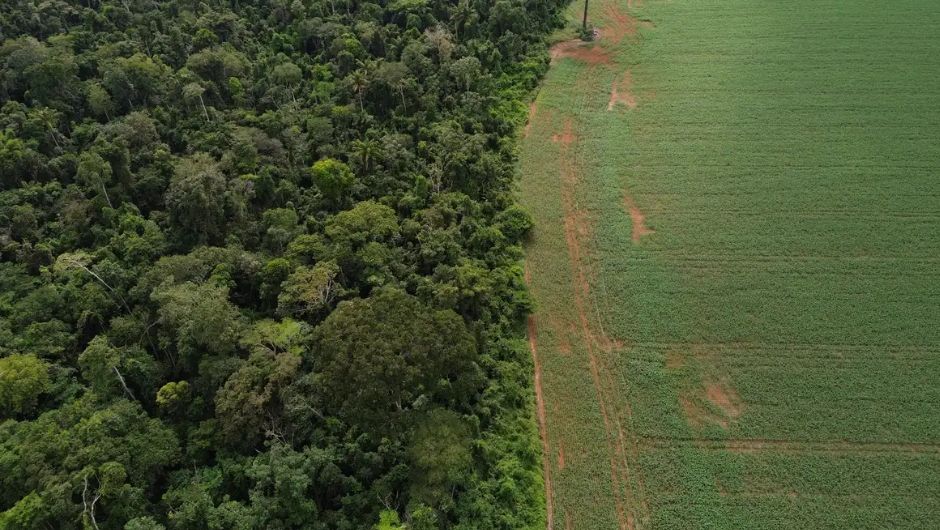
The Brazilian Confederation of Agriculture and Livestock (CNA) filed a lawsuit with the Supreme Federal Court (STF) this Wednesday (April 15th) to suspend resolutions from the National Monetary Council (CMN) that authorize the use of data from the Satellite Deforestation Monitoring Program (Prodes) in granting rural credit.
Resolutions No. 5.268/2025 and No. 5.193/2024 stipulate that financial institutions must begin using information from the system in credit analyses for properties with an area greater than four fiscal modules throughout the country, starting April 1st.
In practice, according to the CNA, the measure creates an additional verification step based on remote sensing that does not automatically distinguish between legal deforestation—authorized by environmental agencies—and illegal practices. The organization also points to risks of inconsistencies, such as overlapping areas between properties and polygons identified by the system.
In the lawsuit, the CNA argues that the regulations violate constitutional guarantees by presuming irregularities without ensuring the producers' right to a prior defense. "The regulations, under the mistaken pretext of environmental protection, disregard the presumption of innocence, due process, and the right to a full defense, culminating in the disregard for property rights," the organization argues.
The Confederation also states that the rules impose an advance penalty on the producer, by restricting access to credit before any justifications have been analyzed. According to the CNA, the model allows the producer to prove compliance only after suffering the effects of the restriction. "The halting of credit while the financial institution analyzes the documentation can make the harvest unviable," it emphasizes.
Another point raised is the possibility of the system identifying vegetation suppression that, in practice, occurred legally, which, according to the organization, cannot be automatically interpreted as an irregularity.
In its arguments presented to the Supreme Federal Court (STF), the CNA (National Confederation of Agriculture) argues that administrative regulations with a direct impact on property rights must fully respect fundamental guarantees. According to the organization, the lack of a clear deadline for analyzing justifications exacerbates the problem by prolonging credit restrictions.
The Confederation also warns of the economic impacts of the measure. In a scenario considered "delicate," with rising input costs, such as fertilizers, and falling commodity prices, restricting credit could compromise production. "Removing access to credit is, in practice, preventing the producer from producing," it states.
The action, an Argument of Non-Compliance with Fundamental Precept (ADPF) with a request for precautionary measures, was forwarded to Minister Gilmar Mendes.
Receive the latest agriculture news by email



Receive the latest agriculture news by email