Minister Tereza Cristina (Agriculture, Livestock and Supply) participated this Wednesday (1st) in the launch of Banco do Brasil's Harvest Plan, which will have R$103 billion made available to the sector. The minister recalled that Banco do Brasil is a historic and fundamental partner of the government in the Safra Plan. “I want to thank President Rubem Novaes for continuing this long and fruitful partnership between Banco do Brasil and Brazilian agriculture, vital for the country’s economic development.”
Highlighting the general numbers of the Safra Plan launched by the government, Tereza Cristina said that the resources will guarantee the continuity of production in the field and the food supply in the country during and after the new Coronavirus pandemic. “Hence the importance of more abundant credit with lower interest rates. I have no doubt that Brazilian agriculture will make a difference, generating jobs and foreign exchange for our country.” For the 2020/2021 harvest, which starts today, R$ 236,3 billion were allocated to support national agricultural production, an increase of R$13,5 billion in relation to the previous plan.
Tereza Cristina said that she hopes that producers will be able to take out credit easily. “Mapa held this conversation with many institutions so that this year could speed up. There were many details discussed during the preparation of this Crop Plan. I hope we can forward it faster, so that producers can better buy the inputs for their costing and those who want to invest also already do their planning in the various lines that have in the Crop Plan”.
The president of Banco do Brasil, Rubem Novaes, highlighted that rural producers have been essential for the country to be able to face the adversities of recent months. “We are very proud to support Brazilian agriculture and livestock, a sector that surpasses itself day by day, with each harvest, demonstrating strength and protagonism on the world stage. The strength of our rural producers is the pride of all of Brazil,” he said.
Novaes highlighted that, in the 2019/2020 harvest, BB invested a record volume of credit resources, reaching BRL 92,5 billion. “It is the biggest disbursement in the history of Banco do Brasil in a Crop Plan”, he said.
Safra Bank of Brazil Plan
Banco do Brasil will make R$103 billion available to the sector in the 2020/21 harvest, which starts today. Of this amount, R$10,3 billion will be allocated to agro-industries and R$92,7 billion to rural credit - R$64,6 billion will finance the corporate agriculture harvest, R$14,4 billion to medium producers and R$13,7 billion for family farming.
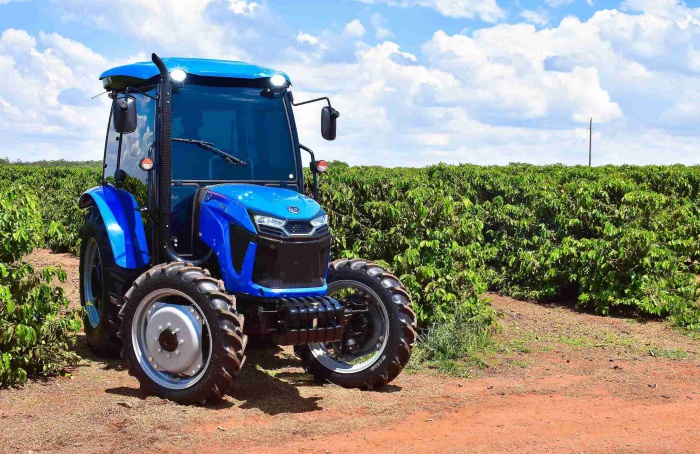
When presenting the numbers of BB's Crop Plan, the vice-president of Agribusiness and Government, João Rabelo, also announced that the Bank will allocate an increase of R$ 2,5 billion in its own resources this harvest to the Moderfrota Program, which enables the modernization of agricultural tractors and other equipment. “We thought that this program needed more resources, so we talked to Banco do Brasil, which committed to allocating more resources to this very successful line”, celebrated minister Tereza Cristina.
Banco do Brasil will operate with the rates announced in the Harvest Plan of the Ministry of Agriculture. Small rural producers, within the scope of the National Program for Strengthening Family Agriculture (Pronaf), rely on interest rates ranging from 2,75% and 4% per year for funding and marketing. For medium-sized rural producers linked to the National Support Program for Medium Rural Producers (Pronamp), the interest rates charged were reduced to 5% per year - compared to 6% in the previous harvest. For large producers, the interest rate will be 6% per year.
Rabelo highlighted that the Bank will continue investing in partnerships with rural producers. "This is our reason for being. This is how Banco do Brasil was created, we know the importance of rural producers for the country and for the Brazilian people”, he concluded.