American study indicates lower soybean production costs in Brazil
Research indicates lower total cost in the country, despite higher spending on fertilizers and pesticides
02.11.2026 | 16:26 (UTC -3)
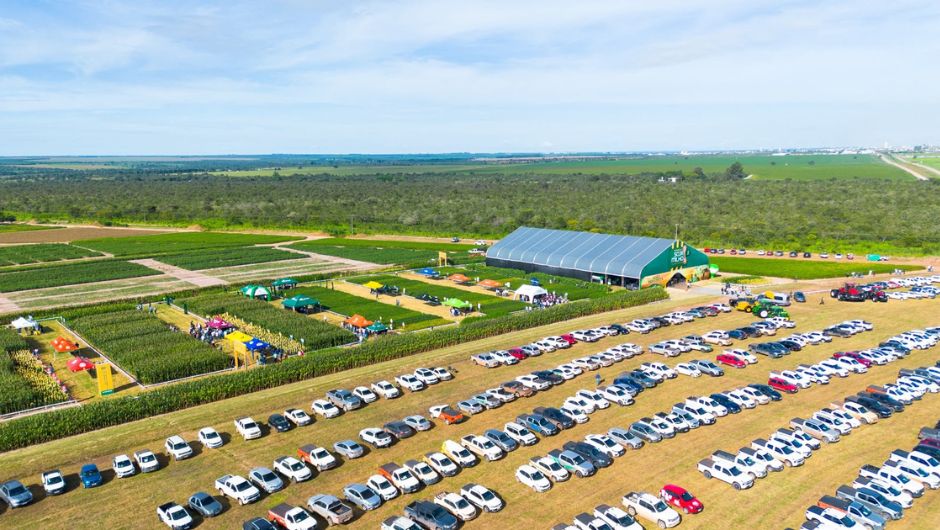
In a landmark year for its history, the Bahia Foundation is preparing to take a new step in the history of agricultural research in western Bahia. On February 27, 2027, the year in which the institution celebrates its 30th anniversary, the 29th edition of the Soybean, Corn and Alternative Crops Walkway will be held, with a proposal that expands the connection between scientific research, innovation and strategic decisions in the field.
With the theme "Research to decide. Science to evolve," Passarela 2027 was conceived to go beyond the traditional format of technical meetings. The proposal is to offer an experience that connects scientific knowledge, observation of results, and practical demonstrations, contributing to more informed decisions in the planning and management of rural properties.
The expectation is to bring together hundreds of participants, including rural producers, farm managers, and decision-makers, especially those involved in the production of soybeans, corn, and alternative crops. The goal is to provide a high-quality environment for knowledge exchange, exposure to new technologies, and closer ties between the various agents in agribusiness.
According to the president of the Bahia Foundation, rural producer Jarbas Bergamaschi, the 2027 edition represents an opportunity to connect the legacy built by the institution to the new demands of the sector.
“Celebrating 30 years means recognizing a history of contributing to the development of agriculture and, at the same time, committing to continuing to evolve. Passarela 2027 was born with this perspective: to bring research even closer to the producer, to transform knowledge into a tool for decision-making, and to create an environment where science, technology, and production go hand in hand,” says Bergamaschi.
The Passarela 2027 program will be organized into three complementary areas: Auditorium, Field, and Connection. Scheduled to take place from 7 am to 16 pm, the structure was designed to integrate scientific knowledge, practical demonstrations, and networking opportunities into a single experience.
The experimental field will be one of the highlights of the event. In this space, participants will be able to closely observe the results of research developed by the Bahia Foundation in different areas of knowledge, including crop science, plant pathology, nematology, and herbology, as well as the evaluation and adoption of soybean, sorghum, corn, and alternative crop cultivars.
The demonstrations will allow participants to observe the performance of the technologies under real field conditions, learn about research results, and validate alternatives applicable to the characteristics and challenges of agriculture in Western Bahia. The goal is to bring science closer to the reality of rural properties, offering practical information to guide cultivar choices, management strategies, and investment decisions.
In the Auditorium, participants will have access to strategic content for planning agricultural activity. The Connection space will be dedicated to fostering relationships between producers, companies, and suppliers of solutions for agribusiness.
“We want event participants to have a complete overview: to understand the technical fundamentals, observe the results in the field, and learn about the solutions available for their activity. Research gains even more value when it helps producers evaluate alternatives and make decisions with greater confidence,” emphasizes Daniel Holanda, executive operations director of the Bahia Foundation.
By integrating technical information, experimental results, and exposure to new technologies, Passarela aims to strengthen knowledge transfer and contribute to an increasingly efficient, competitive agriculture adapted to the conditions of western Bahia.
Receive the latest agriculture news by email



Receive the latest agriculture news by email