Inmet: weather forecast for Thursday (October 1st) and Friday (October 2nd)
A cold front is increasing instability in the Central-West and Southeast regions, with a risk of storms and hail.
30.09.2026 | 17:05 (UTC -3)
The US agtech company Ascribe Bioscience has begun its plan to nationalize its operations by establishing an industrial and logistics structure in Brazil. This move marks the practical execution phase of the US$12 million (R$61 million) global investment raised by the company — whose investors include the venture capital arms of Corteva (Corteva Catalyst) and Syngenta Group Ventures, as well as the Acre Venture Partners fund.
To make the operation viable and meet the demand already projected for the 2026/2027 harvest, the company has established partnerships with local formulators and distributors. In the business model adopted, the synthesis of the active ingredient remains in the United States, while the formulation, bottling, and commercial distribution stages are carried out in Brazilian territory.
Brazil's selection to debut the technology reflects the country's leading role as a global strategic platform for validating and scaling up bio-inputs.
"Brazil has ceased to be merely a consumer market and has become a global validation platform where new agribusiness technologies need to prove their economic and operational value," says Gabriel Wilmoth, Chief Operating Officer (COO) of Ascribe. "The launch of Phytalix brings to the Brazilian farmer a powerful and sustainable new tool to increase plant defense against the main diseases of soybeans and corn, inserting this new class of technology into the routine machinery and logistics that the producer is already accustomed to."
Ascribe's entry into the Brazilian market follows the completion of the joint regulatory approval cycle by the Ministry of Agriculture and Livestock (Mapa), Anvisa, and Ibama, which culminated in the commercial registration of Phytalix.
Unlike traditional chemical and microbiological pesticides that directly combat pathogens, this technology acts preventively. The input uses an ascaroside—a compound from the soil microbiome synthesized in the laboratory—capable of inducing metabolic pathways and preparing the crop's immune system for an immediate and efficient response. The actual activation of these barriers only occurs when the plant detects the presence of the invader, preventing unnecessary energy expenditure and protecting the crop against severe economic damage.
Due to its unique molecular mechanism, Phytalix has received its own resistance classification from FRAC (Fungicide Resistance Action Committee). This seal consolidates the product as a novel molecule, aiding integrated pest management and rotation of mechanisms of action in the field.
The decision to invest in the local ecosystem was backed by a rigorous five-year validation program: more than 450 field trials were conducted in strategic regions such as Mato Grosso, Mato Grosso do Sul, Paraná, Rio Grande do Sul, São Paulo, Bahia, Goiás, and Minas Gerais. The tests proved the technology's effectiveness in reducing high-impact diseases such as brown spot, target spot, and Asian soybean rust, as well as white spot and bipolaris leaf spot in corn. Data indicates a significant productivity gain that will be confirmed by farmers in this 26/27 harvest, with positive results also observed in rice, coffee, and cotton crops.
One of the key differentiators of the technology to attract global investors is overcoming the historical logistical bottlenecks of biological products. The asset offers shelf stability, resistance to temperature variations (heat and cold) and UV radiation, eliminating the need for refrigerated transport and integrating with fleets and machinery already used on agricultural properties.
“Phytalix is the result of global science independently attested by renowned researchers in Brazil and worldwide. Its versatility allows for direct integration into resistance management, reducing phytotoxicity and enhancing phytosanitary control with each application,” highlights Edison Hidalgo, Research and Development Manager at Ascribe in Brazil. “The investment thesis that attracts international funds is the ability to combine advanced science with simple and safe operational application for producers, rural workers, consumers, pollinators, and soil biology.”
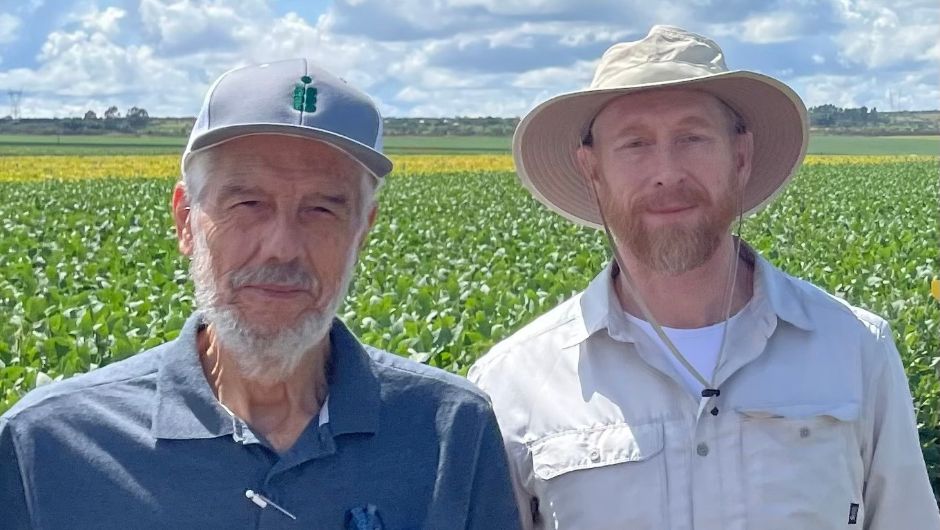
Founded in 2017 based on research developed at the Boyce Thompson Institute, Cornell University (USA), by scientists Frank Schroeder and Jay Farmer, Ascribe is now structuring its commercial and technical team in São Paulo to support the growth of its operations in Latin America.
Receive the latest agriculture news by email



Receive the latest agriculture news by email