Research identifies genes linked to Spodoptera exigua's tolerance to insecticides
Study identifies three genes associated with reduced susceptibility to cyantraniliprole and chlorantraniliprole.
01.11.2026 | 09:36 (UTC -3)
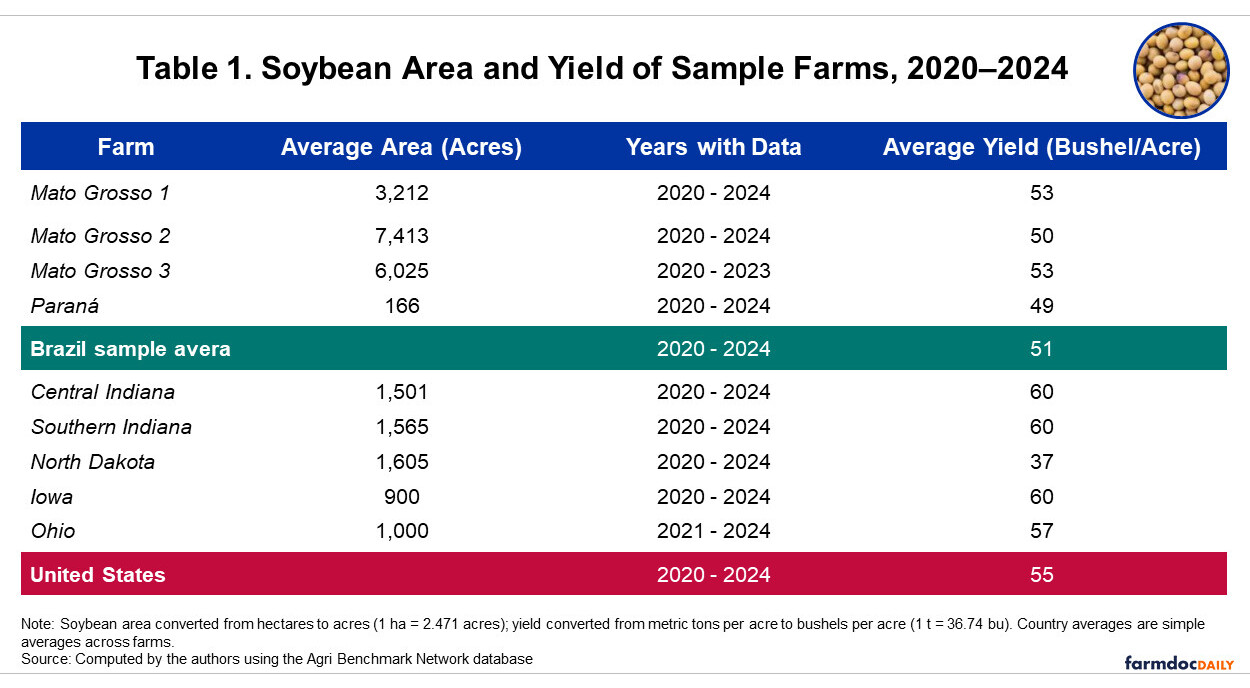
The cost of soybean production in Brazil was 32,5% lower than that recorded in the United States between 2020 and 2024. Brazilian farmers spent an average of US$416 per acre, compared to US$616 in the United States. The difference stems mainly from land costs. In contrast, Brazilian producers faced higher expenses with fertilizers and pesticides.
The survey, published in the University of Illinois' farmdoc daily, analyzed nine representative properties. Four are located in Brazil, three in Mato Grosso and one in Paraná. The other five are in the United States: two in Indiana and one in each of the states of Iowa, North Dakota, and Ohio. The research used data from the Agri Benchmark network. In one of the properties in Mato Grosso and in the one in Ohio, the data covers four of the five years analyzed.
The study divides costs into three groups: direct, operational, and indirect. Direct costs, which include seeds, fertilizers, and pesticides, reached US$218 per acre in Brazil and US$200 in the United States. Indirect expenses, which include land, facilities, and other costs, totaled US$97 and US$251 per acre, respectively. Operational costs complete the calculation and include machinery, labor, fuel, and outsourced services.
Fertilizers represented a significant difference. Brazilian farmers spent US$85 per acre, compared to US$57 for Americans. The need for soil correction and dependence on imports explain part of the difference. Brazil imports approximately 72% of its phosphate fertilizers and 96% of its potassium fertilizers.
With pesticides, expenses reached US$81 per acre in Brazil and US$56 in the United States. The greater pressure from insects and diseases in tropical regions contributed to higher Brazilian expenses. The comparison has a caveat: the American properties in the sample only recorded expenses with herbicides. In the United States, about one in five soybean areas receives fungicide, and a similar proportion receives insecticide.
The seeds showed the opposite behavior. American producers spent US$66 per acre, compared to US$43 for Brazilians. The study attributes the difference, among other factors, to the greater number of genetic traits combined in the seeds used in the United States. Furthermore, Brazil produces its own seeds, which reduces exposure to import prices quoted in dollars. Brazilian farmers, especially smaller ones, can also store seeds for replanting, paying royalties on patented technologies. In the United States, this practice is prohibited for patented transgenic seeds.
Between 2020 and 2024, the cost of seeds in Brazil increased from US$27 to US$58 per acre. In the United States, it rose from US$62 to US$70.
In 2023, when input prices peaked in Brazil, the difference in total production costs between the countries fell to US$71 per acre. In other years, the Brazilian advantage exceeded US$200 per acre.
The work is authored by Julio Bellodi Cortarelli and Grant Gardner, from the University of Kentucky, and Joana Colussi, from Purdue University.
Receive the latest agriculture news by email



Receive the latest agriculture news by email