Inmet: weather forecast between February 16th and March 23nd.
A frontal system is expected to cause instability in the South between Tuesday and Thursday.
16.03.2026 | 16:13 (UTC -3)
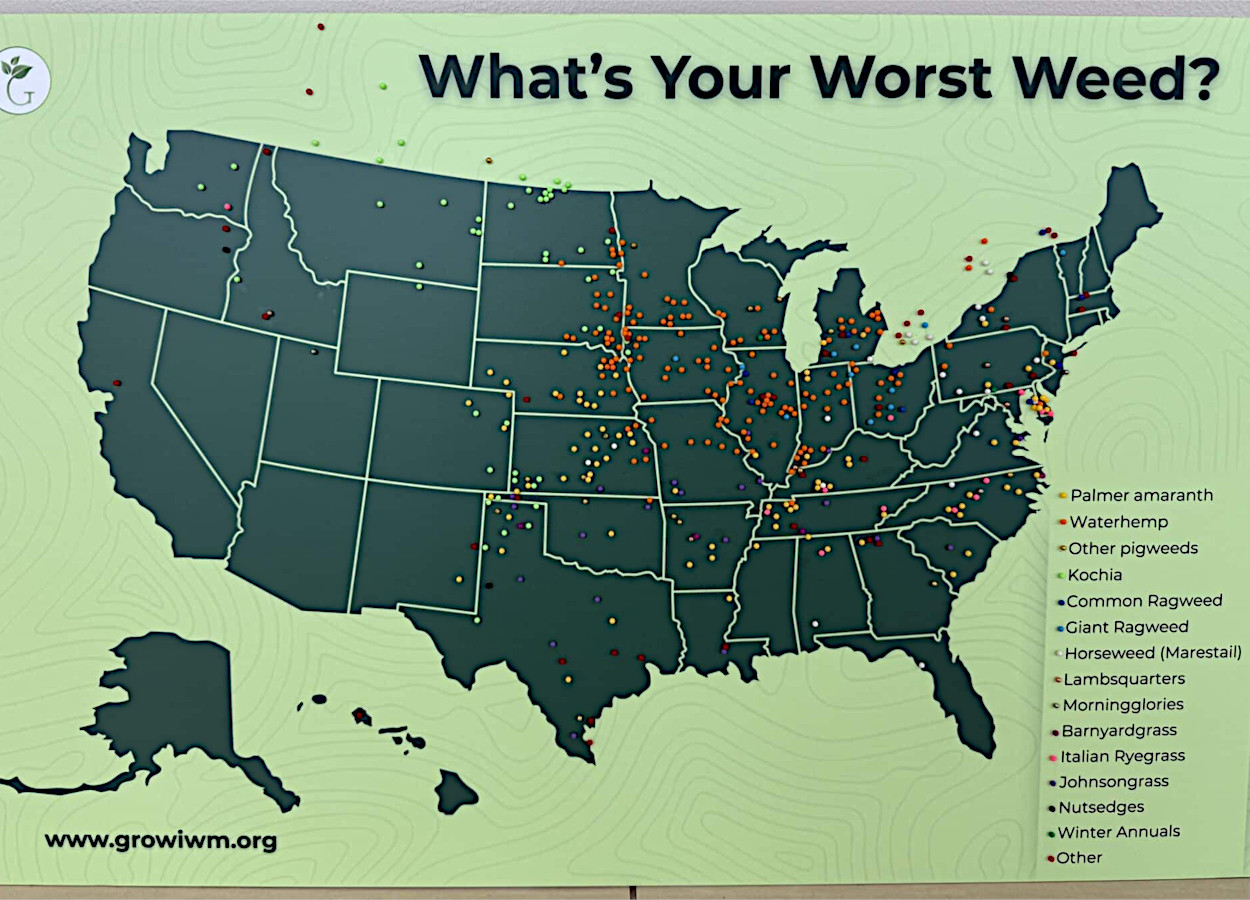
The plant Amaranthus tuberculatus It topped the ranking of worst weed during the Commodity Classic 2026 in San Antonio, Texas. The selection gathered votes from nearly 430 producers from the United States and Canada.
The result emerged on the first day. Producers from the Midwest marked the interactive map with the highest number of indications for the species. In the end, Amaranthus tuberculatus He garnered 146 votes and led in states such as Indiana, Illinois, Iowa, Michigan, Minnesota, Missouri, Ohio, South Dakota, and Wisconsin.
Amaranthus palmeri It came in second place, with 83 votes. The species showed the widest geographic distribution and led in states in the South, Southeast, and parts of the Midwest. kochia scoparia He came in third place, with 49 votes, concentrated in the Great Plains and Western regions.
The data follows a similar trend to the 2025 survey by the Weed Science Society of America. In the previous survey, A. palmeri, K. scoparia e A. tuberculatus They occupied the second, third, and fourth positions.
The final map compiled 18 species identified as major problems. Illinois, for example, had seven different species among the most cited. This data indicates a diversity of pressure and a need for comprehensive management.
The "other" category came in fourth place. It included species such as Sicyos angulatus, senna obtusifolia, Abutilon theophrasti e cirsium arvense. Sorghum halepense It ranked fifth, with distribution from Texas to South Carolina.
Conyza canadensis It occurred frequently in the Northeast and parts of the Midwest. Annual ryegrass Its presence was concentrated in the Southeast and Mid-Atlantic. Species of the genus Ambrosia predominated in the Great Lakes region.
The survey also indicated a lower presence of Chenopodium albumThe species led the WSSA ranking in 2025, but came in 11th place at the event, with six votes.
Receive the latest agriculture news by email


Receive the latest agriculture news by email