American study indicates lower soybean production costs in Brazil
Research indicates lower total cost in the country, despite higher spending on fertilizers and pesticides
02.11.2026 | 16:26 (UTC -3)

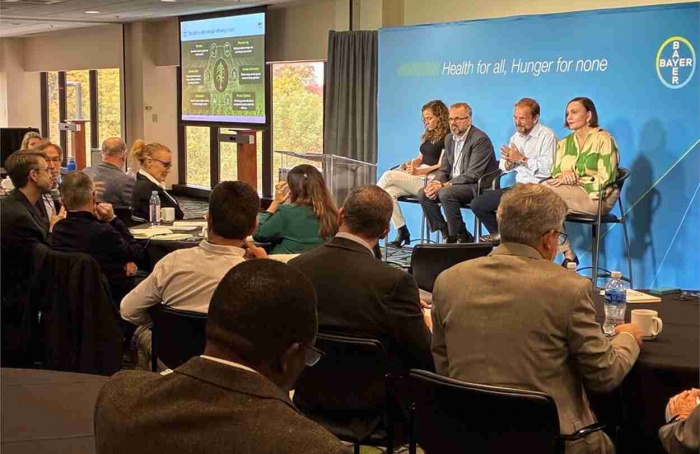
Weed resistance was the focus of Insight Herbicides, a meeting promoted by Adama in Foz do Iguaçu (PR). Researchers from Embrapa Soja, IMAmt, and Fundação ABC discussed combinations of mechanisms of action and formulations for management in the coming harvests.
Repeated use of herbicides with the same mechanism favors the selection of resistant plants. Among the concerns are goosegrass, resistant ryegrass, and other difficult-to-control grasses. Experts stressed that application failures do not necessarily mean resistance.
“When the results of an application fall short of expectations, it’s important to find the cause before simply switching products. The history of the area, the stage of plant development, and the spraying conditions need to be considered. Without this analysis, the producer risks repeating operations that don’t solve the problem,” explains Deborah Baruzo (pictured), Herbicide Manager at Adama.
The combination of herbicides with different mechanisms of action requires evaluation of the efficacy of each component on the target species, the selectivity for the crop, and the conditions of use. The researchers also highlighted residual products to reduce new emergence flushes.
Planning for the 2026/27 soybean crop should consider the species present and the history of the area. New seed biotechnologies expand the tools available, but do not eliminate the risk of resistance.
Formulations can influence the stability of the product in the spray solution, its distribution during spraying, and the behavior of the active ingredient in the soil.
“Formulation is one of the pieces of this evolution. The way forward is to gather knowledge about the different mechanisms of action, how the products behave, and the requirements of each crop. Future advances should increasingly consider this integration of technologies and the particularities of agricultural systems, to develop programs that respond to the needs of the crops,” says Deborah.
Receive the latest agriculture news by email



Receive the latest agriculture news by email