Corteva promotes Veríssimo Gibran to global portfolio leader
Executive to lead management strategies for cereals, rice, and specialty herbicides
03.09.2026 | 17:27 (UTC -3)
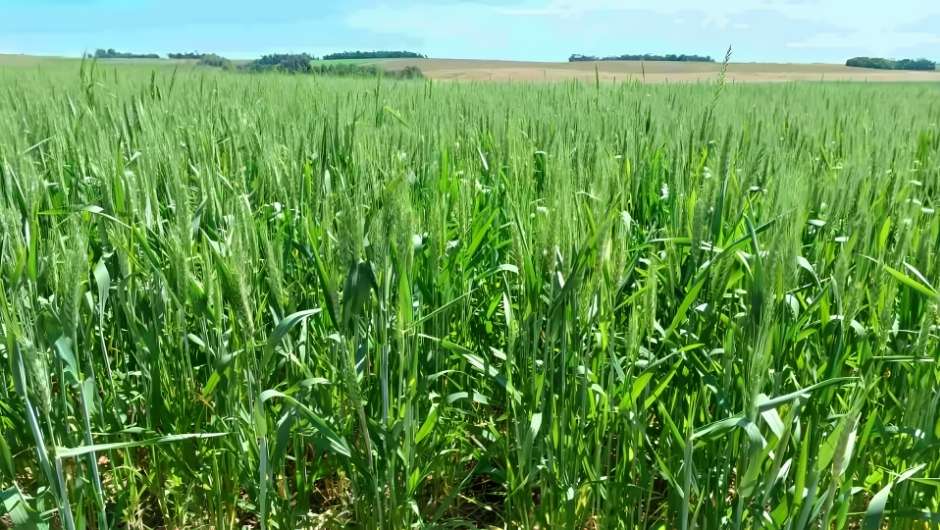
Wheat crops in Rio Grande do Sul are showing different development patterns, with a predominance of areas in the final stages of vegetative development, stem elongation, and booting, totaling 50%. According to the Conjunctural Report released by Emater/RS, the most advanced plots are in flowering (33%), grain formation and filling (16%), and maturation (1%). The projected area for the 2026 harvest is 814.220 hectares, and the average productivity is estimated at 2.701 kg/ha.
The period with lower rainfall and higher availability of solar radiation allowed for the resumption of nitrogen fertilization and phytosanitary treatments, especially in areas with restricted access due to high soil moisture. However, the sequence of cloudy and rainy days recorded in previous weeks favored the development of fungal diseases, such as leaf spots, rusts, and powdery mildew, in addition to an increased incidence of Fusarium head blight in crops in the reproductive phase.
In the Santa Rosa region, 27% of wheat crops are in vegetative development, 45% in flowering, 25% in grain filling, and 3% mature. The last week showed satisfactory progress, favored by dry weather and increased solar radiation and daily luminosity. However, regarding the phytosanitary scenario, there is still an incidence of powdery mildew, rusts, and leaf spots. The frosts at the beginning of the period were generally of low intensity and are not expected to cause significant impacts.
Canola is currently in its reproductive phase (flowering, silique formation, and grain filling), with varying development across regions, being more advanced in the Northwest of the state, where some crops have already been harvested. Increased sunlight and temperatures are favoring the advancement of the cycle and, in the more advanced areas, the formation and filling of siliques.
However, prolonged periods of cloudiness, high humidity, and frequent rainfall limited development in some areas and tend to reduce yield potential. Hail caused damage to some crops. The cultivated area of canola is estimated at 353.397 hectares, and the average yield at 1.619 kg/ha.
The crops are in the reproductive stage, predominantly in the silique formation and grain filling phases. Improved light conditions have favored the cycle's development, keeping the crop within the expected pattern. The phytosanitary situation is stable, with sporadic incidence of pests and diseases. In the Santa Maria region, in Tupanciretã, 100% of the crops are in the grain filling stage.
Phytosanitary conditions are satisfactory, but localized incidences of sclerotinia (white mold) and bacterial diseases were identified, the latter associated with hail damage. In the Santa Rosa region, crops are in the reproductive phase, with 5% flowering and 95% in the silique formation and grain filling stages. The increased sunshine during this period favored development, without significant occurrences of phytosanitary or climatic problems.
The crops are showing variable phenological development, progressing towards the grain-filling stage. Harvesting has already begun in the most advanced areas. Overall, crop conditions are satisfactory, although differences are observed in terms of yield potential and phytosanitary conditions.
In the Passo Fundo region, 60% of the white oat crops are in the flowering stage, and 40% are in the grain-filling stage, with good health. Hailstorms have been reported in some municipalities, and the damage will be assessed more precisely in the coming days.
Barley is progressing from the vegetative phase to the reproductive stages (stem elongation, heading, flowering, and grain filling). Weather conditions have allowed for the resumption of plant health management operations, although rainfall has maintained a high risk of fungal diseases between the heading and reproductive stages.
The overall condition is satisfactory, but there is an incidence of foliar diseases in some of the crops. The estimated cultivated area is 20.320 hectares in the state, and the average productivity is 3.020 kg/ha. Summer Crops
The planting of the corn crop showed strong progress during the period, favored by the reduction in surface soil moisture and the increase in the availability of solar radiation and temperatures, and is more accelerated in lower altitude areas and in locations with a planting window already established by the Agricultural Zoning of Climatic Risk (Zarc).
The crops show satisfactory germination and emergence, as well as uniform stands. Areas in the early stages of vegetative development predominate. In crops sown in soil that was still excessively moist or subjected to rain soon after sowing, there were some isolated establishment problems.
The estimate carried out by Emater/RS indicates the planting of 896.401 hectares of corn, 7,42% higher than the previous harvest, with a projected productivity of 7.711 kg/ha and an approximate production of 6,91 million tons, representing an increase of 7,18%. The expansion of the cereal area occurs in a context of recovery and consolidation of the crop in the State. In the 2025/2026 harvest, the area effectively cultivated was 812,5 hectares, 13,1% higher than the 2024/2025 harvest, and production reached approximately 5,98 million tons, also above the previous cycle.
Garlic
In the Caxias do Sul region, in São Marcos, the crops continue to show good vegetative development, despite the weather conditions. The first planted crops should begin the differentiation process (start of bulb formation) in mid-September. The frosts did not affect the crop.
Brassicas (broccoli, cauliflower and cabbage)
In the Lajeado region of Vale Real, brassicas are in full production, yielding very good quality produce, although unfavorable weather conditions, such as excess soil moisture, have caused losses in the quality of these crops.
citrus
In the Erechim region, the harvest of the Salustiana, Iapar, Umbigo Navelina, and Rubi orange varieties has ended, with sales occurring at very low prices, around R$ 0,40/kg. The Valencia orange harvest began in early August. Citrus growers are discouraged due to the low prices offered by processing industries, a situation aggravated by the decline in demand and prices for fresh oranges.
Valencia oranges destined for the juice industry are being sold at R$ 380,00/t. There is an expectation of a slight recovery in prices starting in September, driven by the approved subsidy and the gradual increase in temperatures, a factor that tends to stimulate the consumption of juice and fresh fruit.
In the Lajeado region of Montenegro, 60% of the Montenegrina bergamot orchards have been harvested, with a price difference for the product delivered to the consumer market. The Valencia orange harvest has reached 30% of the orchards. In Maratá, the Montenegrina bergamot harvest has reached 70% of the cultivated area, varying according to fruit quality. In São José do Sul, producers report low sales of Tahiti limes, but expect improved sales towards the end of the year.
Natives
In the Bagé region, native grasslands continue to show moderate regrowth. The main limitations to pasture growth and utilization are concentrated in areas with higher rainfall accumulations, where flooding or waterlogging of the soil has restricted plant development. Inadequate stocking management in recent months has reduced the availability of quality pastures due to reduced photosynthetic capacity and recovery.
In the Santa Maria region of Júlio de Castilhos, the return of sunnier days, with greater solar radiation, has been favoring the recovery of pastures. The reduction of excess soil moisture and the improvement in weather conditions have stimulated the growth of native grasslands, and there has been a resumption of regrowth and recovery of leaf area.
Cultivated
In the Erechim region, oat and ryegrass fields intended for hay and silage production are in the vegetative development phase. The absence of prolonged dry periods has hampered hay production and compromised the quality of already baled material. Given these conditions, many producers have opted for the production of pre-dried hay, packaged in bales. In the Frederico Westphalen region, the planting of summer forage crops, such as Sudan grass for grazing and corn for silage production, has already begun on some properties.
In the Ijuí region, the annual winter forage crops are in the grain formation stage and are being mowed to make way for the planting of summer forage crops. The reduction in soil moisture, combined with increased sunshine, has allowed for cutting to produce conserved forages, such as oat and wheat silage, pre-dried forage, and hay. The sowing of annual summer forage crops has intensified during this period, with Sudan grass being a particular highlight.
In the Santa Rosa and Soledade regions, the earliest oat areas have progressed to the elongation and flowering stages, and are being gradually desiccated for corn planting. Topdressing with urea and manure was also carried out, contributing to increased forage production. Due to the approaching spring, perennial summer pastures are showing a gradual resumption of growth.
Receive the latest agriculture news by email


Receive the latest agriculture news by email