


Use of soil and foliar fertilizers in beetroot
By Emmanuel Zullo Godinho, Amanda Alves Arruda, Meirieli Nunes Beladeli
11.06.2025 | 17:38 (UTC -3)
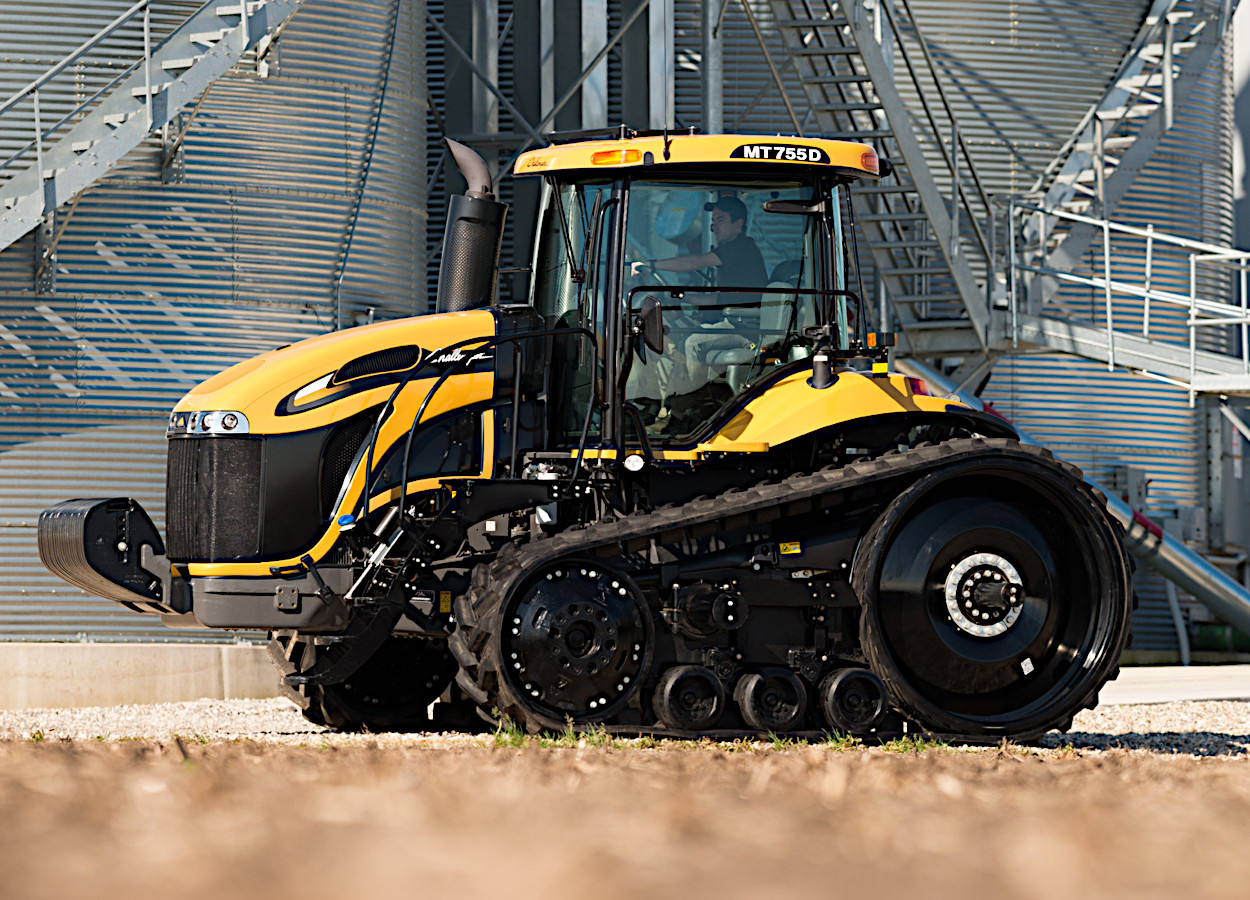
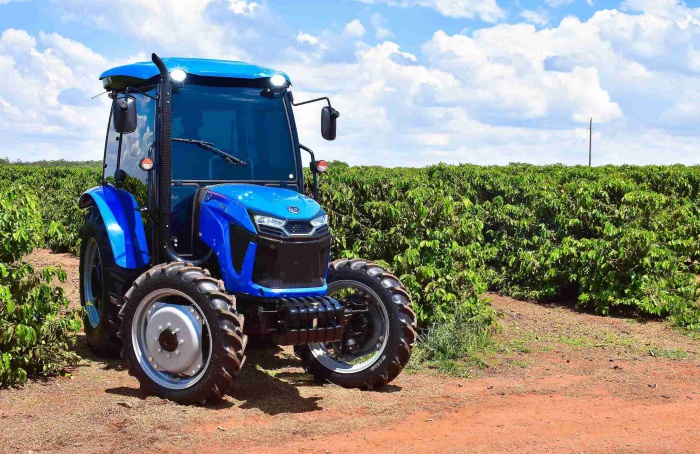
When it comes to soil compaction caused by agricultural machinery, especially heavy tractors, harvesters and forestry machines, the types of wheels can have a direct influence. Pneumatic wheels (or simply tires) and tracks are the main types of agricultural wheels, with tires being the predominant type. However, both have undergone technological evolution in recent years.
There are two main types of tires: bias ply and radial ply. Bias ply tires have the construction characteristic of plies arranged from bead to bead and in a transverse direction (at angles of 30 to 45°) to them, occupying the entire tread and sidewalls. This type of construction gives bias tires an “oval” tread, in an elliptical shape, with a low contact area with the ground. Radial tires, on the other hand, are constructed with plies arranged perpendicularly to the beads and from sidewall to sidewall, with the tread being increased and reinforced with longitudinal plies to the tread, giving it a “flatter” and more rigid shape, less elliptical and with less deformation, with a high contact area with the ground.
Modern agriculture has an advanced tire option, low-pressure, high-flotation radials (BPAF) with construction characteristics that are intermediate between diagonal and radial, with the main differences between this type being the reinforcement of the sidewalls and the possibility of using low inflation pressures for work, which gives it greater flexibility.
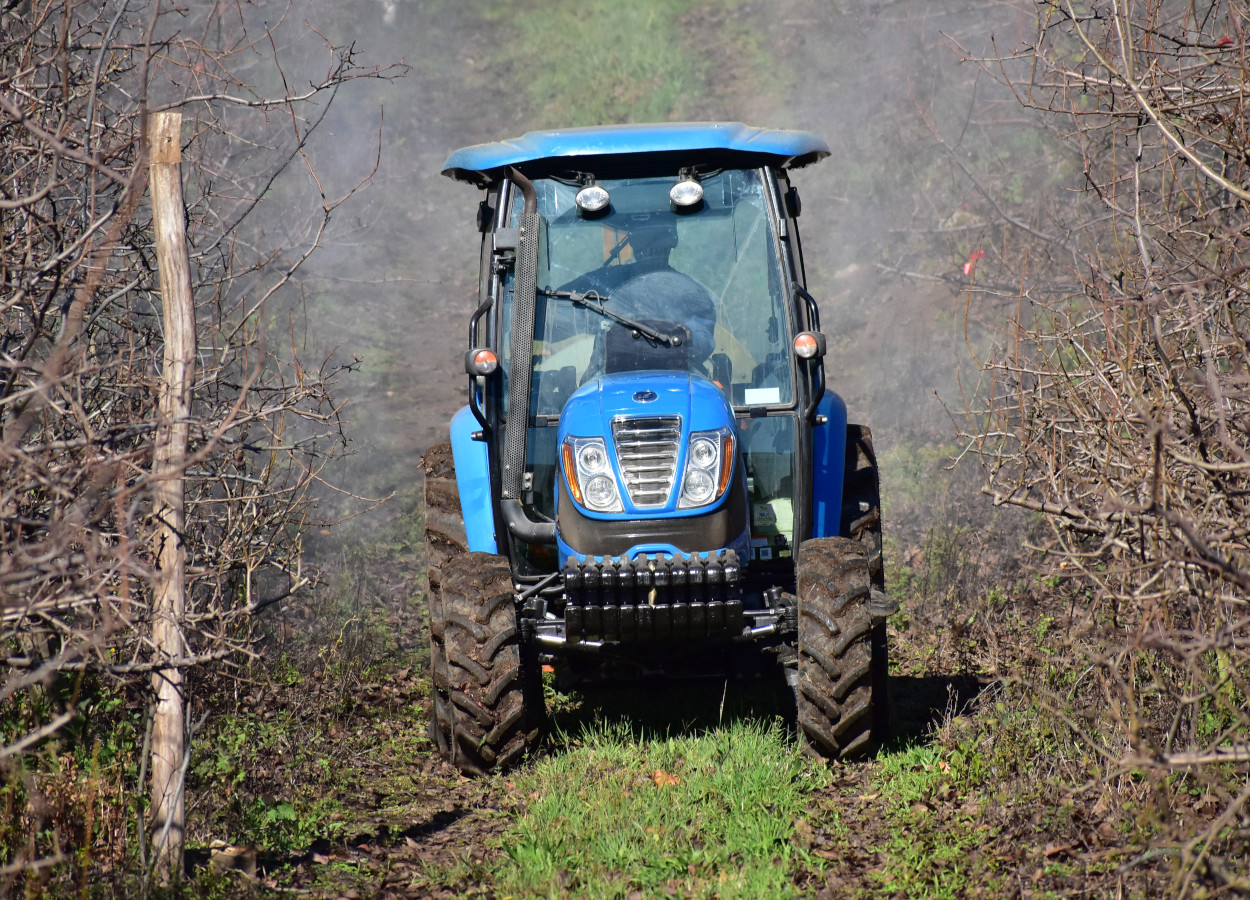
Considering the construction differences, in practice, radial tires and especially BPAF tires, when properly assembled and inflated, have the advantages of causing less soil compaction, slippage and specific fuel consumption, and greater traction capacity, engine power transfer efficiency and operational performance than bias tires. However, bias tires are more resistant to damage such as punctures and tears, due to thicker sidewalls, as well as lower acquisition costs.
Tracked wheels do not have a formally defined and updated classification, so they are simply subdivided according to the construction material into steel (rigid) or rubber (flexible), and can be full track or semi-track (half-track). In addition, both tracks and semi-tracks can be oblong (elongated) or triangular.
For agricultural purposes, steel tracks are falling into disuse, as they predominantly have greater weight, less flexibility in the reduction hubs and in the terrain, lower working speed and operational efficiency and higher specific fuel consumption than rubber tracks.
Tires or tracks, which one to use? The answer does not follow a consolidated rule and the decision-making process must take into account the agricultural fleet (types of tractors, harvesters and implements), agricultural operations to be carried out, main crops, soil type, topography and level of technical development of the property. Agronomically, the choice prioritizes the aspect of soil compaction, for which common sense from research indicates an advantage for tracks.
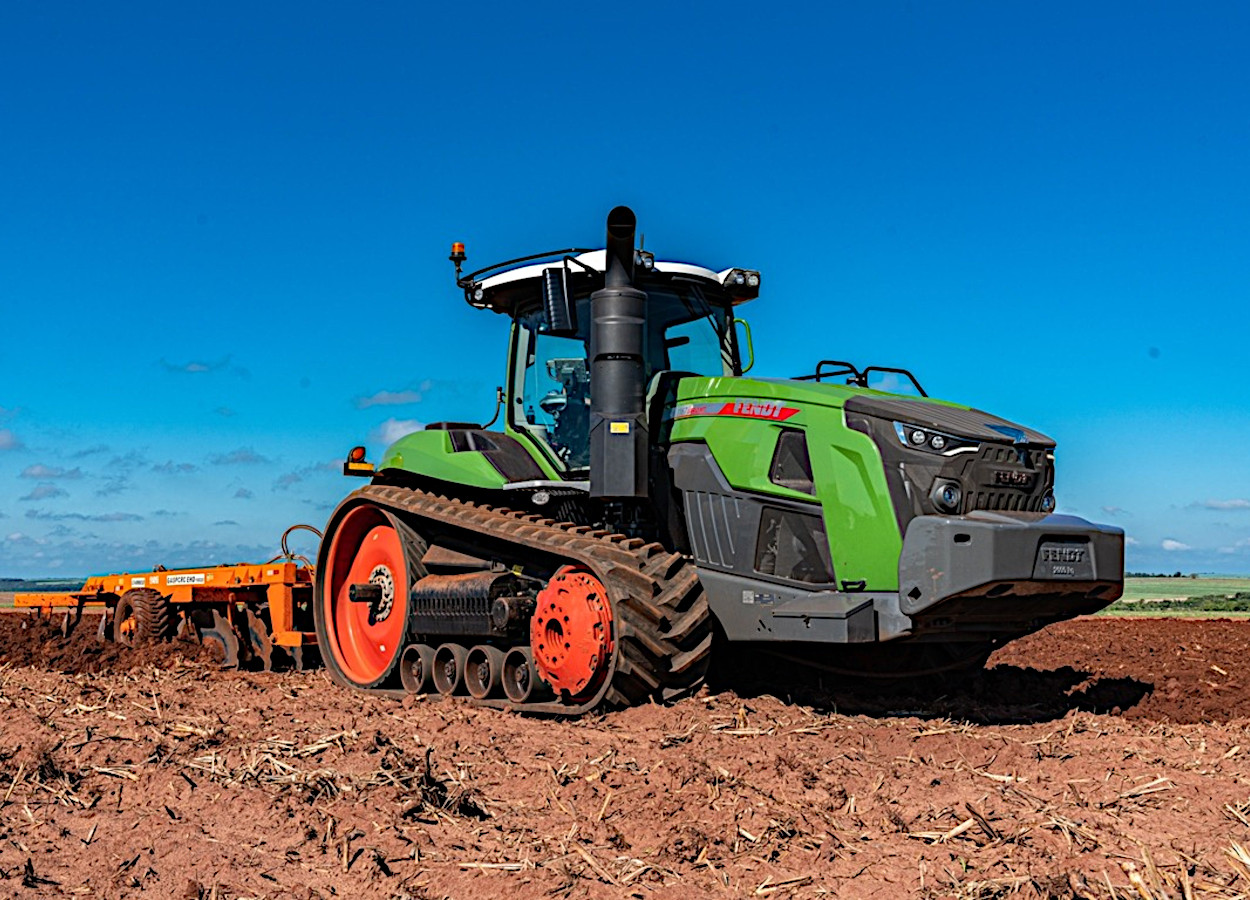
When compared to tires, tracks have a larger contact area with the ground, and therefore better dissipate the static (weight) and dynamic load of the machine, especially tractors with medium/high power and weight, slowing down and reducing soil compaction rates. However, the use of modern tires generates controversy among experts, as doubled (tipped) tires with a large contact area with the ground can be used.
Due to the presumably larger track contact area, tractors equipped with them tend to have greater traction capacity due to reduced slippage and better power transfer efficiency and wheel/ground interaction. These characteristics provide tracked tractors with higher operating speed and consequently higher operational efficiency. As a result, they are more suitable for flat and extensive areas.
Regarding ergonomics and drivability, which can be translated into human well-being and overall system performance, tractors equipped with tires are smoother and softer on uneven terrain. Another situation in which tires have an advantage is when traveling on roads, in addition to having less wear and fuel consumption. In terms of costs, including acquisition, installation and maintenance, tires are cheaper. There are more moving parts on a track, especially metal ones, than in the wheel hub of a tractor with tires.
In the sugar and energy sector, tracks have been gaining ground, being installed on tractors, transshipments and agricultural trucks, enabling operations to be carried out even in wet soil conditions. There are reports of producers using tracked tractors in the production of vegetables with the justification that it is possible to remove harvested products from the field even on rainy days and waterlogged soil, thus allowing them to obtain better prices, which may justify the investment.
An alternative offered to producers is the semi-track configuration, when in 4 x 2 TDA agricultural tractors the front axle is equipped with tires and the rear axle (main drive) is equipped with semi-tracks. This configuration does not apply to 4 x 4 agricultural tractors, since in these all the wheels must be of the same type, and may have four tires or four semi-tracks. In the case of grain harvesters, the semi-tracks occupy the front axle, which is the main drive. The semi-track configuration can be understood as the balance between tires and tracks, with the possibility of equalizing costs and obtaining good traction capacity, fuel consumption and operational performance, in addition to enabling operation on waterlogged terrain.
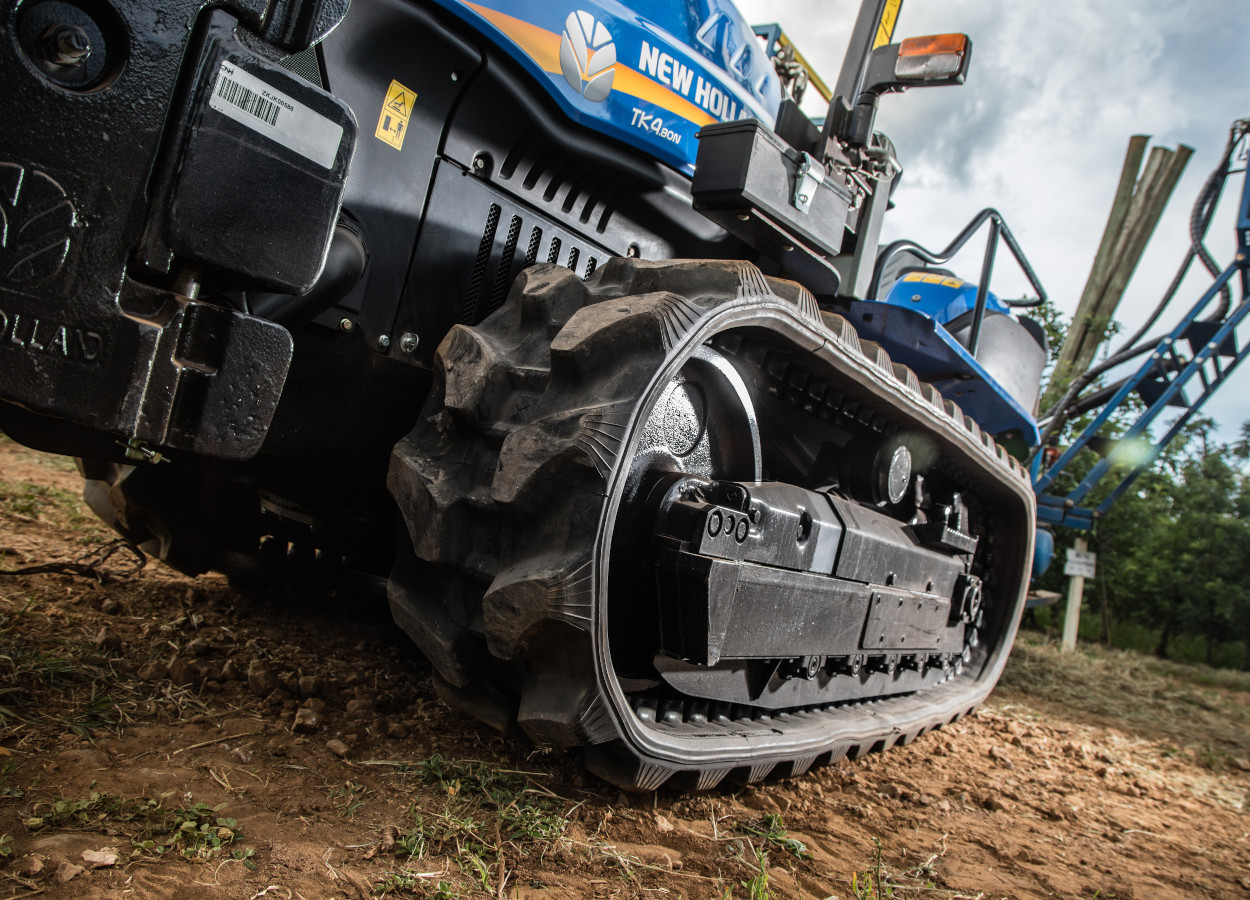
In lowland rice cultivation where the soil remains flooded for a few days before harvesting and even during harvesting, semi-tillers are widely used and their performance is superior to tires. However, it should be noted that in these areas soil compaction is not a major concern, as flood irrigation facilitates root penetration into the soil and, eventually, compaction is beneficial as it reduces problems caused by the lack of support in these soils, reducing the risk of machinery getting stuck.
Currently, some properties have adopted controlled traffic of machinery in the fields, in which the path of the machines is predetermined and guided by georeferencing systems and automatic pilot, always following the same routes, from sowing to harvesting. The system aims to avoid random soil compaction and crushing of plants, systematizing the trampling of the wheels on defined and known paths where compaction is acceptable.
Each system has its pros and cons, so it is important to better understand the characteristics and peculiarities of each one, and decisions should not be made in a generalized manner. It is suggested that a case study be carried out and that the farmer seek technical assistance in order to evaluate the best type of wheel for his/her situation, so that the one selected is capable of carrying out the work in the best possible way.
By Francisco Faggion, Tiago Pereira da Silva Correia, Victoria Linhares, Aline Biazioli of Pine, Haniel Carlos Gomes da Cruz, Brenda Jhully Alves Moreira, Pedro Henrique Gomes Alves (Lamagri/UnB)
Receive the latest agriculture news by email



Receive the latest agriculture news by email