Grain storage safety
Safety is essential to maintain the smooth functioning and efficiency of grain storage companies
18.05.2023 | 16:16 (UTC -3)
After Direct Planting, Machine Traffic Control is one of the important steps within the crop, as it improves the management of passes with a reduction in fuel consumption and the time needed to carry out the work.
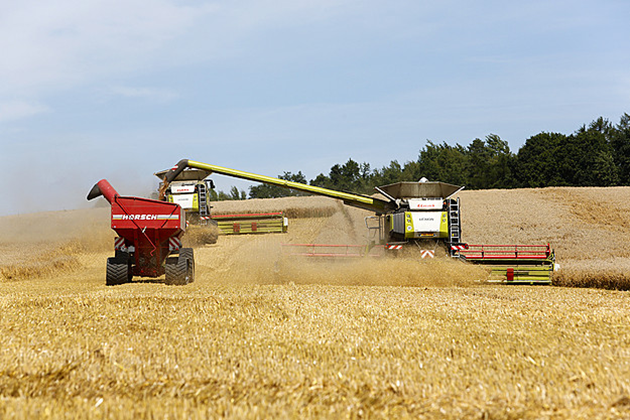
In the 1980s/1990s, the Direct Planting cultivation system evolved rapidly in Brazil, greatly influenced by the need to minimize erosion. Not without less importance, the aim was to increase the availability of water, nutrients and organic matter with the use of soil cover, resulting in increased efficiency in the use of machines, work in the field and, ultimately, agricultural productivity. . In this way, we no longer turn over the soil to simply dry out existing vegetation in the crop and control invasive plants during crop development with the use of post-emergent herbicides.
Without realizing it, we were moving from the mechanical agriculture model, still used today in many countries, especially those with cold climates, to the chemical model of agricultural production. As a result, we stopped using plows and harrows and reduced the use of subsoilers. There was a need to adapt the machines, with emphasis on the seeders that became more robust and gained a larger front straw cutting disc than conventional ones to start the furrow opening process without the soil having been mobilized before sowing. Other advances resulting from this change were the improvement in spraying efficiency, with the use of self-propelled and aerial sprayers, and the management of their passes using a global satellite navigation system, with real-time location, precision and accuracy. Associated with the evolution of machines and browsers, the aim was to improve agricultural production systems, with emphasis on straw management, crop rotation and genetics.
While we used mechanical agriculture, the soil was disturbed with each cultivation to a depth of 15cm to 25cm, which promoted decompaction in this layer, leaving the concern with compaction only in the depth immediately below, the so-called plow foot, mitigated by the use of subsoilers to a depth of approximately 30cm. In both the mechanical and chemical models, the machines traveled throughout the field without control, the so-called random traffic. In Direct Planting, without turning and subsoiling, problems with compaction of the surface layer emerged, especially in clayey soils, which, in part, is due to the heavy weight of the machines and their random traffic, without considering humidity and the load-bearing capacity of the soil.
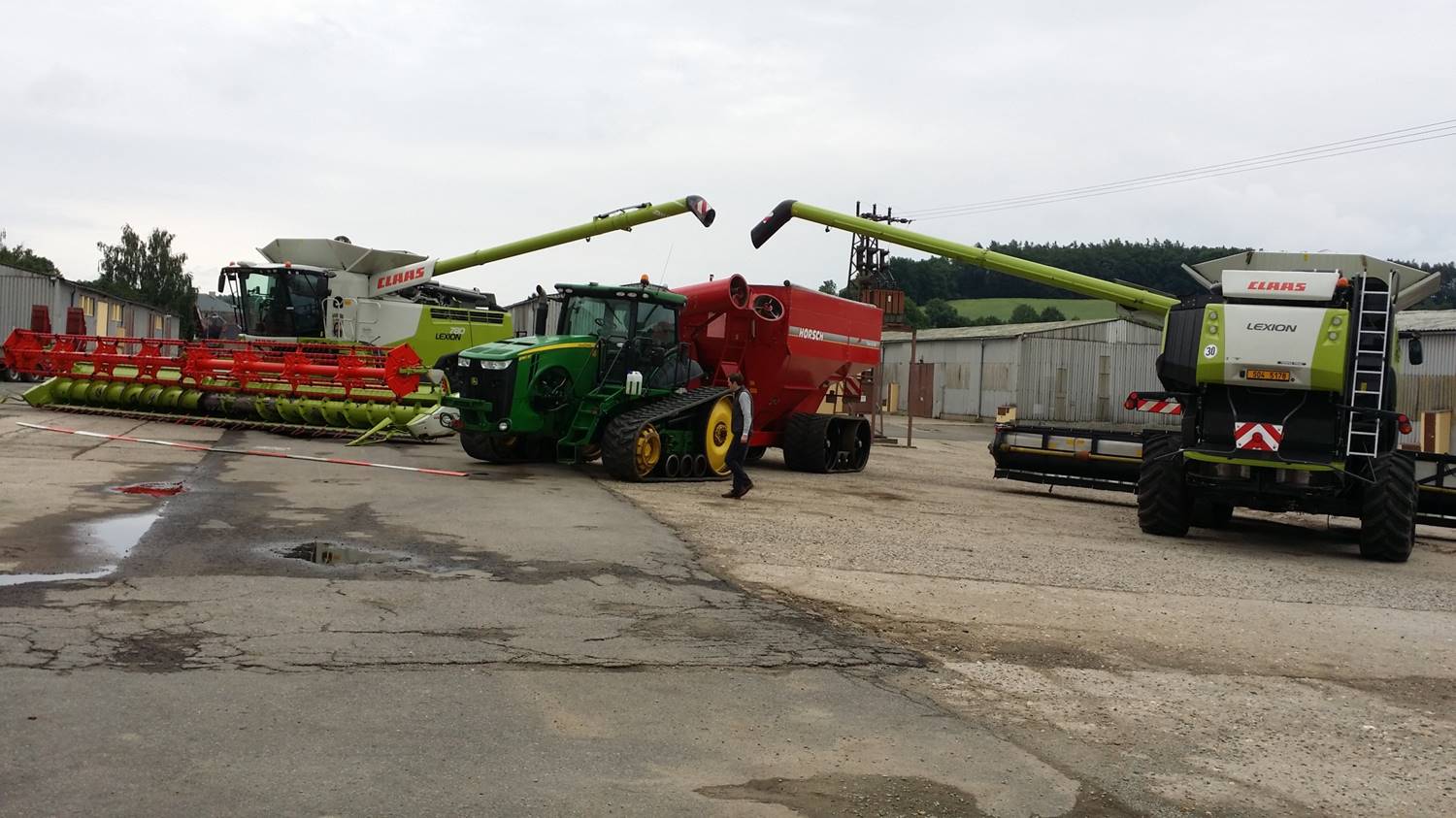
During this period, the total weight of the tractors increased from 2.600kg to approximately 12.000kg, which led to an increase in the weight per axle by more than 4,5 times. Without considering the distribution and transfer of weight that occurs during traction, we went from 650kg to 4.000kg per axle. It is even more dramatic when you look at grain harvesters weighing more than 20.000kg and adding a load of 10.000kg, they can exceed 30.000kg. This all had consequences for soil compaction at greater depths, that is, between 40cm-60cm, which is little studied and even unknown, therefore disregarded. To reduce surface soil compaction, the tire-soil contact area was increased and some advances in tire technology were adopted. As for the use of more efficient wheelsets, we are still in the transition phase from conventional tires to radials with gains in traction efficiency and reduced compaction. However, we can still improve these aspects with the use of low-pressure, high-flotation tires, semi-tracks and tracks, preferably made of rubber.
In sandy soils, the effect of traffic organization on crops may not be as easily perceived due to their low susceptibility to compaction. Even so, controlling traffic within the field improves the management of passes by reducing fuel consumption and the time needed to carry out work. Attention must be drawn to the possibility of the existence of subsurface clayey layers in these types of soil, which can suffer the same deep compaction effect as clayey soils due to the weight and random traffic of machines, even in surface soil conditions that are more suitable for soil production. machine traffic.
Several attempts have been made to reduce and control farm traffic by modifying, configuring or managing machines, both empirical and research or development. Mention is made of the construction of agricultural tractors of the tool holder bar type with a gauge, which can reach 10m, where kits are placed to carry out different activities. This would have a larger lateral dimension instead of longitudinal, as they are currently manufactured. However, so far, the best alternative seen continues to be the use of the machines as they are with some adjustments to suit them, without the need for large investments to change their configuration.
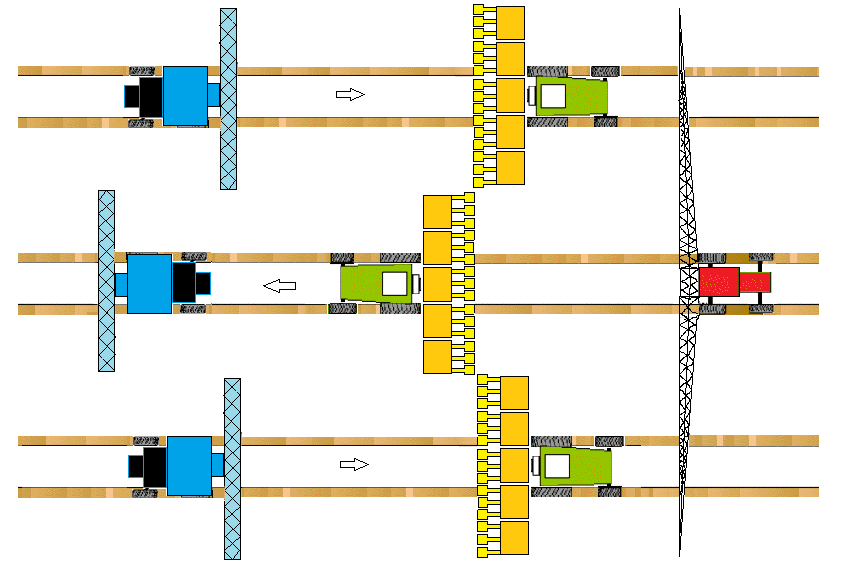
Machine Traffic Control (CTF) consists of disciplining and controlling the passage of machines with the creation of specific paths or permanent paths for the circulation of machines within the field, using a global satellite navigation system (GNSS). In this case, machines travel on these paths during crops year after year, keeping the largest possible area free from traffic. Areas where there are no wheelsets do not suffer the effect of soil compaction, which increases water availability and facilitates seeding and root penetration to exploit water and nutrients in deeper areas. On the paths where the machines “trample” the opposite occurs, there is soil compaction and this increases traction capacity and facilitates traffic, being beneficial, especially with high soil humidity. Therefore, spraying and harvesting can be done with moister soil, as long as the plant and environmental conditions are suitable for carrying out the intended activity.
The cost of purchasing satellite navigation equipment has decreased, like other electronic devices, and the popularization of its use, as in the case of applications for individual transport of people, can contribute to greater access to this method of work in various types. of cultivation and size of property. It is already known that the CTF contributes to the general management of the property, organizes activities within the farm, improves soil characteristics, promoting greater availability of water and nutrients, prevents soil compaction and increases productivity. Due to improving traffic conditions by partially removing off-road machinery, it requires less total power per hectare worked, lower fuel consumption and fewer machines per property. The logistics used to manage traffic within the field reduces the total distance traveled by machines to carry out the same work and avoids re-passing, making the phrase “once it’s done, it’s done!” true.
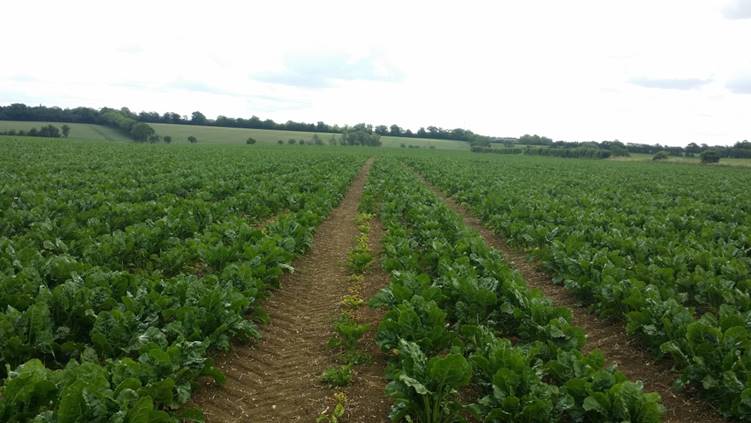
For the specific case of using CTF in grain crops, there is a need to adjust agricultural machines, especially the gauge and lengthening of the harvester discharge tube. Due to the gauge of harvesters normally being 3m, this is suggested as a standard, being measured from center to center of the wheelsets. For tractors, the rear axle normally allows adjustment and for the front there are two possible solutions: some manufacturers have an axle with a 3m gauge or the placement of normal axle extenders similar to flanged sleeves. As for lengthening the discharge pipe, the ideal is for machine manufacturers to carry out the sizing, indicating the material and dimensions suitable for their machines and the traffic model adopted.
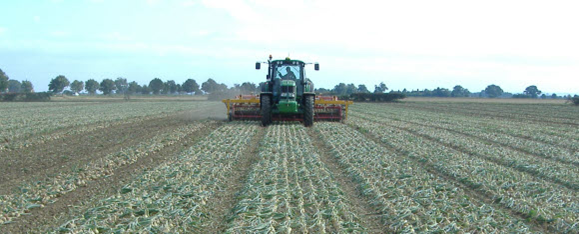
Before starting the CTF, the conditions of the crops and the characteristics of the machines on each property must be assessed to define the gauge and the arrangement of the passes, always a multiple of three. As an example, if the largest sprayer boom acceptable for the terrain conditions is 30m, the seeder and grain harvester must have a working width of 10m. In this case, the large grain seeder could have the lines spaced at 0,50m or 0,45m and in the position where the wheels pass 0,75m. Using tractors with 0,60m wide wheels prevents “trampling” of lines. For the cultivation of small grains, until now the entire area has been sown and the paths have been “trampled”. However, these could be maintained with some type of cover, without being sown. As explained, one pass of the sprayer covers three passes of the other machines, all with a standardized gauge.
As previously stated: would traffic control be the next step in Direct Planting? The global trend towards adopting this work methodology in the field seems to be clear. The advantages are still little proven by research, the literature is still incipient and its adoption is not widespread, especially in the Americas. However, its concept and visualization of the practicality of use after its implementation must overcome currently existing obstacles, such as those experienced during the period of implementation of the Direct Planting cultivation system. The biggest beneficiaries of adoption seem to be farmers, consumers and the environment.
Francisco Faggion, UNB
Article published in issue 182 of Cultivar Máquinas, March 2018.
Receive the latest agriculture news by email



Receive the latest agriculture news by email