Dialogue between beekeepers and farmers is essential to protect bees.
By Anderson Roberto dos Santos
29.10.2026 | 14:14 (UTC -3)
In the fresh produce supply chain, time is not just an operational variable: it's part of the product itself. Fruits, flowers, vegetables, and eggs cannot wait indefinitely for a better route, a more favorable negotiation, or a more accurate forecast. A supply disruption, a delayed harvest, or a loss of quality can quickly traverse the field, transportation, the store, and the consumer's table.
Therefore, the greatest risk is not simply the occurrence of a severe weather event. It is discovering too late which products will be affected, in which regions, during which harvest window, and with what consequences for volume, quality, cost, and delivery time. The strategic question is not only "what can the weather do?", but "what decision can we still make before the impact becomes irreversible?"
This question gains urgency with the 2026/27 El Niño. The report from the U.S. Department of Agriculture's Foreign Agricultural Service (USDA FAS), published on October 13, 2026, states that projections from the U.S. National Oceanic and Atmospheric Administration (NOAA) indicated the possibility of the phenomenon reaching very strong intensity between November 2026 and January 2027. This period coincides with crucial stages of planting and crop development in Brazil. It is a risk projection, not a sentence on the harvest: intensity, rainfall distribution, and the timing of the event are as important as the name of the phenomenon.
And there is one characteristic that needs to guide every response: the same El Niño can mean drought and heat in one part of the country, excessive rain in another, and even different effects between neighboring municipalities. A national climate forecast, therefore, is not yet a supply forecast. To reach a decision, it is necessary to translate the climate signal into the geography, calendar, and physiology of each product—and then into the routes, contracts, and demand.
The report describes important regional contrasts. In the North and the Amazon, the prospect of below-average rainfall and high temperatures increases the risk of water stress, wildfires, and reduced river levels. This affects crops and pastures, but can also hinder cargo transport and compromise logistical regularity. In the Northeast, prolonged dry periods can reduce soil moisture and put pressure on water availability for production and livestock farming. Even when an irrigated crop benefits from specific conditions, the territory's water security remains a determining factor.
In the Midwest, irregular rainfall can delay soybean planting and shorten the window for second-crop plantings. The report highlights Mato Grosso as an area particularly exposed to this effect. In the Southeast, although the impact pattern may be less intense than in the North and South, above-average temperatures and irregular rainfall can affect sensitive stages of coffee and orange production, especially flowering and fruit formation. In the South, the combination of excessive rain, humidity, and extreme events increases the risk of flooding, disease, planting and harvesting delays, quality losses, and road disruptions.
This asymmetry is central to fruits and vegetables. Heat and lack of water can reduce size, alter flowering, and compromise fruit set; excess moisture can favor rot and disease, delay field operations, and shorten shelf life. The report cites apples, grapes, potatoes, tomatoes, carrots, and onions among the products from the South potentially exposed to delays and excess rain. Therefore, there is no single answer called "substitute the origin": an alternative needs to be at the correct productive stage, have comparable quality, and be able to reach its destination.
Brazilian agriculture is characterized by interconnected calendars. If irregular rainfall delays the planting or harvesting of soybeans, the second corn crop may be sown later, leaving it more exposed to the end of the rainy season and the heat during grain filling. The second cotton crop may also miss its planting window. This interconnectedness is important for the supply of fresh produce even when the directly affected product is not a fruit or vegetable: corn and soybean meal are components of animal feed, and changes in availability, price, and logistics impact poultry farming, egg production, pig farming, and milk and meat production.
The USDA FAS notes that heat stress can reduce feed intake, weight gain, production, and reproductive efficiency in animals; elevated temperatures also affect the quantity and quality of eggs. Irregular rainfall can compromise pastures and increase the need for supplementation, while excess moisture can worsen management conditions and silage quality. The result reaches the supply chain as operational costs, pressure on margins, and potentially greater supply and price volatility.
For FFLVO, the impact isn't simply a matter of "having or not having" the product. It can affect size, appearance, moisture content, ripeness, shelf life, delivery regularity, and the cost of selecting, cooling, and transporting. A reasonable national harvest can coexist with localized shortages, commercial standard losses, or bottlenecks on a specific route. This is why an aggregate reading of the annual volume is insufficient for those who need to supply stores and kitchens every day.
Anticipating requires building a shared vision at the right level of detail: product, region of origin, and week of marketing. This analysis combines weather forecasts with crop stage, planting and harvesting calendar, water and soil conditions, historical productivity, labor availability, packaging and refrigeration capacity, road and river conditions, orders, and demand signals. It's not enough to simply layer information on a dashboard; it's necessary to explicitly state what is known, the degree of confidence, what is still a hypothesis, and which link can confirm or refute the signal.
Next, the information needs to be transformed into a consequence assessment. For each relevant item, the supply chain must estimate not only the probability of the event, but also the exposure of the source, the sensitivity of the product, the time needed to replace the supply, and the cost of a delayed decision. The question ceases to be "is there a risk of drought in the Midwest?" and becomes, for example: "if planting is delayed during this window, what volumes and patterns of corn, feed, or vegetables become most vulnerable, in which weeks, and how long does it take to activate another solution?". This translation prevents a climate headline from generating vague alarms or, worse, false reassurance.
Each risk level must be associated with a trigger, a responsible party, and a pre-arranged action. An alert without an owner and without operational consequence is merely information. In an alert scenario, the response might be to confirm field conditions and revise the harvest forecast; if the risk increases, it might involve reserving transport capacity, anticipating the qualification of an alternative source, adjusting the purchasing schedule, or protecting the cold chain. The decision must respect the reliability of the forecast, the reaction time, and the cost of acting too early—but it cannot wait until the disruption is visible to the consumer.
Diversification of sourcing also needs to be real, not just a list of suppliers in a contingency plan. An alternative source must be validated before a crisis regarding scheduling, water, quality and safety practices, volume, packaging, transit time, refrigeration, transport capacity, and economic viability. Furthermore, a company's response cannot simply shift the shortage to another buyer or to an already pressured region. Planning for alternatives means understanding interdependencies and negotiating access responsibly.
Similarly, commercial flexibility cannot be improvised. Retailers, food service providers, distributors, and suppliers can agree in advance on which substitutions in variety, size, origin, or presentation are acceptable without compromising safety and consumer experience. Realistic specifications for periods of stress, contracts that acknowledge crop variations, careful review of promotions, and clear communication about seasonality help reduce waste and prevent the pressure from always falling on the producer or on the lower-income consumer.
The response also includes financing and structural adaptation. Accessible rural insurance, credit and working capital compatible with more volatile cycles, soil conservation, efficient water management, drainage, area recovery, suitable varieties, shade and water for animals, and post-harvest infrastructure reduce vulnerabilities that cannot be resolved with an emergency meeting. The report emphasizes that prevention tends to be more efficient and less costly than reacting after the damage. Investments of this type need to be evaluated as part of the continuity of supply, not just as an isolated cost of the property.
No single link holds all the data or all the levers. The producer knows the field and the crop; the input supplier sees the demand and availability; the transporter tracks routes and capacity; wholesalers and retailers observe orders, replacements, and purchasing behavior. The challenge is to transform these signals into a shared understanding without exposing sensitive commercial information. Aggregated data, common risk definitions, and forums with clear rules of confidentiality and competition can make coordination possible.
IFPA can contribute as a space for connection between production, suppliers, distribution, retail, and food service, helping the sector exchange knowledge, test standards, and learn from real-world events. A first practical step is to choose some categories and regions, establish an update schedule, define comparable indicators, and simulate decisions before needing to implement them. The ambition should not be to promise perfect predictions—those don't exist—but to reduce the interval between the first signal and a useful decision.
A pilot program could begin with a few combinations of product, origin, and supply window, selected by the links in the chain who know their exposures. Each week, the group would update weather signals, crop stage, volume and pattern estimates, route conditions, and qualified alternatives; each risk would have a responsible party and a pre-agreed action. Then, the evaluation would not only measure whether the forecast was accurate: it would observe how much lead time there was, how quickly the chain confirmed the signal, whether the alternatives were actually available, whether the service level was preserved, and how much waste or extraordinary cost could be avoided. This cycle transforms dispersed experience into reusable learning.
It's also important to communicate transparently with consumers. Highlighting products that are in good supply and suggesting seasonal substitutions can broaden choices, reduce waste, and alleviate temporary pressures. But seasonality alone doesn't solve food insecurity or guarantee affordable prices. Access depends on supply, income, logistical efficiency, commercial decisions, and public policies. Communicating well is part of the answer; it doesn't replace the commitment to keeping fresh food available and economically accessible.
Protecting supply in the face of El Niño doesn't mean eliminating uncertainty or preventing all climate impact. It means recognizing that Brazil faces distinct risks simultaneously, monitoring changes in each product and region, preparing viable alternatives, and sharing information and responsibility before the crisis reaches the supermarket shelves. The challenge is transforming knowledge into coordinated decision-making. This is how we move beyond simply reacting to the climate and begin to truly anticipate its effects on freshness, quality, and access.
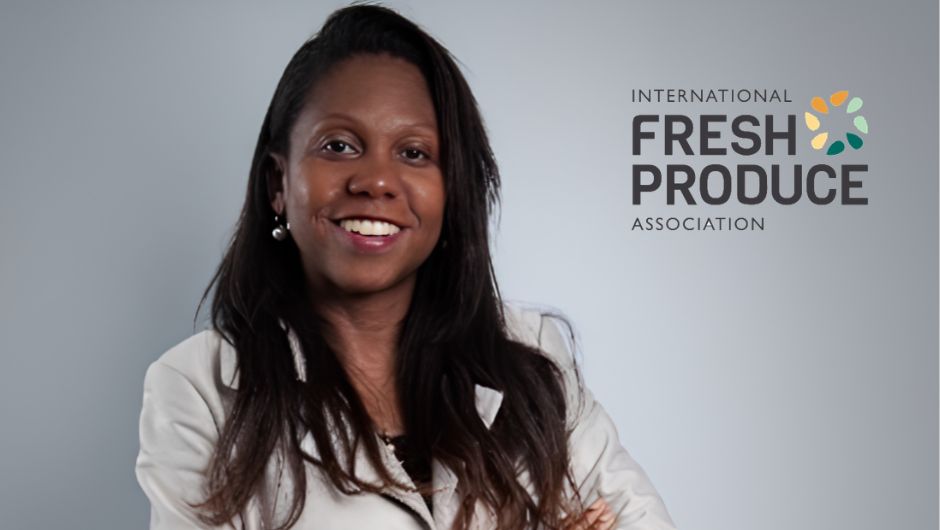
*Per Valeska Ciré is Country Manager of the International Fresh Produce Association (IFPA)
Receive the latest agriculture news by email



Receive the latest agriculture news by email
By Anderson Roberto dos Santos

With a 70 hp engine, the new MT4 70 series from LS Tractor, tested by our team, features an LS 32F x 16R transmission with super-reduction, three PTO speeds (540, 750, and 1.000 rpm), and a new original cab from the brand