Public-private cooperation drives the Producing Safe Food project in São Paulo.
By Camila Ribeiro de Souza Grzybowski and Jeferson Sabino Fabris Pezotti
01.10.2026 | 17:23 (UTC -3)
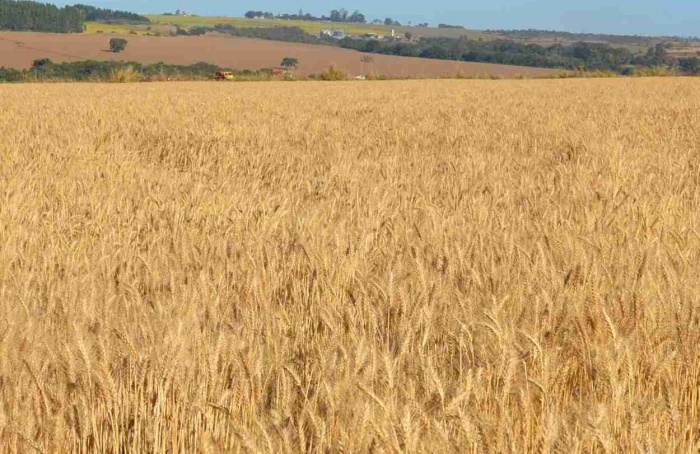
Choosing the right cultivar is undoubtedly one of the most impactful decisions for crop success. However, determining the plant material depends not only on the genetic potential of the seed, but also on how that material performs under the management and edaphoclimatic conditions of each specific plot. It is in this context that applied agricultural experimentation and statistical analysis of field data take center stage, becoming the main tools for consulting firms and research companies.
Positioning genetic materials with technical certainty requires abandoning the empiricism of visual observation. The isolated performance of a plant in a year with favorable weather does not guarantee its stability in the face of adversity or in different environments. Without the statistical rigor of repetitions, randomness, and local control, the producer is vulnerable to false positives, which increases the risk of choosing a material motivated, for example, by random fluctuations in fertility or climate, instead of genetic superiority and productive stability.
Analytical errors in genetic positioning trigger a domino effect capable of compromising production profitability. Beyond the direct reduction in productivity, when demanding cultivars are grown in restrictive environments, this mistake generates wasted inputs and can increase emergency expenses on pesticides due to unmapped susceptibilities. All of this results in an opportunity cost, where the producer uses land, machinery, and time on a low-performing material for that specific context. Most alarmingly, these flawed decisions may be based on poorly conducted field tests, which have a high probability of failing to detect real agronomic evidence.
In conducting cultivar competition trials, statistical rigor is the cornerstone for ensuring technical security in the positioning of genetic materials. The effectiveness of inference about the genotypic mean can be compromised by methodological flaws such as inadequate block positioning, the absence of borders in plots, confusion between pseudo-replications and true replications, and lack of randomization. These errors, added to imprecision in data collection, such as lack of standardization, subjectivity in visual assessments, and low experimental power, often resulting from the use of few replications, mask the performance of cultivars, generating erroneous information that affirms the stability and adaptability of the plant material for a given region, without actually presenting these characteristics.
To ensure a correct recommendation, strict control must be adopted, prioritizing indicators of selective accuracy. This requires careful experimental design, which includes: the appropriate sizing of the number of repetitions and treatments to guarantee sufficient degrees of freedom for the residual and reduce experimental error; the coding of plots during collection to mitigate observer bias; the use of well-defined useful areas to isolate the border effect; and the use of precise evaluation scales.
Statistical analysis, however advanced, cannot correct poorly conducted experiments in which environmental variability was not properly isolated or the collected data is inaccurate. Therefore, the integrity of the experimental design is the only guarantee that agronomic evidence will prevail over chance, preventing financial losses for the producer resulting from recommendations that do not reflect reality.
Research plays a crucial role in ensuring technical security in the field by transforming massive volumes of raw data into strategic decisions, filtering out environmental "noise" to isolate the potential of cultivars. The innovation lies in migrating from simple phenotypic averages to genotypic values predicted via models that correct for adverse edaphoclimatic effects, ensuring that research minimizes results stemming from mere chance occurrences in the experimental environment.
Beyond the individual precision of the assays, the recommendation calls for regionalization through analysis of genotype x environment interaction, using advanced models that map stability and adaptability in different scenarios. This stratification allows researchers to identify the specific response of each material under different conditions, such as clayey or sandy soils, and in different sowing windows.
In plant breeding programs, the most prominent procedures are: individual and joint analysis of variance, mixed models, and ranking selection indices, such as the Mulamba and Mock method. Analysis of variance allows for the verification of significant differences between the evaluated genotypes, while joint analysis makes it possible to study the behavior of materials in different environments and quantify the genotype × environment interaction. Mixed models allow for a more precise estimation of the genotypic performance of materials, considering random effects and possible imbalances in the data. The Mulamba and Mock index allows for the simultaneous selection of genotypes based on multiple agronomic characteristics, favoring the identification of cultivars with balanced and superior performance for a set of attributes of interest. Thus, the combined use of these methodologies increases the efficiency and reliability of cultivar selection and recommendation processes.
Therefore, the statistical rigor that begins with the plot design and ends with the choice of the biostatistical model ceases to be an academic nicety and becomes a market requirement. Given high production costs and increasingly restrictive weather windows, the margin for empiricism in the field is zero. Transforming raw data into agronomic intelligence mitigates risks, protects the producer's capital, and ensures that the genetic potential developed in laboratories is actually converted into harvested bags per hectare. In the contemporary agribusiness ecosystem, technical security is not a differentiator; it is the foundation of the crop's economic sustainability.
*Per Rafael de Queiroz Costa, Yasmim Dias de Souza, Jamile da Silva Oliveira Nunes, Greice Marques Barbosa e Jerusa Maia e Sá
Receive the latest agriculture news by email



Receive the latest agriculture news by email