Public-private cooperation drives the Producing Safe Food project in São Paulo.
By Camila Ribeiro de Souza Grzybowski and Jeferson Sabino Fabris Pezotti
01.10.2026 | 17:23 (UTC -3)
Camila Ribeiro de Souza Grzybowski, manager of Peara-POV and coordinator of the Producing Safe Food Project, and Jeferson Sabino Fabris Pezotti, Stewardship & Regulation coordinator at Aenda.
The sustainability of Brazilian agribusiness benefits from the combined efforts of the public and private sectors, particularly in promoting the correct and safe use of pesticides and ensuring the supply of healthy food to the population. In this context, the State Program for the Analysis of Pesticide and Related Substance Residues in Products of Plant Origin (Peara-POV), conducted by the Directorate of Agricultural Defense of São Paulo, an agency of the Secretariat of Agriculture and Supply (SAA), is consolidating itself as a fundamental public policy for inspection, diagnosis, and safety in the field.
For the results and guidelines of Peara-POV to be effective, phytosanitary inspection gains strength when combined with education and ongoing guidance for producers. It is precisely to broaden the reach of good practices that the National Association of Phytosanitary Product Companies (Aenda) signed, in April 2026, a protocol of intentions between the SAA and seven entities in the sector.
The protocol formalizes cooperation for the implementation of the "Producing Safe Food" sanitary education project, coordinated by the Directorate of Agricultural Defense, which seeks to integrate institutional efforts to expand the dissemination of technical information, promote training actions, and strengthen the adoption of good agricultural practices related to the correct and safe use of pesticides.
Representing over 70 associated institutions, Aenda carries out the dissemination of best practices in partnership with State Agricultural Defense agencies. This consolidated experience is fundamental to the education and training actions of the São Paulo state education project, primarily aimed at small and medium-sized rural producers and professionals involved in technical assistance. The project scope includes topics such as acquisition, transportation, storage, preparation of the spray solution, application, use of personal protective equipment, proper disposal of empty containers, and compliance with current legislation. Activities aimed at raising awareness in the rural community, including children and young people, are also planned, reinforcing the ongoing nature of sanitary education.
Joint action
In addition to SAA and Aenda, the following organizations participate in the program: the Association of Agricultural Input Distributors of the State of São Paulo (Adiaesp), CropLife Brasil, the Federation of Agriculture and Livestock of the State of São Paulo / National Rural Learning Service (Faesp/Senar-SP), the National Institute for the Processing of Empty Packaging (Inpev), the Organization of Cooperatives of the State of São Paulo (Ocesp), and the National Union of the Plant Protection Products Industry (Sindiveg).
The signatories meet periodically to develop technical materials, define joint actions, and plan training events and mobile collection drives. The municipality of Itapetininga (SP) was chosen to host the pilot action of the project, while the next municipalities will be selected based on the results obtained by Peara-POV and the priorities identified by the Directorate of Agricultural Defense.
The consolidation of this initiative demonstrates that promoting compliance in the use of pesticides depends on integrated action between inspection, industry, technical assistance, research, rural extension, and the productive sector.
Traceability and security
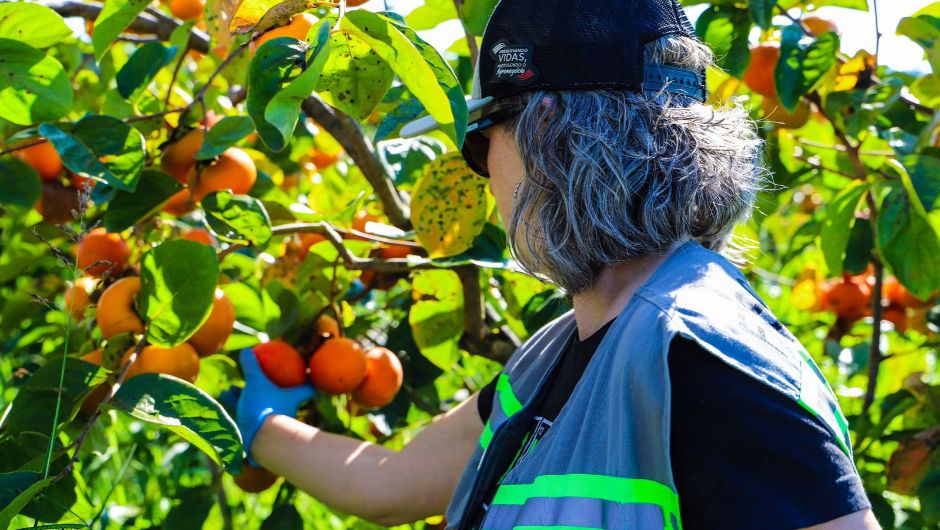
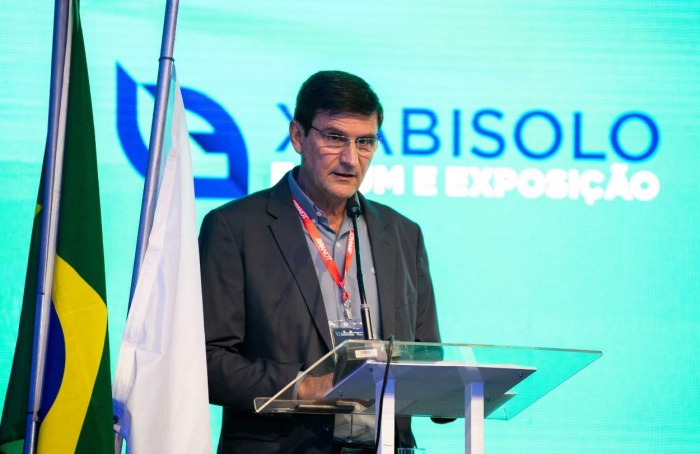
Photo: Felipe Nunes
Peara-POV is a residue monitoring program that constitutes an important traceability tool for food produced in the State of São Paulo. It allows for the identification of problems, when they exist, at their origins, during inspections on rural properties. Complete food traceability makes it possible to identify, understand, monitor, and intervene in the problem detected by analyzing the collected sample.
To achieve its objectives, the program is structured to promote:
Monitoring compliance in the application of pesticides;
Developing a culture of health education among rural producers;
Mitigating health risks for farmers and consumers;
Caring for the environment, avoiding potential damage resulting from the improper use of pesticides;
The safety of agricultural products produced in the State of São Paulo.
The data collected, as well as all the information produced, provides input for public authorities' decision-making regarding strategies to promote food security and food safety in the State. The Directorate of Agricultural Defense has been expanding the program's reach in terms of the number of data collections and regions where activities are carried out, consolidating the active presence of inspection with an educational character, allowing access to basic information regarding the correct use of pesticides, which reflects on the production of safe food and promotes agriculture in São Paulo.
Results
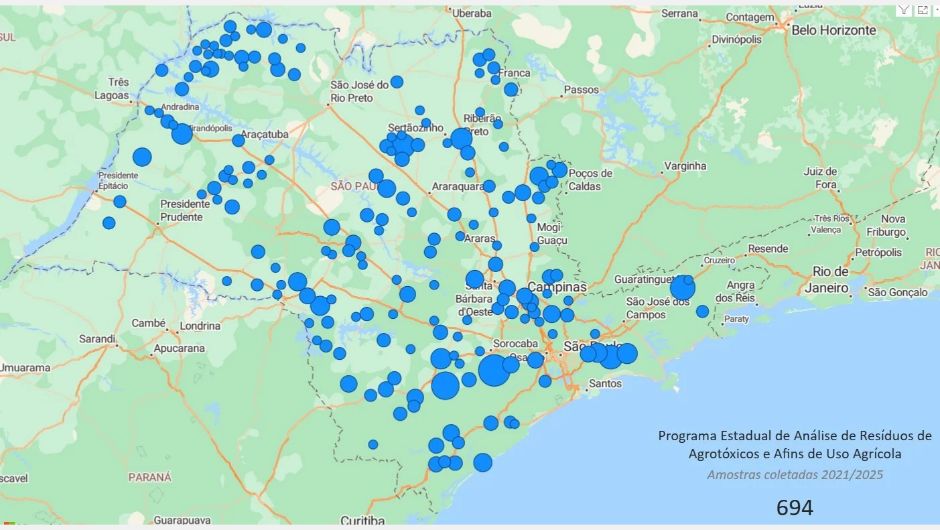
The Program began in 2021 with its pilot project and has since become a routine activity of the Directorate of Agricultural Defense. From August 2021 to July 2025, a total of 694 tax collections were carried out, distributed across 182 municipalities in the State of São Paulo (Collection Map).
Products of plant origin are considered to be fresh vegetables obtained directly from the producer or from the person responsible for production in the field, packing houses, silos or warehouses, provided that the traceability of the products is guaranteed.
The selection of sampled foods is based on the composition of the basic food basket in São Paulo and the extent of production within the state. Sampling also considers the seasonality of agricultural crops, prioritizing proximity to market and the importance of the producing region, encompassing all production systems (conventional, organic, hydroponic, and others).
Currently, 27 agricultural crops are sampled: zucchini, lettuce, peanuts, rice, bananas, potatoes, sweet potatoes, broccoli, coffee, persimmon, onion, carrot, chayote, kale, beans, guava, oranges, lemons (lime and lemon), papaya (formosa), cassava, mango, strawberry, cucumber, bell pepper, cabbage, tomato, and grapes.
The overall compliance results are satisfactory, considering that they encompass the implementation phase of the program, demonstrating that, out of the 694 samples collected, 536 were within the legal parameters required for the use of pesticides, indicating a compliance rate of 77,2% in the total sampled universe.
Non-compliance was detected in 22,8% of the samples collected, divided into three categories: 104 samples that showed pesticide residues not permitted for use in the crops (NPC), 23 samples that showed residues above the maximum permitted limits (MRLs) for the crop in question, and 31 samples that identified both NPC product and MRL exceedance.
According to the official reports published, which are available in full on the website of the Directorate of Agricultural Defense, the following crops are at an excellent level for pesticide residues in the sampled universe: peanuts, onions, beans, lemons, papayas, cassava, mangoes, and cabbage, while the results detected in the crops of bell peppers, guavas, cucumbers, lettuce, and strawberries were considered delicate.
When a non-compliant result is identified, the inspector returns to the property to investigate the causes of the irregularity. The producer then receives guidance on crop management, the use of appropriate technologies, and the adoption of good practices, and is notified to make the necessary corrections. Within 12 months, depending on the crop's seasonality, a new sample collection is carried out to verify if the irregularities have been corrected and if the producer is in compliance with the agricultural pesticide legislation.
Outlook for the future
The expectation is that the "Producing Safe Food" educational project will be continuously expanded to other regions of the State of São Paulo, prioritizing municipalities whose Peara-POV results indicate a greater need for technical guidance. In this way, actions become evidence-based, allowing for more efficient action aligned with the reality of each producing region.
The experience of Peara-POV demonstrates that residue analysis programs achieve even more significant results when associated with ongoing actions in sanitary education and training of the different links in the production chain. In this context, the Memorandum of Understanding represents an important instrument of institutional integration, allowing public bodies and sector entities to act in a coordinated manner in disseminating knowledge and strengthening sustainable, responsible agriculture in São Paulo, aligned with the demands of society.
*Per Camila Ribeiro de Souza Grzybowski, manager of Peara-POV and coordinator of the Producing Safe Food Project, and Jeferson Sabino Fabris Pezotti, Stewardship & Regulation Coordinator at Aenda