Asian tractors put pressure on the Brazilian market.
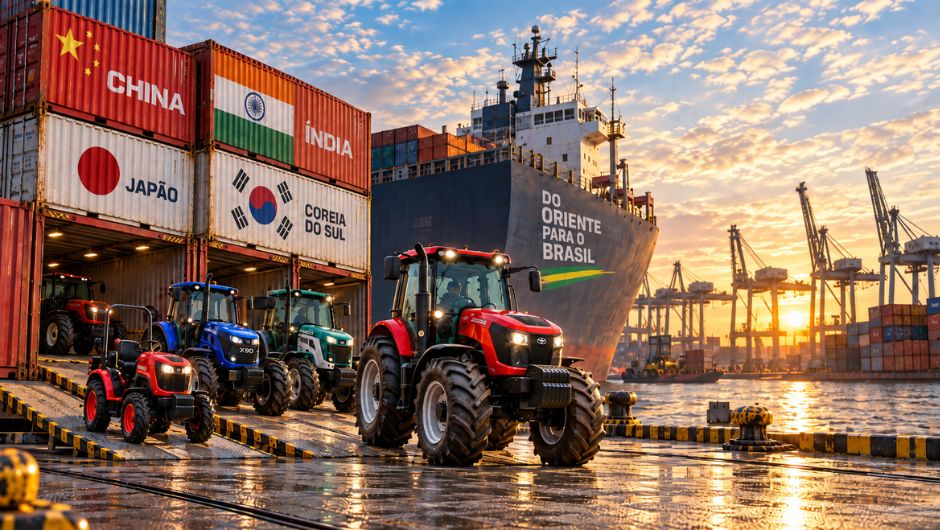
The arrival of new Chinese, Indian, and other Asian brands is beginning to shake up a structure that has been consolidated in the Brazilian tractor market for decades.
22.09.2026 | 10:06 (UTC -3)
The current Brazilian agricultural tractor market is largely dominated by an oligopoly of brands from three major global groups: John Deere, CNH (Case IH and New Holland), and AGCO (Fendt, Massey Ferguson, and Valtra). Although the market share of each brand is a secret, some information indicates that more than 80% of consumer sales are divided among these six brands. This is only an assumption, as data on units sold are not public but rather estimated. Some companies, besides those belonging to the aforementioned three groups, have been present in the country for some years, such as Agrale, Agritech, LS Tractor, Mahindra, Tramontini, and Yanmar. Other players, such as Budny, Forza, Hanomag, Kioti, Kubota, Landini, Lovol, Preet, and YTO, are frequently found at fairs, exhibitions, dealerships, and, on some occasions, working in the field. Some of these brands, with a small share of the local market, are true powerhouses in their countries of origin, and several recent news reports indicate their arrival in the Brazilian market, employing different strategies. Some already have assembly and manufacturing plants in the country, while others report their arrival soon. There are also national manufacturers that use basic components such as engines and transmissions from Asian countries.
The availability of new technologies applied to tractors in the country has increased in recent years, particularly in the last two decades. The use of platforms and cabins has become popular, minimizing physical effort and occupational risks, such as exposure to noise and vibration, and controls on pollutant emissions have led to the introduction of electronic fuel injection systems, among others. These transformations, resulting from national regulations, have provided levels of comfort and sustainability not found in products from past decades. However, this evolution has led to an increase in the cost of these products.
One of the opportunities that Asian manufacturers are seeing is the possibility of entering the Brazilian market with an acquisition cost up to 30% lower than the average national product, offering simpler equipment with lower specifications, taking advantage of the current economic instability of rural producers. Currently, the market is concentrated and focused on high technology, including connectivity and precision agriculture features. Therefore, some entrepreneurs are seeing this moment as an Asian opportunity and are investing to launch new brands in the country, capturing a share of this market.
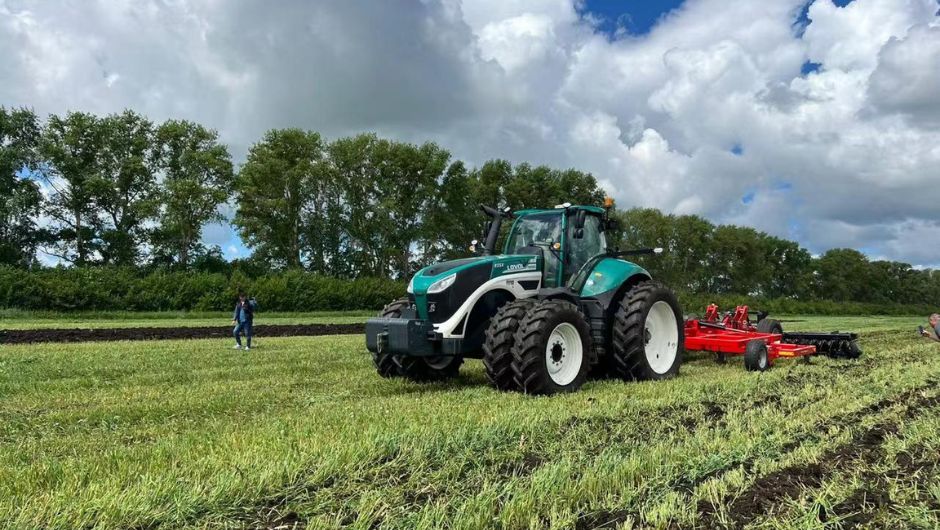
Considered the number one brand in China, Lovol has gained ground in Brazil by using reliable mechanically injected engines, modern cabins, and continuously variable transmissions.
Even with this promise of low purchase prices, it will be necessary to offer credit, preferably official credit, available only for nationalized products, with factories and distribution centers in the country. Therefore, it will be necessary to localize the product, according to the rules of the Finame/BNDES Program. This will make it possible to obtain credit lines.
From what we see, analyzing the products that reach the market and that we have even had the opportunity to test in the field, there are two trends that seem to originate from the industrial philosophy of the brands' countries of origin. It appears that Chinese brands focus more on entering the market with a high volume of units sold, offering very rapid electrification alternatives, including hybridization, with medium and high engine power, at highly competitive prices. The capacity of the Chinese industry to occupy markets should not be doubted.
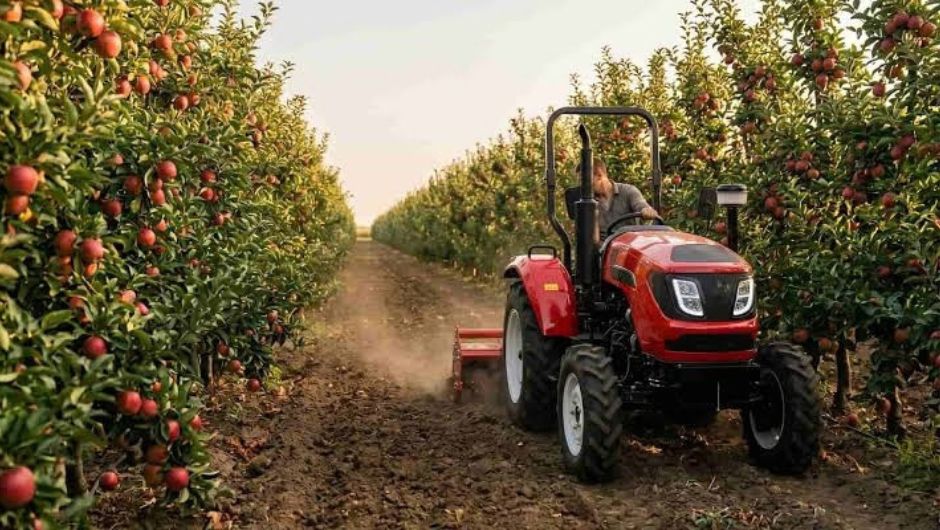
Alternatively, the way Indian brands operate is by offering a lower-powered product that is durable, simple to use and maintain, targeting family farming markets such as fruit and vegetable production.
The challenges facing the Brazilian market in the new reality to come, with the entry of these new tractor brands, lie mainly in the infrastructure that will be created. Modern tractors are increasingly incorporating electronics to operate various components, especially for fuel injection and emissions control. It is known that when electronics are mass-produced and prices are reduced, they lose quality and durability. Will the tractors that arrive use electronics like the domestically produced ones do now? If not, will they comply with the existing emissions regulations in the country? In the field, the maxim is: a stopped tractor is synonymous with irreparable damage. In agricultural production, an operation cannot be postponed without incurring losses.
A common question concerns the durability of these new products. The low annual usage of tractors, averaging 800 hours per year nationally, with a technical lifespan of 10 hours, leads to an approximate useful life of over 12 years. However, it is known that on small farms this number doubles, leading users of these machines to extend their use for more than 30 years. Will the incoming product be prepared for this scenario?
Finally, the most worrying point is after-sales service. We know that several of these new brands, arriving and being offered, are building factories and nationalizing their products. For them, the supply of mechanical components, consumable parts for maintenance, and mechanic training should not be a problem. The key to success is effective logistics for replacement parts, training, and technical assistance. But what can happen to a product from a manufacturer that arrives only as an exporter, bringing batches of machines without maintenance support? We may be returning to the 1950s in the country, when we had numerous brands and it was common to abandon tractors due to a lack of replacement parts. This chaotic state even gave rise to the National Tractor Industry Plan, which promoted the growth of the sector's industrialization.
In this time of transition and instability, we must avoid generalizations and fully embrace this new phase. However, it is undeniable that we need to separate the positive from the harmful. Several new brands will present all the conditions to meet the needs of Brazilian rural producers, and it is these that we want to highlight the qualities of and hope for their success. On the other hand, we must reject those that come only for the opportunity of the moment and have no commitment to the needs of the producer, nor to the possible deindustrialization that is looming.
To the best of my knowledge, based on available information, mainly from websites and social media, a large number of Asian companies are seeking representatives in the country. Others are already established.
Chinese companies already established in Brazil
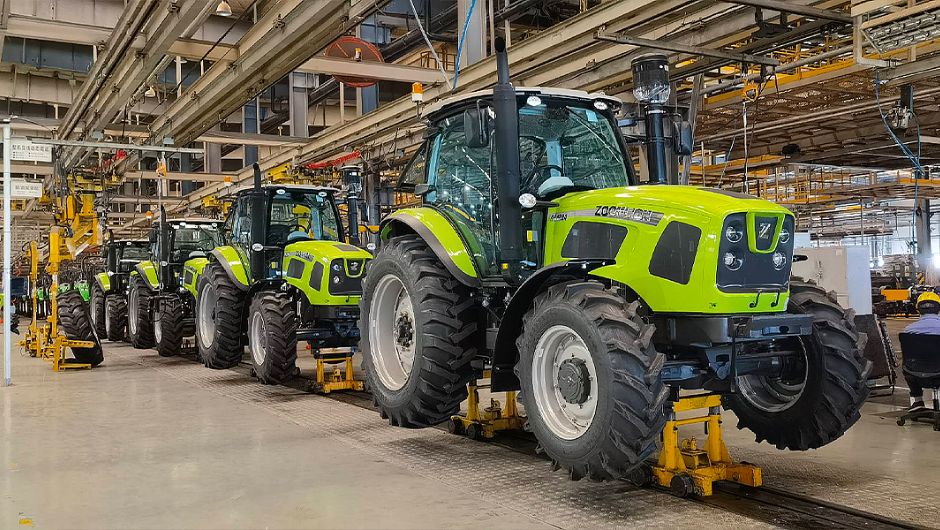
Zoomlion debuted at Agrishow 2026 and recently launched the world's most powerful hybrid wheeled tractor, a model that combines a 700 hp diesel engine with electric motors to achieve peak power of up to 1.200 hp and 4.500 Nm of torque.
The arrival of Asian manufacturers in Brazil occurs at different stages, from companies that are still evaluating the market to those that have already structured imports, a commercial network, or local production projects. Among the Chinese companies, some brands have already advanced in this process and maintain an effective presence in the country, although with different strategies and levels of implementation.
Zoomlion
It debuted with great success at trade shows, such as Agrishow. It surprised the market with the giant, high-powered DV3504 model (350 hp) and its bet on hybrid engines. It announced the establishment of a local factory in Brazil, in Indaiatuba, São Paulo. In China, its agricultural machinery factory is located in Wuhu, Anhui. It has an estimated annual production volume of over 30 units and operates worldwide.
Lovol (Weichai Lovol)
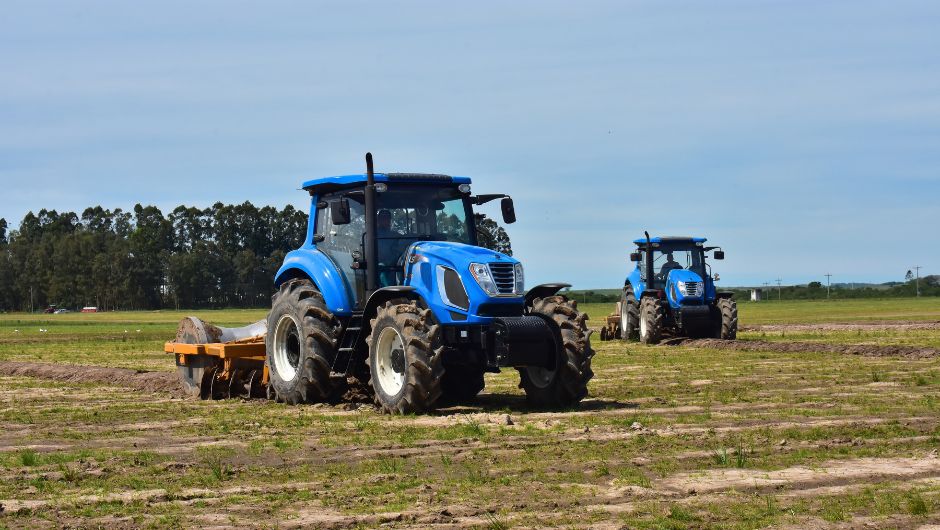
Considered the number one brand in China, it has gained ground in Brazil by using reliable mechanically injected engines, modern cabins, and continuously variable transmissions (CVT). Its industrial base is located in Weifang, Shandong (China). It produces between 50 and 80 tractors per year and sells utility tractors, narrow tractors for fruit farming, and medium/large-sized, high-tech tractors, as well as harvesters. It already has several sales points in Brazil.
YTO
A traditional Chinese state-owned manufacturer has arrived in Brazil through a partnership with BDG Máquinas, from Ribeirão Preto, SP. Its tractors focus on engines with mechanical injection and synchronized or Powershift transmissions with low maintenance costs. In China, its main factory is located in Luoyang, Henan. Its annual production exceeds 100 units, making it one of the largest producers in Asia. It manufactures compact and high-power tractors (up to more than 300 hp).
Indian companies already established in Brazil
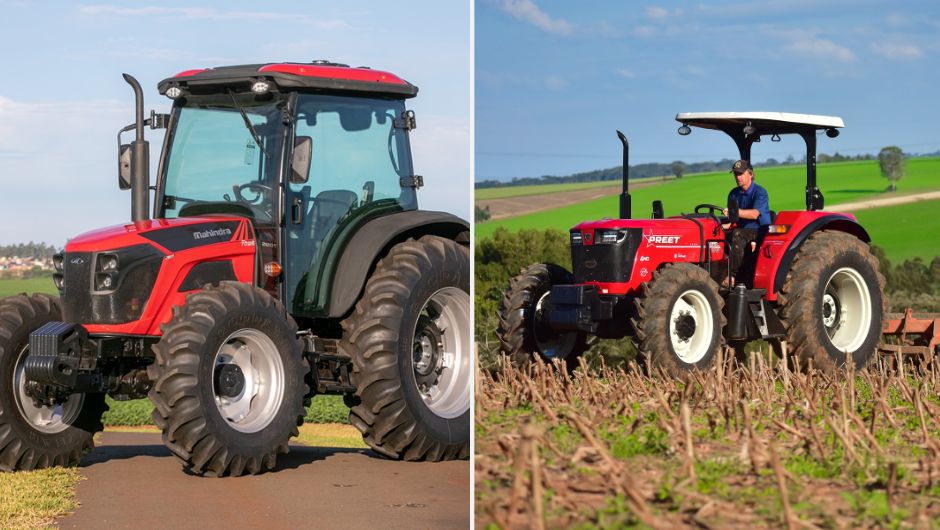
Two Indian companies at different stages: Mahindra has had a factory in Brazil for over ten years, well-established among Brazilian producers; while Preet is entering the Brazilian market, with a factory under construction, also targeting a market segment that demands robust and simple tractors.
Among Indian manufacturers, their presence in the Brazilian market also shows varying degrees of structuring. While some already have domestic production and a more consolidated track record in the country, others are advancing in the formation of their commercial network and in projects to establish their own industrial base in Brazil.
Mahindra
The world's largest tractor manufacturer by volume already has a well-established factory in Brazil, in Dois Irmãos, Rio Grande do Sul. It stands out for offering a five-year warranty and dominating the segment of compact and narrow tractors with medium and low power.
Preet Tractors
With its exclusive distributor for Brazil, Nosso Campo, in Ponta Grossa, Paraná, it is already seeking dealers and beginning the organization of a factory in Arapoti, also in the state of Paraná, which will be named CNT Preet, Companhia Nacional de Tratores (National Tractor Company). Its main factory is located in Nabha, Punjab (India). It produces between 10 and 15 units per year. It sells medium and high-power agricultural tractors, as well as harvesters.
South Korean companies already established in Brazil
The South Korean company LS Tractor has a factory in Brazil and is well-established, with stores throughout the country, focusing on a market for tractors with numerous accessories and technologies.
South Korean manufacturers have also established a presence in the Brazilian market, but they adopt different operating strategies. While one maintains an industrial structure in the country, another participates in the market by importing tractors produced in Asia, catering to different power ranges.
LS Tractor
Established with a plant in Garuva, Santa Catarina, for over a decade, LS is already part of the group of traditional manufacturers in the country. It produces tractors from 40 hp to 145 hp, using Brazilian labor and technology. In South Korea, the main factory is located in Yongam-ri, Wanju-gun.
Kyoto
Also from South Korea, Kioti serves the Brazilian market with products imported from Asia. Engine power ranges from 22 hp to 140 hp.
Japanese companies already established in Brazil
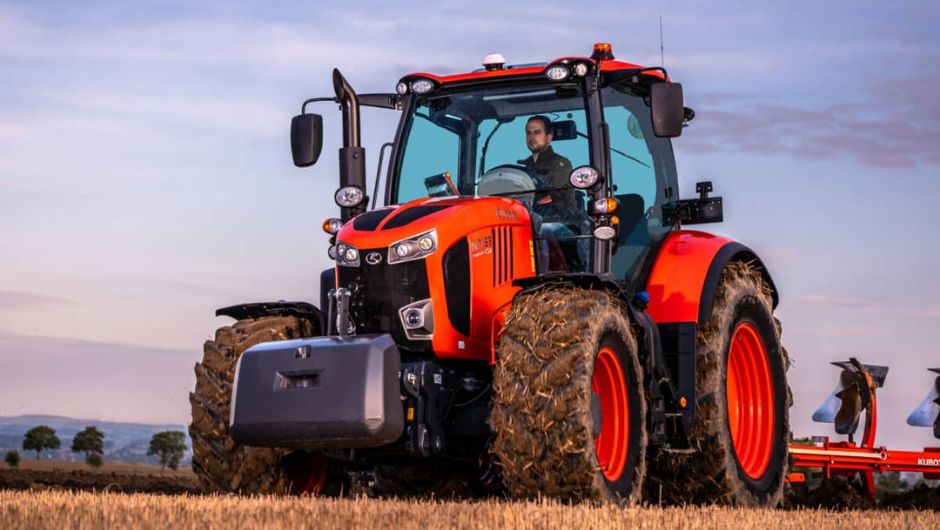
Japanese company Kubota has been operating in the Brazilian market for several years through imports.
Among Japanese brands, their presence in Brazil is primarily through distribution, import, and after-sales structures, with different operating models. In some cases, this presence also involves commercial partnerships with manufacturers from other countries, expanding the availability of tractors in specific market segments.
Kubota
A Japanese brand that imports and distributes tractors through Tratores Mercosul Importadora (TMI), located in Linhares, Espírito Santo. There is information that both TMI and other companies supply parts and components for the brand and provide after-sales service for the national market.
Yanmar (Solis/Sonalika)
Sonalika (which markets the Solis brand internationally) distributes its products in Brazil in partnership with Yanmar. It is a global leader in compact tractors under 30 hp, combining economical engines with a modern design focused on family farming.
Asian manufacturers with potential for the Brazilian market.
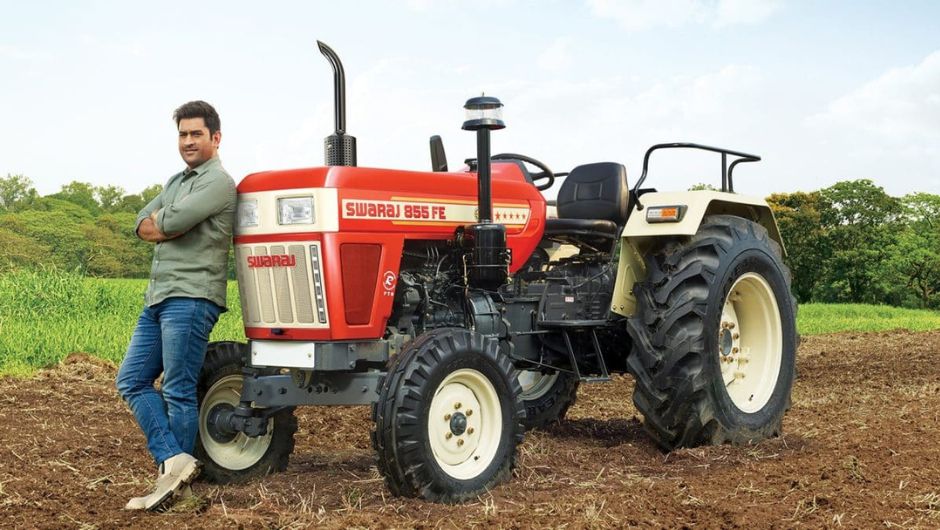
Indiana Swaraj Tractors produces 26 tractor models ranging from 15 hp to 70 hp.
In addition to brands that have already established commercial or industrial operations in the country, other Asian manufacturers appear as potential participants in the Brazilian market. This group includes Chinese and Indian companies with different profiles, ranging from large industrial conglomerates to brands specializing in compact tractors, all supported by production structures already consolidated in their home markets and with product lines that could serve different segments of Brazilian agriculture.
Swaraj Tractors
Founded in 1974, the company developed India's first fully domestically produced tractor. In 2007, it became part of the Mahindra & Mahindra Group conglomerate. Currently, the brand produces 26 tractor models ranging from 15 hp to 70 hp. It has factories in Mohali and Punjab (India). Its production volume exceeds 120 tractors per year. It markets small and medium-sized agricultural tractors (from 15 HP to 65 HP), very popular in small-scale agriculture and regular crops.
Sinomach
A state-owned conglomerate with factories in various regions of China (historically associated with the Dongfanghong brand). Its production volume is tens of thousands of units per year, focusing on heavy tractors for construction and large-scale agriculture.
Avenger Tractors
A brand manufactured by Preet in India (focused on export). Its production volume is integrated into the parent brand's product lines and specializes exclusively in compact microtractors (20 hp to 30 hp) for gardening, greenhouses, and small orchards.
Chinese companies with potential for the Brazilian market.
This model is from Weiwo Machinery, which has export brands or OEM divisions from factories located in Shandong and Jiangsu.
In addition to the Chinese brands that already have structured operations in Brazil, there is a second group of manufacturers that is monitoring the national market and may expand its presence in the coming years. These are companies with international operations, their own tractor lines, and varying levels of engagement with the country, ranging from commercial contacts and the search for representatives to the maintenance of support and after-sales structures.
Example
A global manufacturer of agricultural machinery. It reports having over 400 service points and strategically located parts warehouses worldwide, including in Brazil. Its portfolio comprises 19 tractor models with power ranging from 25 hp to 180 hp, including tractors for orchards.
China Feichuang Group/Feichuang
A Chinese company focused on technological innovation and customer needs, with products exported to over 180 countries. Currently, it produces 17 tractor models, mainly compact (microtractors). It is located in the industrial districts of Zhejiang and Shandong.
LuGong
A recently established company, Lugong International Trade Company entered the international market. It is well-positioned in the Chinese market and exports to countries in Asia, the Middle East, Europe, and recently entered the American market. It is seeking representatives in Brazil for its 15 tractor models, with power ranging from 25 hp to 220 hp.
Weiwo Machinery/Woye/Genius Machinery/Fotrak
These are export brands or OEM divisions of factories located in Shandong and Jiangsu. Their volume depends on foreign trade demand. They mainly sell economical compact platform tractors (20 HP to 60 HP). Information indicates they have already sold over 10 tractors worldwide and their export market covers more than 30 countries. There are announcements of contacts with the Brazilian market.
Original Equipment Manufacturers (OEMs) and Chinese export brands
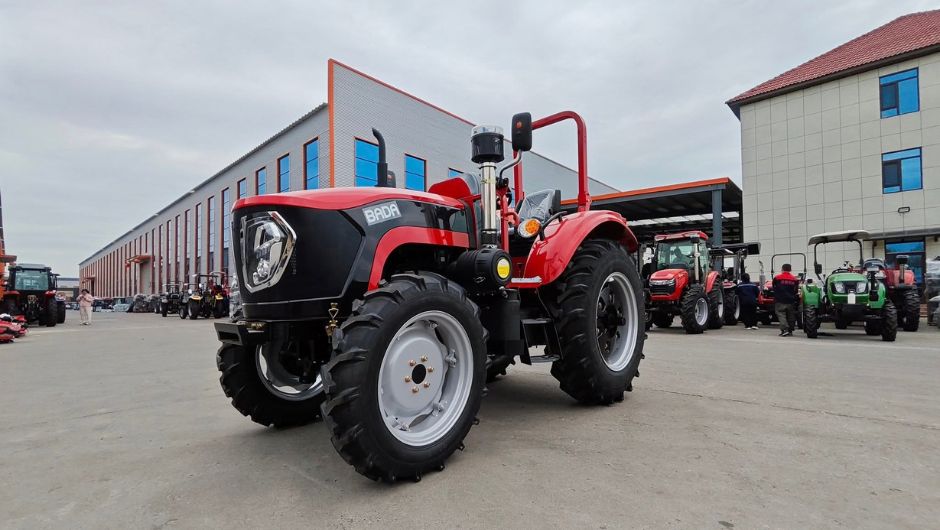
The Chinese company Bada produces agricultural tracked tractors, economical utility tractors for rice cultivation and wetlands.
At a different stage are Chinese manufacturers whose operations are heavily focused on production for third parties and export markets. Many of these companies originated in other machinery segments and have begun to incorporate tractors into their portfolio, generally with compact and utility models. Although they still have a limited or non-existent presence in Brazil, they represent a contingent of manufacturers with industrial structure and experience in international trade that may, in the future, seek space in the national market.
LuGong
Factory in Yantai, Shandong (China). Its historical strength lies in small wheel loaders, but it also markets compact articulated and multi-purpose tractors.
Shandong Baolu Intelligent Equipment Co
Located in Linyi or Jinan, Shandong, China. Focuses on modern medium-sized agricultural tractors with advanced cabs and micro excavators.
Everun Machinery
Factory in Qingdao, Shandong, China. Widely known for its front loaders, but also markets small garden tractors and utility tractors (from 25 hp to 50 hp) for international markets.
BADA Agricultural Machinery
Factory in Yancheng, Jiangsu, China. Produces agricultural crawler tractors, economical utility tractors for rice cultivation and wetlands.
Other companies operating in Brazil
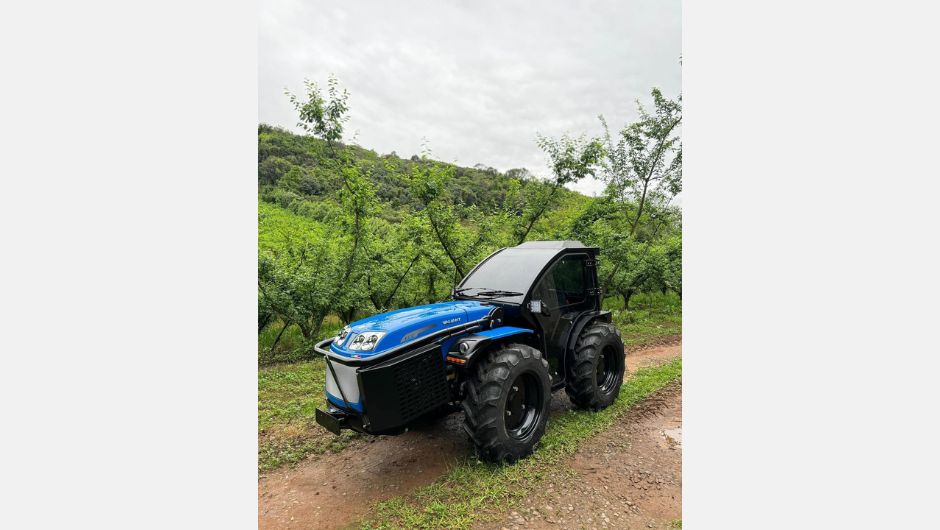
Tractor from Tecnofrutt, a company from Rio Grande do Sul that imports and exclusively resells specialized brands such as BCS and Orizzonti.
In addition to Asian manufacturers that have been expanding their presence in the country, the Brazilian market brings together companies of different origins and operating models. These range from established domestic manufacturers to foreign brands that operate through local assembly, imports, or commercial partnerships, serving niches ranging from compact tractors to higher-powered models.
Agrale
A very traditional national company, operating in the country for over 60 years. It has manufacturing facilities in Caxias do Sul (RS) and in Argentina, but is present in many other countries. It produces small agricultural tractors, starting from 25 hp, and larger tractors, up to 220 hp.
Buddy
A Brazilian company based in Içara, in the state of Santa Catarina. Since 1990, it has manufactured four lines of tractors, ranging from 25 hp to 145 hp.
Strengths
It uses YTO and Yuchai engines of Chinese origin, with maximum engine power ranging from 25 hp to 155 hp. The factory, which originally produced yellow line machinery, now produces agricultural tractors in Palhoça, Santa Catarina. The tractor line is geared towards the utility and heavy-duty segments for agribusiness and infrastructure.
Hanomag
One of the world's most traditional brands in this segment, it now serves the national market through its Argentinian manufacturer, located in the city of Granadero Baigorria, Santa Fe province. It produces two models, the R35 and R55, for the South American market.
Landini
The brand is very traditional in Europe, particularly in Italy, and belongs to the Argo Group. In Brazil, it manufactures and assembles tractors with power ranging from 49 hp to 240 hp, in Contagem, Minas Gerais state.
Tracforce
Their assembly plant is located in Batatais, São Paulo. Production volume is regional (hundreds of units annually). They import and assemble small, compact tractors specialized for field work, horticulture, and family farming.
Tecnofrutt
Located in Farroupilha, Rio Grande do Sul. It does not manufacture tractors on a large scale, but is an importer and exclusive reseller of specialized brands (such as BCS and Orizzonti), selling compact, articulated tractors with a low center of gravity for vineyards.
tramontini
A Brazilian company, with a factory in Venâncio Aires, Rio Grande do Sul, is bringing to market tractors under the Antonio Carraro brand, specialized for use in mountainous regions.
*Per José Fernando Schlosser, Natalia of Nascimento Garcez, João Pedro Sala Gallina, Luisa Modesto SchoellkopfAgrotechnology Laboratory - UFSM