Statistics are a cornerstone for the safe positioning of cultivars
By Rafael de Queiroz Costa, Yasmim Dias de Souza, Jamile da Silva Oliveira Nunes, Greice Marques Barbosa and Jerusa Maia e Sá
02.10.2026 | 14:43 (UTC -3)
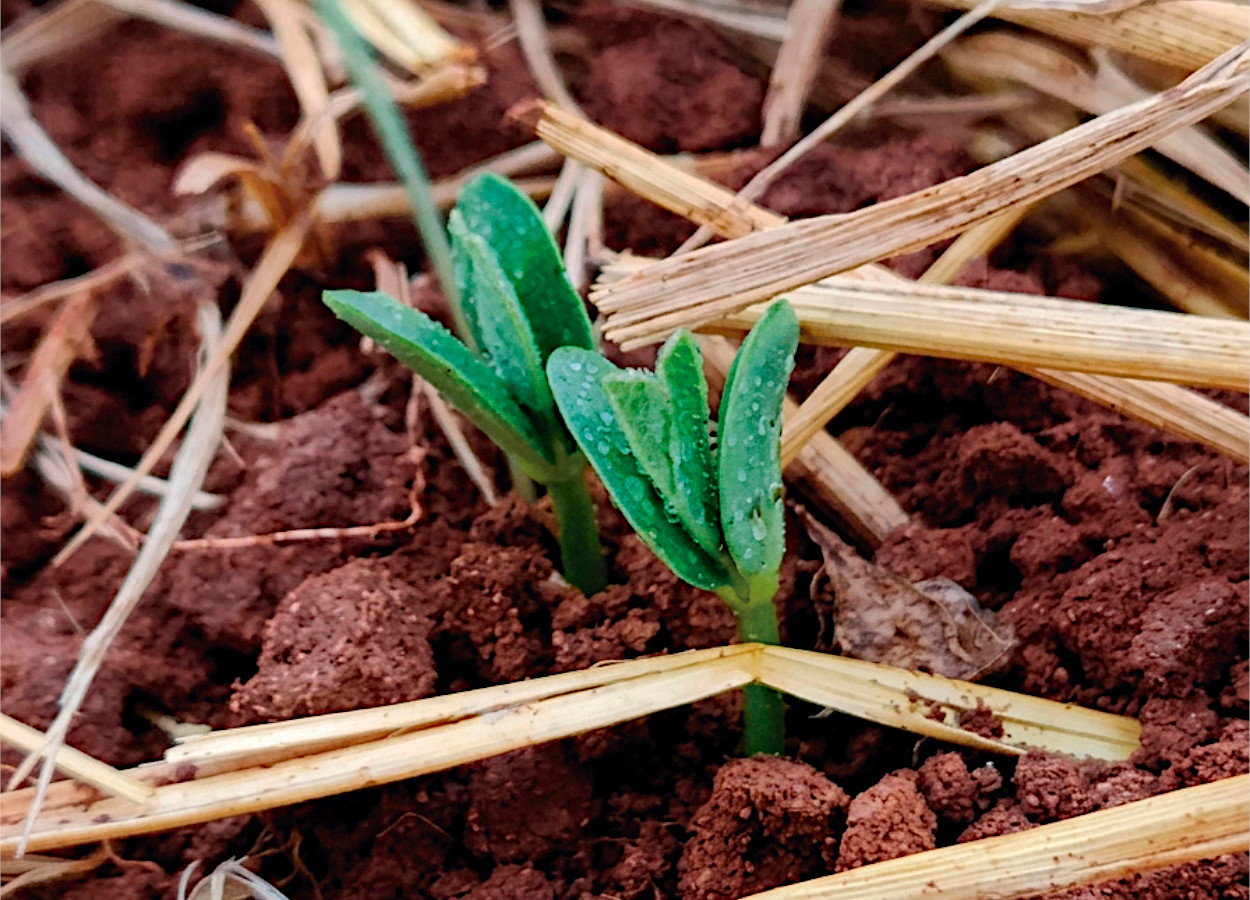
Even before the seed germinates, the soil already harbors fungi ready to associate with the roots as soon as they form. This partnership, known as arbuscular mycorrhiza, is one of the oldest relationships between plants and microorganisms, dating back to a period before the emergence of roots themselves in the evolutionary history of plants, and it has been gaining ground in discussions about productivity and sustainability in large-scale cropping systems, especially due to the role it plays in phosphorus absorption and plant tolerance to water scarcity.
In most crops, this association already occurs spontaneously, often without the producer realizing it, but understanding how it works helps to understand why certain management decisions favor or harm crop productivity.
Arbuscular mycorrhizal fungi (AMF) colonize the roots and, in exchange for sugars produced by photosynthesis, offer the plant something it could not obtain on its own with the same efficiency: access to nutrients and water in soil regions that the roots could never reach. This exchange is not a curious biological detail. It has a direct impact on the producer's pocket, especially when it comes to phosphorus, one of the most expensive and poorly utilized nutrients in Brazilian crops.
To understand why this symbiosis matters so much, it's worth remembering how nutrient absorption by the root works. Around each root there is a thin layer of soil, called the depletion zone, where nutrients are depleted as the plant absorbs them. Some nutrients, such as nitrate, move easily through the soil water and replenish this zone quickly. Phosphorus does not. It gets trapped in clay particles and iron and aluminum oxides, and moves so slowly that the root alone quickly depletes what is within its immediate reach.
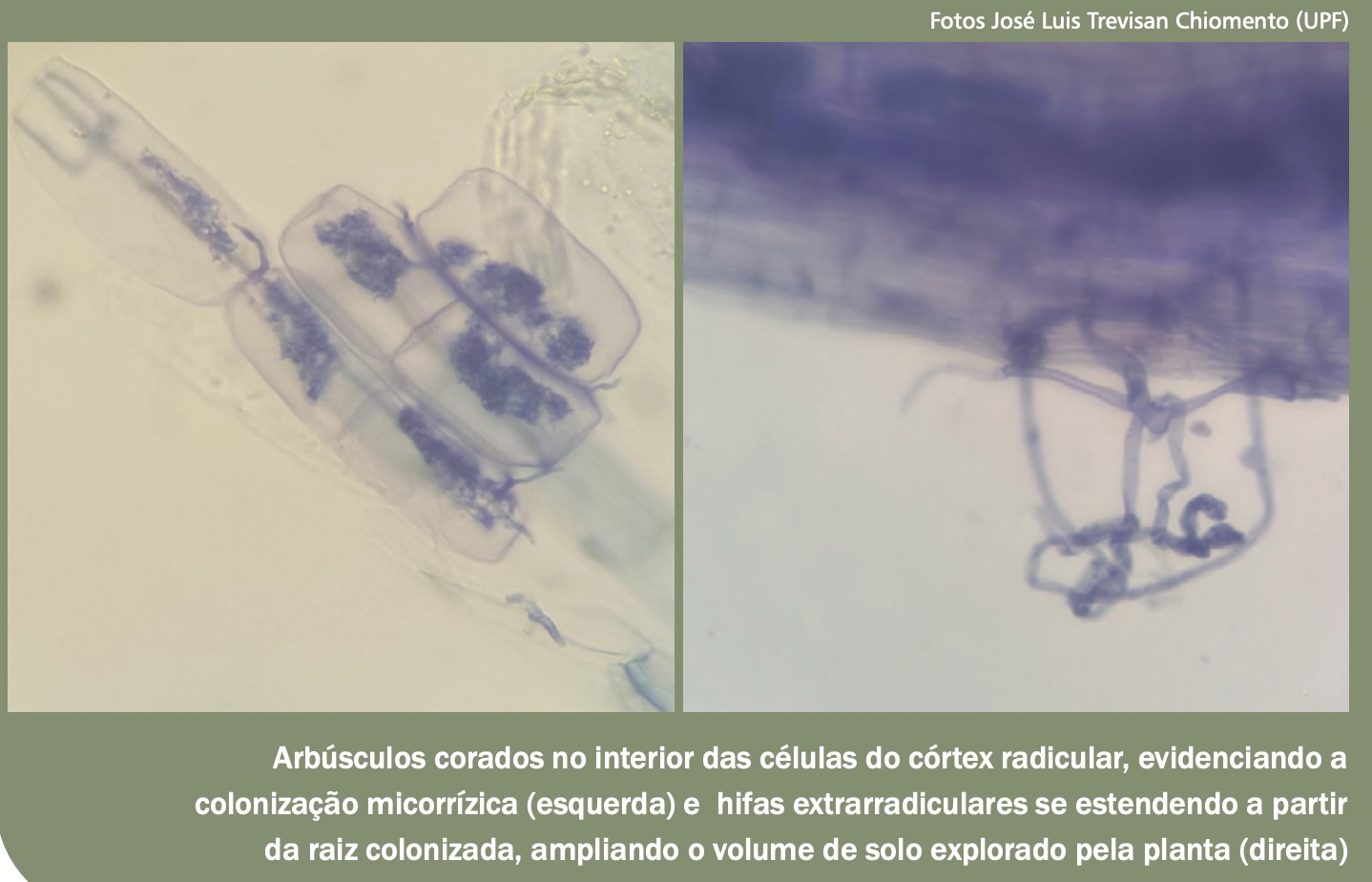
This is where arbuscular mycorrhizal fungi (AMF) come in. When they colonize the root, they form structures called arbuscules within the cortical cells, veritable interfaces where nutrients and carbon pass from one organism to another. At the same time, the fungus sends out of the root a network of extremely thin filaments, the extraradicular hyphae, which spread through the soil far beyond where the root could reach. Because they are much thinner than the smallest root, these hyphae explore soil pores inaccessible to the root system and capture phosphorus beyond the zone that the root has already exhausted.
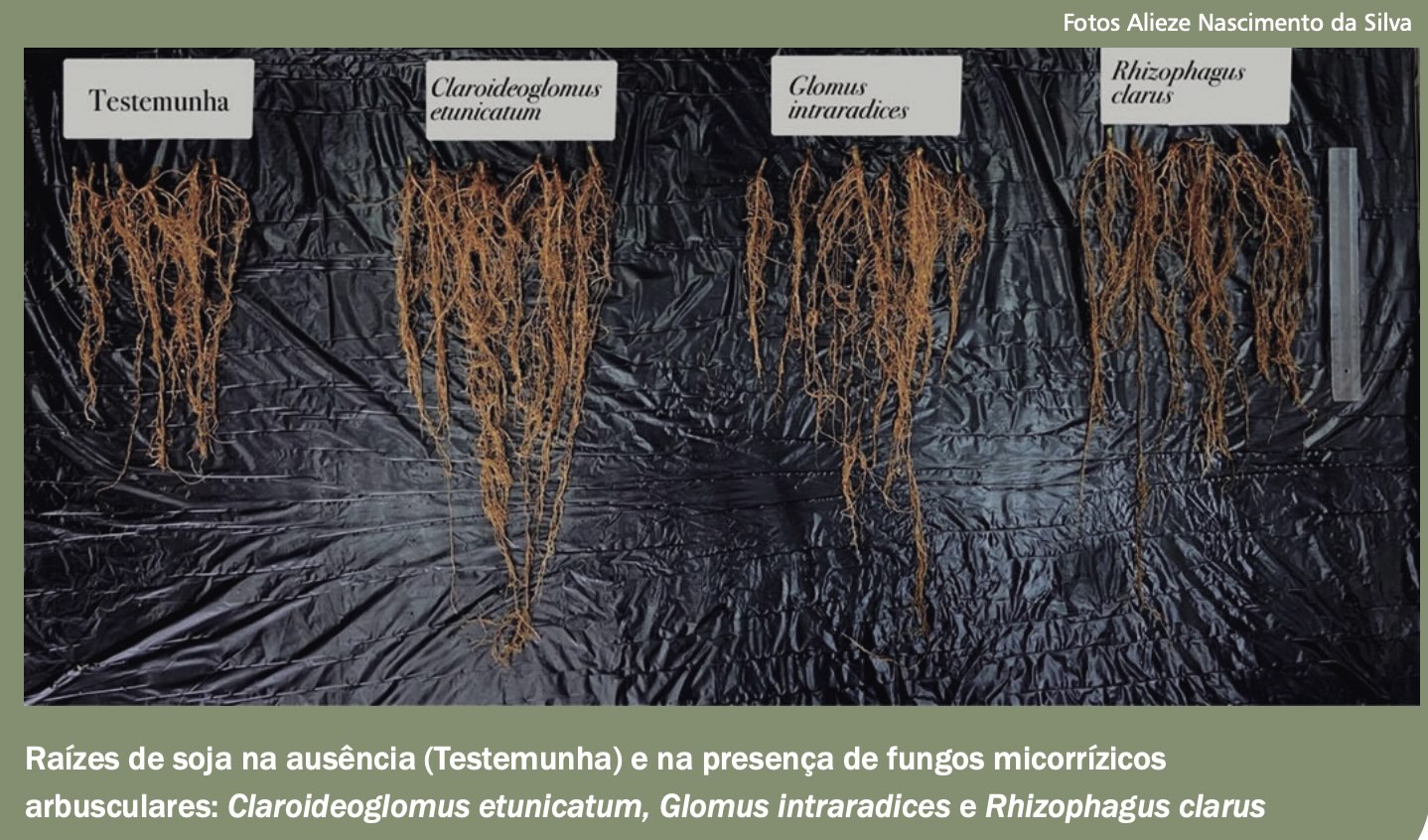
In practice, it's as if the plant gains an extra root system, connected to the original one, but with a much greater reach and more efficient at capturing phosphorus. Field surveys indicate that this network of hyphae can expand the area of soil explored in search of the nutrient by dozens of times, which translates into better-nourished plants even in soils with low phosphorus availability, a common situation in much of Brazil's tropical and subtropical soils, which are naturally poor in this element and have a high capacity to fix it.
The role of mycorrhizae is not limited to nutrition. In years of drought, or in regions where irrigation is not an option, the same network of hyphae that seeks phosphorus also helps the plant to better cope with water scarcity, exploring fine soil pores where moisture is still available and expanding the volume of soil from which the plant can indirectly extract water. Colonized plants also tend to exhibit physiological adjustments that reduce the impact of water deficit, such as a greater capacity to maintain cell turgor and a more branched root system, stimulated by the presence of the fungus itself.
Add to this an indirect, but equally important, effect on the physical structure of the soil. The hyphae produce a protein called glomalin, which acts as a kind of natural glue, binding soil particles into stable aggregates. Well-aggregated soils infiltrate and retain water more efficiently, resist erosion better, and maintain the porosity necessary for roots to breathe. In other words, the mycorrhizal association protects the plant against drought not only internally, aiding in plant physiology, but also externally, improving the soil's own capacity to store water.
However, not all management practices are conducive to this partnership. Some common practices in intensive production systems end up reducing the natural population of arbuscular mycorrhizal fungi (AMF) in the soil, precisely when they are most needed. Intense and frequent soil disturbance physically disrupts the already established network of hyphae. High doses of soluble phosphate fertilizer reduce the plant's incentive to invest in symbiosis, since it then has phosphorus available without needing the fungus. Long periods of bare soil, without live host plants, also weaken this community, as do cropping sequences with non-host species, such as brassicas, or very long fallow periods.
On the other hand, producers who keep plants alive in the soil for as long as possible, using no-till farming and cover crops, create conditions for fungi to survive and propagate from one crop to the next, since they depend on a living root system for this. Balanced phosphate fertilization, adjusted according to the actual needs of the crop and soil analysis, rather than generous doses as a precaution, also preserves the stimulus for symbiosis. In degraded areas, recently deforested areas, or areas with a history of intensive monoculture, where the native fungal community may be significantly reduced, the use of AMF-based inoculants has proven to be an interesting tool for reconstituting this population more quickly.
In practice, this translates into relatively simple day-to-day farm decisions: reducing soil disturbance whenever possible, maintaining crop rotation with host species, avoiding long fallow periods without cover crops, and calibrating phosphate fertilization based on soil analysis instead of applying fixed doses for safety. None of these measures depend on investment in sophisticated equipment or technology, and the return appears cumulatively, crop after crop, as the fungal community re-establishes itself and begins to contribute more consistently to the nutrition and resilience of the crop.
The growing interest in arbuscular mycorrhizae in large-scale cropping systems is not a fad. It reflects a shift in perspective on how to sustain productivity without increasingly relying on external inputs. In a scenario of high phosphate fertilizer costs, much of which is imported, any strategy that improves the utilization of phosphorus already present in the soil, or reduces the dose needed to achieve the same productive response, has a direct impact on crop profitability. In years of unfavorable exchange rates or instability in the international supply of phosphates, this efficiency gain ceases to be an agronomic detail and begins to directly impact the farm's financial planning.
Add to this the increasing climate instability, with more frequent dry spells and less predictable rainfall distribution, and it becomes clear why the resilience that this symbiosis provides in the face of water stress is of such interest to both research and producers.
A production system that conserves and stimulates its native community of mycorrhizal fungi is, in practice, building biological insurance against two of the biggest bottlenecks in Brazilian agriculture: soils poor in available phosphorus and irregular climate.
Nurturing this partnership doesn't require expensive technology or complex management. Above all, it requires understanding that the soil is a living system, and that part of the productivity seen in the field comes from a network of fungi working silently, kilometers of hyphae per square meter, extending the reach of each root far beyond what the eye can see.
* By Alieze Nascimento da Silva, Monalisa Eli Fernandes Guerreiro, João Guilhermi Freire Paz, Bruna Jikowski, Maria Antônia Lacourt and José Luis Trevisan Chiomento (UPF)
Article published in issue 326 of Cultivar Grandes Culturas Magazine
Receive the latest agriculture news by email



Receive the latest agriculture news by email