By Marcelo C. Ferreira, Head of the Plant Health Department at Unesp, Jaboticabal Campus
24.04.2026 | 13:38 (UTC -3)
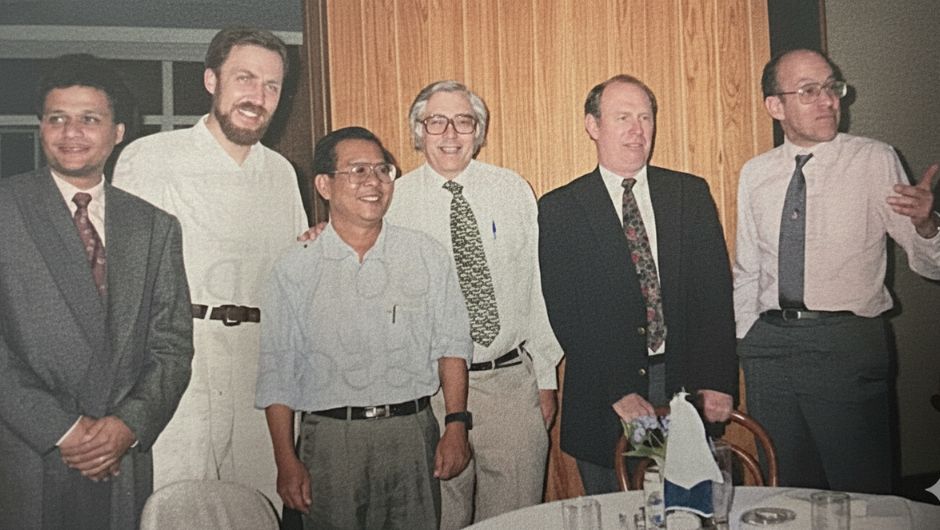
Participants of Sintag, in 1996
In 2026, the São Paulo State University (Unesp), Jaboticabal campus, celebrates a historic milestone: the 50th anniversary of the postgraduate course in Application Technology of Phytosanitary Products, created in 1976 within the postgraduate program in Plant Production, initially under the name "Formulation and Application of Agricultural Pesticides," renamed in 2004. This fiftieth anniversary is not just an academic event, but a testament to the capacity of Brazilian science to reinvent itself, train generations of professionals, and transform national agriculture.
Origin and pioneering spirit
In the 1970s, Brazil was undergoing a crucial transition: from a food importer to an aspiring agricultural powerhouse. Modernization demanded not only new grain varieties and machinery adapted to the vast areas of the Central-West and North, but also technical knowledge for the efficient and safe use of pesticides. It was in this context that Professor Tomomassa Matuo, from the then Faculty of Agricultural and Veterinary Sciences of Jaboticabal, conceived the postgraduate course.
In 1976, the discipline was created within the postgraduate program in Plant Production, becoming a pioneer of its kind in Brazil and South America. Its objective was to fill a critical gap: to train specialists and researchers capable of conducting research and development for the application of phytosanitary products with accuracy, safety, and environmental responsibility. Professor Tomomassa's pioneering spirit was not limited to the technical aspect; his teaching methods blended scientific rigor with human values, inspiring generations of students.
Academic and scientific consolidation
Over the decades, the discipline has established itself as a national and international benchmark. More than 350 masters and doctoral students have passed through its classes, many of whom are now professors, researchers, and leaders in public agencies and private companies. The laboratory infrastructure has been continuously updated, culminating in 2004 with recognition from Anvisa (Brazilian Health Regulatory Agency) for official analyses of household aerosol droplets, further enhancing the scientific credibility of the field.
In 2012, NEDTA (Center for Study and Development in Application Technology) was created by the person responsible for the discipline since 2004 – Professor Marcelo da Costa Ferreira, which strengthened applied research on the importance of formulation components in aspects of application; preparation and stability of spray mixtures; use of adjuvants; components of application equipment; calibration of sprayers; development of accessories; formation, transport and deposition of droplets; occupational safety and sustainability; in addition to extension services in audits, offering lectures, organizing courses and technical and scientific events of recognized quality.
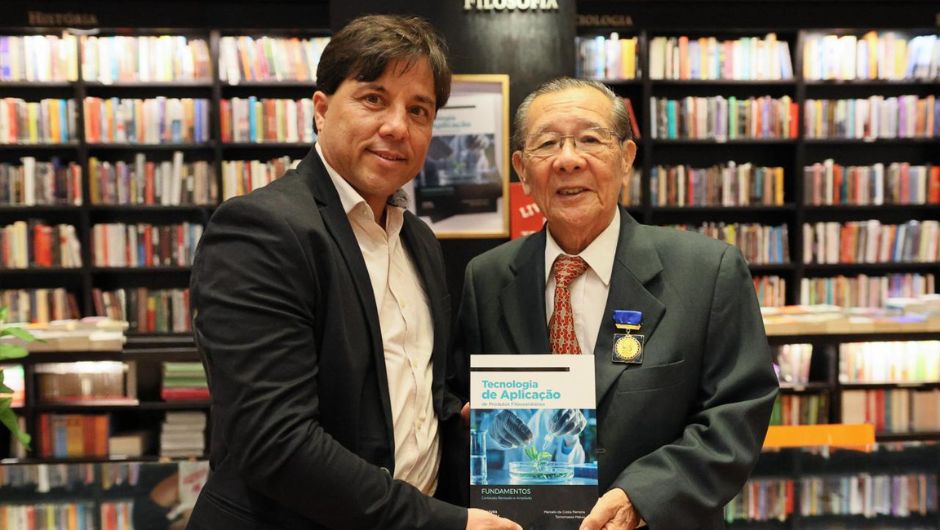
The historical technical and scientific output of the discipline includes approximately 500 abstracts at conferences, 200 articles, 30 chapters, and 15 books, including the reference work Technology of Application of Phytosanitary Products – Fundamentals (2024), co-authored by Professors Tomomassa and Marcelo.
Contributions to Brazilian agriculture
The discipline has accompanied and propelled the growth of Brazilian agriculture, which today accounts for more than 23% of GDP and almost half of national exports. Among its contributions, the following stand out:
Productivity: technologies that increased the efficiency of treatments and reduced phytosanitary losses and waste during application.
Sustainability: practices that reduce environmental risks and impacts and promote the rational use of resources.
Occupational safety: pioneering studies on dermal exposure of applicators and residues in human milk.
Technological innovations: enveloping sprayer with plant sensors (Governor of the State of São Paulo Award); Ecospray acoustic trap for cicadas in coffee; spraying system for controlling pineapple rot in sugarcane.
These contributions demonstrate how the discipline has united science and practice, transforming knowledge into concrete solutions for the productive sector.
Scientific events and research networks
Academic consolidation led to the organization of high-impact scientific events:
Sintag (International Symposium on Application Technology) – started in 1996, now in its 12th edition.
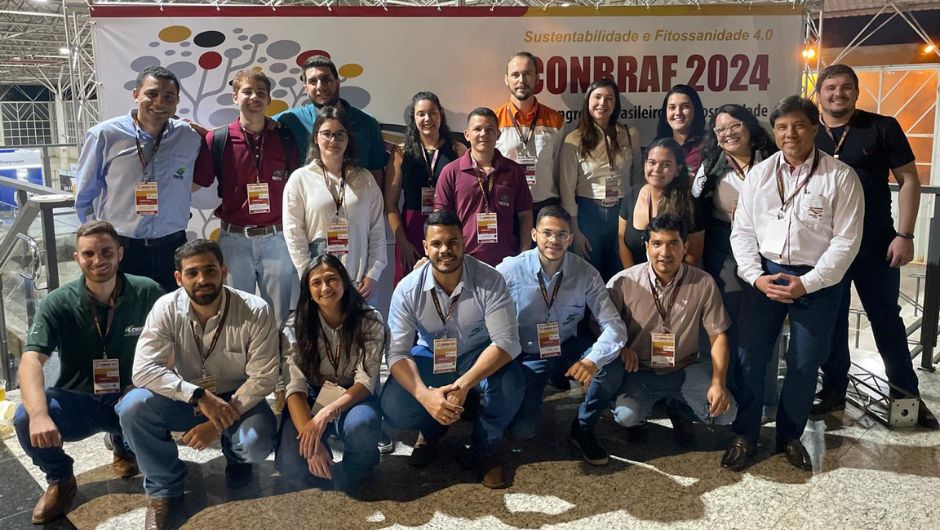
Conbraf (Brazilian Congress of Plant Protection) – a national benchmark since 2011.
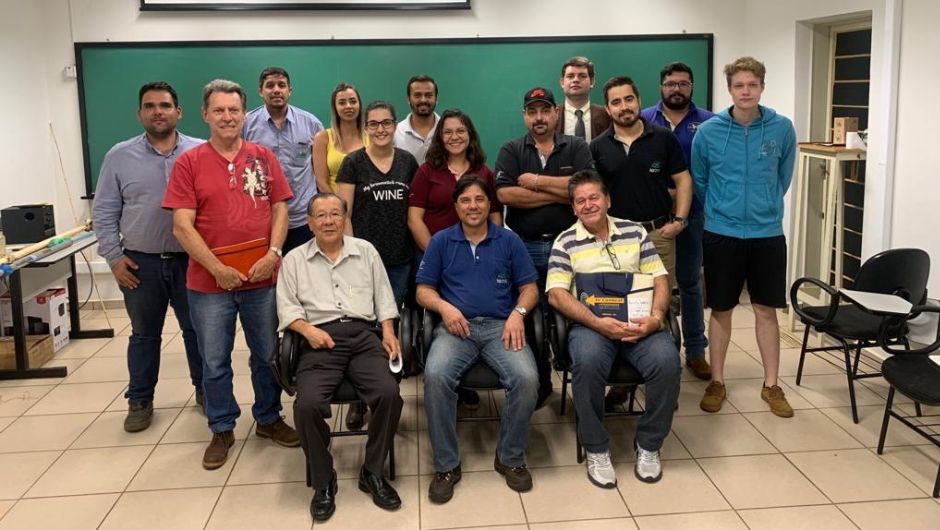
Workshops on adjuvants in spray mixtures – since 2016, bringing together technicians, researchers and businesspeople.
Symposium on Citrus Phytosanitary Issues – held between 2008 and 2014, accompanied by a technical book.
These events broadened the dissemination of best practices and consolidated national and international research networks.
Internationalization
Since the late 1970s, with Professor Tomomassa's involvement at Imperial College London and his participation in FAO panels, and Professor Marcelo's involvement as a Senior Visiting Professor at the University of Lisbon, the discipline has gained international recognition. Professors and students have participated in exchanges across five continents, contributing to conferences and partnerships that have made Unesp globally active in applied technology. This internationalization has reinforced the relevance of the discipline and ensured that the knowledge produced in Jaboticabal addresses global agricultural challenges.
Professional services structure
One aspect that is often overlooked, but of enormous importance, is the structure of professional services that has emerged from the knowledge consolidated by the discipline. Today, there is a specialized sector that employs everyone from agricultural technicians to PhDs in Application Technology, offering complete solutions for agribusiness.
Consulting and service companies operate in different areas:
Technical guidance to equipment manufacturers, suggesting configurations and compositions for the equipment to be manufactured.
Technical guidance for equipment operators, aimed at correct calibration, proper use of nozzles and their components, and configuration during sprayer adjustment.
Training and capacity building focused on occupational and environmental safety and best application practices.
Cross-functional audits that monitor the entire process: from the selection of plant protection products to the evaluation of the effectiveness of treatments in the field.
Sustainability consulting, helping producers reduce waste, minimize drift, and comply with environmental regulations.
Applied innovation, using drones, sensors, and management software to monitor and optimize spraying.
This sector not only expands the discipline's contributions beyond the university, but also generates skilled jobs and strengthens the competitiveness of Brazilian agribusiness. It is a clear example of how scientific knowledge can be transformed into high value-added services, connecting academia, the market, and society.
Human legacy
More than just knowledge, the discipline built a community of values. Professor Tomomassa's inspiring style, which blended Greek mythology with popular anecdotes in his classes, instilled creativity, responsibility, and ethics in his students. Stories of personal mentorship, such as lending a suit to a student for his dissertation defense, symbolize the Professor's human commitment.
This legacy lives on at Unesp Jaboticabal, in memory and innovation, through its successors. The trajectory demonstrates that science and humanity can walk hand in hand, forming conscious, competent, and engaged professionals.
Professor Tomomassa's legacy was also widely recognized nationally. In 2003, during the 60th Official Week of Engineering, Architecture and Agronomy (SOEAA), held in Brasília, he received the Confea Medal of Merit, a distinction awarded to only 24 outstanding professionals in the country. At the same ceremony, architect Oscar Niemeyer, a world icon of architecture, was also honored, highlighting the relevance of the Professor's contribution to agronomy and to the science applied to Brazilian agriculture.
Future perspectives
With the arrival of Agriculture 4.0, the discipline incorporates sensors, drones, artificial intelligence, and localized application systems. The challenge is to train professionals capable of understanding digital tools with sustainable practices, ensuring food security, worker health, and the sustainability of agribusiness. The scenario points towards increasingly efficient, safe, and environmentally responsible spraying methods.
Conclusion
The 50th anniversary of the Plant Protection Products Application Technology course at Unesp Jaboticabal celebrates a trajectory that unites pioneering spirit, innovation, and professional commitment. From its origins in 1976 to its full integration into Agriculture 4.0, the subject has established itself as a pillar of Brazilian agriculture and an international benchmark. Over 50 years, it has actively participated in the dissemination of knowledge, contributing to the consolidation of Brazilian agriculture in its current stage of significant and responsible global participation.
*Per Marcelo C. Ferreira, head of the Plant Health Department at Unesp, Jaboticabal Campus